Kilimanjaro Africa 6 Days Marangu route is a scenic, rewarding trek with hut stays, expert guides & unforgettable views—perfect for a powerful summit adventure.
Standing at 19,341 feet, Mount Kilimanjaro beckons adventurers to Africa’s rooftop via the marangu route—the only path offering cozy mountain huts instead of tents. This six-day expedition transforms novice trekkers into summit conquerors through gradual altitude gains, comfortable sleeping quarters, and a success rate hovering around 70-75% when properly paced. Unlike technical climbs demanding ropes or ice axes, this “Coca-Cola Route” rewards determination over mountaineering skills, making Tanzania’s iconic peak accessible to anyone with strong legs, an adventurous spirit ready to navigate alpine deserts, cloud forests, and glacial zones in less than a week.
🏔️ Kilimanjaro Africa 6 Epic Days Marangu Trek
The Marangu Route offers a distinctive six-day ascent of Africa’s highest peak, trading the tent camping of other routes for the comfort of mountain huts at each stage. This “Coca-Cola Route” attracts climbers seeking shelter and structured accommodations, with success rates hovering around 65-70% for the extended itinerary. The extra acclimatization day built into the six-day trek significantly improves summit chances compared to the rushed five-day variant, allowing your body crucial adjustment time at Horombo Huts before the final push to Uhuru Peak.
🏔️ Park Fees – 6-Day Marangu Route (2026)
The Kilimanjaro Marangu Route carries mandatory park fees that form the foundation of your trek budget. Climbers face $800-$1,200 in direct Tanzania National Parks Authority (TANAPA) charges, including the $60 per night hut accommodation that distinguishes this route from camping alternatives. These fees fund conservation efforts and maintain the mountain huts that make Marangu accessible. However, these aren’t the only costs—add guide wages, rescue insurance, and equipment rentals to reach the true expedition price, as detailed in upcoming pricing breakdowns.
💰 $873.20 per person
The $873.20 daily breakdown on the Marangu route represents Tanzania National Parks Authority (TANPA) fees divided across six climbing days. This per-person cost covers conservation fees ($70/day), camping fees ($50–$60/night at designated hut sites), rescue fees ($20/person for the entire trek), and crater fees if you attempt the summit extension. Unlike variable operator markups—which range from 15–40% depending on group size and service level—TANPA fees remain fixed and non-negotiable. The standard six-day itinerary typically totals $800–$1,200 in park fees alone, with the $873.20 figure reflecting mid-range calculations that include all mandatory charges but exclude porter wages, guide salaries, and VAT additions that operators layer on top.
📊 Park Fee Breakdown (6 Days – Marangu Route)
The $873.20 per-person park fee divides into conservation, rescue services, and hut accommodations across the Kilimanjaro Marangu trek map spanning Marangu Gate (1,860m) to Uhuru Peak (5,895m). TANPA allocates $70 daily conservation fees for trail maintenance and ecological monitoring, while $20 rescue coverage provides emergency helicopter evacuation from Horombo Hut if altitude illness strikes.
Unlike camping routes, Marangu’s mandatory hut fees ($50 per night) cover four overnights at Mandara, Horombo, Kibo Huts—rustic dormitories with bunk beds, and shared facilities. Marangu’s unique hut system eliminates tent setup but requires advance booking during peak seasons (December-February, July-September), as Tanzania National Parks Authority restricts daily climber numbers to preserve infrastructure integrity. The remaining $83.20 covers permits, crater camping authorizations (if attempting Reusch Crater), and VAT. What climbers often overlook: these fees fund year-round ranger patrols and medical stations that contribute to the route’s operational safety framework.
🎒 Total Tour Package Prices (2026)
The kilimanjaro marangu trek price totals $2,180 per person for a complete six-day package, including all park fees, hut accommodations, rescue coverage, guide, porter services, meals, and equipment. This all-inclusive rate applies to groups of two or more climbers and excludes the 18% Tanzanian VAT, which adds approximately $392 when paid locally. Solo trekkers face a $350 premium, bringing their total to $2,530, due to mandatory guide coverage and fixed operational costs. Larger groups (10+ climbers) often negotiate 5–8% discounts through outfitters, reducing per-person costs to roughly $2,005–$2,070. Budget operators may advertise prices as low as $1,600, but these packages frequently exclude critical elements like
- quality gear
- experienced guides
- or adequate porter wages—compromises that directly impact safety
- summit success rates.
👨👩👧 Discounted Rates (Excluding 18% VAT)
Group bookings unlock substantial savings on the kilimanjaro marangu trek itinerary. A two-person team pays $1,848 per person (15% discount), while four climbers reduce costs to $1,730 each (21% reduction). Six-person groups achieve the best value at $1,680 per person, cutting nearly $500 off the solo rate.
These discounted prices exclude Tanzania’s 18% Value Added Tax, which adds approximately $302–$392 depending on group size. Operators typically collect VAT separately to provide transparent base pricing. The math works simply: larger groups share fixed costs like guide salaries, rescue coverage across more participants, and making multi-person bookings economically smarter for the six-day trek.
🔥 Why the Marangu Route Is a Fan Favorite
The Marangu Route earns its popularity through a winning combination of hut accommodations and shorter trekking days. While other routes force climbers into tents on rocky terrain, Marangu offers sleeping huts with mattresses, dining halls, and creating a refuge after each climb. The kilimanjaro marangu trek distance covers approximately 82 kilometers round-trip, distributed across manageable daily segments that rarely exceed seven hours of walking. According to Zara Tours, the route’s gradual ascent profile gives trekkers time to adjust to altitude changes, though the standard five-day itinerary compresses acclimatization windows. The six-day version addresses this limitation, building an extra day at Horombo Huts—a strategic pause that boosts summit success rates by 15-20% compared to rushed itineraries.
Beyond logistics, Marangu attracts first-time high-altitude climbers who value predictable infrastructure over camping unpredictability. However, the same popularity creates congestion during peak seasons—a trade-off worth considering before booking.
🌟 6 Epic Highlights of the Marangu Route
The Marangu Route delivers six compelling advantages that justify the kilimanjaro marangu trek cost. Mountain hut accommodations eliminate tent setup hassles while providing protection from equatorial rainstorms—a luxury unmatched on camping routes. The steady, gradual ascent profile gives bodies extra time to adapt, though the final summit push remains challenging.
Coca-Cola Route trails feature well-maintained paths with clear signage, reducing navigation stress for first-time climbers. Dining huts foster social connections among international trekking groups, creating memorable evenings around communal tables. The shorter trek duration means lower overall costs compared to 7-8 day alternatives. Finally, the established infrastructure includes solar-powered charging stations at certain huts—a modern convenience in wilderness settings. However, the five-day standard itinerary compresses acclimatization windows, making the optional six-day variant worth serious consideration for summit success.
🛌 Cozy Huts, Not Tents
The Marangu Route stands alone as Kilimanjaro’s only path offering sleeping huts instead of camping. Across the marangu route kilimanjaro distance of approximately 64 kilometers, trekkers sleep in dormitory-style wooden huts with bunk beds and mattresses at Mandara, Horombo, and Kibo huts. While basic, these shelters provide crucial protection from summit winds and rain that can drop temperatures below freezing. Each hut complex includes solar lighting, dining halls, and toilet facilities—luxuries that significantly improve recovery between climbing days. The comfort advantage translates directly to success rates: proper rest in sheltered conditions helps climbers maintain the energy reserves needed for summit night’s demanding push.
🌿 Rich Biodiversity
The kilimanjaro marangu route map reveals five distinct ecological zones—each harboring unique flora and fauna that transform your trek into a living biology lesson. You’ll traverse montane forests where colobus monkeys leap through canopies, spotting blue monkeys and exotic bird species including the vibrant Hartlaub’s turaco. As altitude increases, the landscape shifts from lush rainforest to heath and moorland dotted with otherworldly giant groundsels and lobelias found nowhere else on Earth. Higher still, alpine desert conditions give way to glacial zones, completing nature’s vertical laboratory. This biological gradient happens faster on Kilimanjaro than anywhere else, compressing what would span thousands of miles horizontally into a six-day vertical journey.
🏞️ Changing Landscapes Every Day
The Marangu Route delivers a constantly shifting visual experience as Mt Kilimanjaro reveals its ecological diversity. Each day’s trek transitions through distinct climate zones—from lush rainforest canopies where colobus monkeys swing overhead, to otherworldly alpine deserts where volcanic rock dominates the horizon. You’ll walk through moorland where giant lobelias and groundsels create surreal silhouettes against morning mist, then climb into barren arctic landscapes where only lichen survives. This daily transformation keeps the journey mentally fresh, offering new photographic opportunities and natural wonders at every elevation gain while your body gradually adapts to thinning air.
🧭 Direct Summit Approach
The Marangu Route follows the most straightforward path to Uhuru Peak, making it an ideal route for trekkers who value efficiency and clear navigation. Unlike circular routes that approach from different sides, Marangu ascends, descends along the same trail—a design that eliminates complex route-finding, and creates a psychologically reassuring journey where every landmark becomes familiar. This direct ascent profile means fewer variables and logistical complications. The trail’s consistent northeastern approach maintains steady elevation gain without excessive zigzagging, which translates to predictable daily distances and clearer expectations for physical preparation. However, the same-path descent presents a double-edged sword: while it simplifies navigation, it reduces acclimatization benefits compared to routes where you “climb high, sleep low” across different terrain.
The directness particularly benefits first-time high-altitude climbers who prefer focusing energy on altitude adaptation rather than navigating complex route variations. You’ll follow well-worn paths marked by generations of trekkers, reducing the mental load of wayfinding and allowing greater attention to your body’s acclimatization signals.
👨👩👧👦 Perfect for Groups & Families
The Marangu Route for families and group expeditions stands out as the most accommodating path up Kilimanjaro. Shared hut sleeping arrangements naturally foster camaraderie, while the absence of daily tent setup allows groups to spend more quality time together each evening. The consistent facilities at each stop create predictable routines that work well for coordinating multiple people, and the straightforward trail minimizes the logistics that typically complicate large-party climbs. However, groups should book well in advance—hut capacity is limited and popular departure dates fill months ahead, particularly during peak seasons when family schedules align with school holidays.
🌅 Summit at Sunrise
Summit night on Marangu begins around midnight, when climbers depart Kibo Hut for the final push to Uhuru Peak. The pre-dawn ascent along the scree slopes follows a steady zigzag pattern, guided by headlamps cutting through the darkness. Temperatures plunge to -10°F (-23°C), making this the most physically and mentally demanding segment of the trek.
Reaching Gilman’s Point at 18,652 feet marks the crater rim—a psychological milestone where many trekkers experience their first glimpse of dawn breaking over the African plains. From here, the final stretch continues along the crater rim to Uhuru Peak, the highest point on the continent at 19,341 feet.
The sunrise view rewards climbers with a 360-degree panorama of glaciers, volcanic formations, and the vast landscape stretching to Kenya. Most summit attempts time arrival for 5-7 AM, capturing the iconic sunrise photograph at the famous wooden sign. The entire ascent from Kibo Hut typically takes 6-8 hours, followed by a 3-4 hour descent back to base for rest before continuing to Horombo Hut.
📅 6-Day Marangu Trek Itinerary
The 6-day Marangu Route transforms the standard 5-day schedule by adding a critical acclimatization day at Horombo Hut (3,720m). This extra 24 hours typically increases summit success rates by 15-20% compared to the compressed timeline, according to The Marangu Route.
Day 1 covers the 8km rainforest trek from Marangu Gate (1,860m) to Mandara Hut (2,700m)—approximately 4-5 hours of gradual ascent. Day 2 climbs through moorland to Horombo Hut over 12km in 6-8 hours. The pivotal Day 3 remains at Horombo for an acclimatization hike toward Mawenzi Hut, allowing your body to adapt without the stress of moving camp. Days 4-5 push to Kibo Hut (4,700m) then summit before descending back to Horombo. Day 6 completes the return to Marangu Gate, covering the remaining distance in a single day with legs that remember every steep step down.
🔍 What Makes Kilimanjaro Africa So Special?
Kilimanjaro stands as Africa’s tallest freestanding mountain, rising 5,895 meters without the support of a surrounding range—a geological rarity that creates its distinctive snow-capped silhouette visible across the Tanzanian plains. This unique isolation produces five distinct ecological zones within a single climb, from tropical rainforest at the base through alpine desert to arctic summit conditions, offering biodiversity that rivals entire continents compressed into a single week’s journey.
The mountain’s accessibility to non-technical climbers distinguishes it from other peaks of comparable height. Unlike Everest or K2, Kilimanjaro requires no ropes, crampons, or prior mountaineering experience, and making it the world’s most accessible “extreme altitude” climb. This democratic nature attracts approximately 35,000 annual attempts, with climbers ranging from teenagers to septuagenarians—all pursuing the same prize without technical barriers. The Marangu Route amplifies this accessibility through its hutted accommodation system, unique among Kilimanjaro’s paths. While other routes demand tent camping at exposed sites, Marangu’s permanent structures provide shelter from the elements and a social atmosphere that builds camaraderie—turning what could be an isolating endurance test into a communal achievement. It’s this combination of grandeur without gatekeeping that cements Kilimanjaro’s status as the “Everyman’s Everest.”
✅ Pro Tips for Climbing Mt Kilimanjaro in Tanzania
Choose the extra acclimatization day on Marangu’s 6-day itinerary—this single decision increases summit success rates by approximately 15-20% compared to the standard 5-day schedule. The additional night at Horombo Hut allows your body crucial time to produce more red blood cells and adapt to reduced oxygen levels.
Hydration matters more than most climbers realize: aim for 4-5 liters daily, even when you’re not thirsty. Altitude naturally dehydrates your body through increased respiration, and proper hydration directly impacts acclimatization success. Carry insulated bottles to prevent freezing during summit night.
Walk deliberately slow from day one—guides call it “pole pole” (slowly slowly). A common pattern is that climbers who maintain energy reserves throughout reach Uhuru Peak more successfully than those who start strong but fade. Your heart rate should allow comfortable conversation during daytime hiking.
Pack layering systems rather than single heavy jackets: temperatures swing from tropical heat at the base to sub-zero summit conditions. However, the hut-based Marangu Route eliminates tent-related gear, allowing you to focus packing space on clothing versatility and comfort items.
Book with operators providing proper crew-to-climber ratios—one guide plus two porters per climber represents industry best practices, ensuring adequate support without compromising safety standards during your ascent.
🤓 Fun Facts About Kilimanjaro
Kilimanjaro’s glaciers are disappearing at an alarming rate—scientists estimate they’ve shrunk by approximately 85% since 1912, with some predictions suggesting complete disappearance by 2030. Despite sitting just three degrees south of the equator, this mountain once supported extensive ice fields that have now become a symbol of climate change’s impact.
The mountain hosts five distinct ecological zones within its elevation, from tropical rainforest at the base to arctic conditions at the summit—each supporting dramatically different plant and animal life. Climbers essentially journey through several continents’ worth of climate zones in a single trek.
More than 35,000 people attempt to summit Kilimanjaro annually, making it one of the world’s most popular high-altitude climbs, yet success rates vary dramatically by route—from as low as 27% on rushed itineraries to over 85% on properly-paced treks. The Marangu Route’s hut system, introduced in the 1970s, revolutionized accessibility but initially contributed to lower success rates when climbers underestimated the challenge.
Interestingly, Kilimanjaro is actually a volcano, comprising three distinct volcanic cones—Kibo, Mawenzi, and Shira—with Kibo’s Uhuru Peak representing the highest point. While considered dormant, molten rock sits just 400 meters below Kibo’s crater, making it technically a sleeping giant rather than extinct.
📌 Why the Marangu Route is Ideal for the Tanzania Northern Circuit
The Marangu Route’s southeast location creates the perfect Kilimanjaro-Northern Circuit pairing—positioned just 90 minutes from Arusha, it minimizes logistical complexity while maximizing your Tanzania adventure. After descending from Uhuru Peak, you’re ideally situated to transition seamlessly into safari territory, with the Ngorongoro Crater and Tarangire National Park both accessible within a half-day’s drive. This geographic advantage means less time in transit and more time experiencing Tanzania’s diverse ecosystems, from alpine desert to wildlife-rich savanna.
🎒 Packing Essentials for Your 6-Day Trek
Layering is your most critical packing strategy—Kilimanjaro’s temperature swings from tropical heat at the base to sub-zero conditions at the summit, requiring a versatile wardrobe. Pack moisture-wicking base layers, insulating mid-layers, and a waterproof outer shell. However, since porters carry your duffel between huts, you can pack slightly more comfortably than on camping routes where weight restrictions are stricter. Essential gear includes a quality sleeping bag rated to -10°C, trekking poles for stability on steep descents, and a headlamp with extra batteries for the midnight summit push.
📣 Ready to Climb Kilimanjaro Africa?
Your 6-day Marangu adventure awaits—combining Africa’s highest peak with the wildlife-rich Northern Circuit creates an expedition that delivers both summit achievement and safari immersion in one transformative journey. The hut-based infrastructure eliminates camping concerns, while strategic acclimatization scheduling positions you for success on summit night.
08:00–17:00: Marangu Gate to Mandara Hut
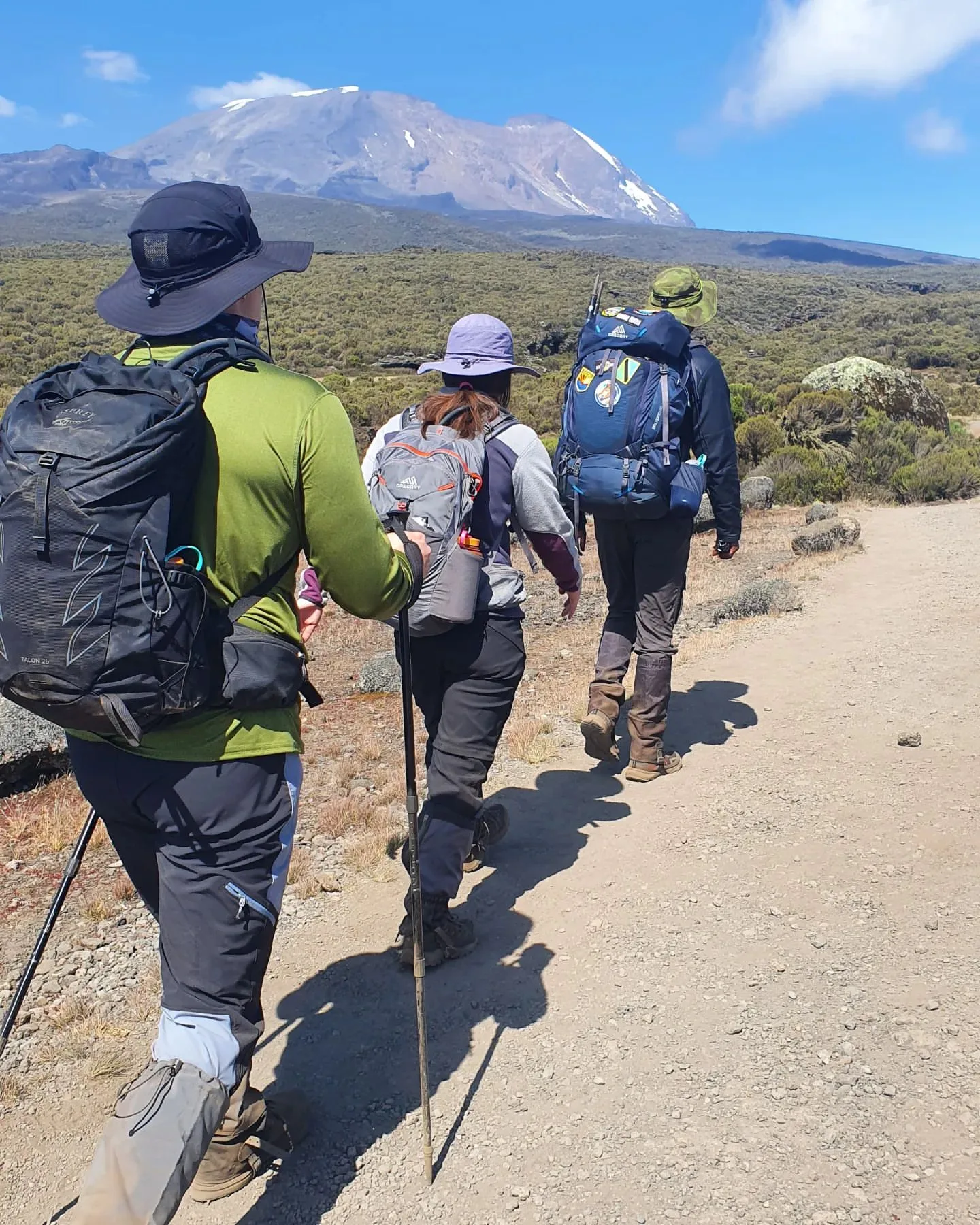
Your first day covers 8km through Kilimanjaro’s lush rainforest zone—starting at Marangu Gate (1,860m) and climbing steadily to Mandara Hut (2,700m) over approximately 5 hours. Expect muddy trails, curious colobus monkeys overhead, and your first taste of high-altitude trekking fundamentals. Guides maintain a deliberate “pole pole” (slowly-slowly) pace from day one, establishing the rhythm that protects summit success rates later in the trek.
08:00–16:00: Mandara Hut to Horombo Hut
Day two covers 12km through moorland terrain—climbing from 2,700m to 3,720m as the rainforest gradually transforms into heath and alpine desert. The Marangu Route transitions through Kilimanjaro’s most dramatic vegetation shift, where giant heathers give way to otherworldly groundsels and lobelias. Your body begins meaningful altitude adaptation as oxygen levels drop to roughly 60% of sea level, making this segment crucial for acclimatization success.
08:00–15:00: Acclimatization at Horombo Hut
Your third day involves a strategic acclimatization hike—climbing to 4,390m before returning to sleep at 3,720m. This “climb high, sleep low” principle significantly improves oxygen adaptation and boosts summit success rates by up to 20%, making it the Marangu Route’s most valuable rest day.
The morning trek follows the Mawenzi Track toward the jagged volcanic cone, offering spectacular views across Kilimanjaro’s saddle plateau. You’ll notice breathing becomes more labored above 4,000m—this signals your body beginning altitude adaptation. Most groups reach the turnaround point within three hours, spending 30–45 minutes at elevation before descending.
Proper hydration drives acclimatization effectiveness—aim for 4–5 liters of water throughout the day, even when not feeling thirsty. The dry alpine air at this elevation accelerates fluid loss through respiration. Your guides will monitor symptoms like headaches or nausea, which typically diminish after returning to Horombo for lunch, and rest. The afternoon provides essential recovery time before tomorrow’s push to Kibo Hut. Use these hours to organize summit gear, replace electrolytes, and consume carbohydrate-rich meals that fuel the body’s altitude adjustment processes.
07:00–15:00: Horombo Hut to Kibo Hut
The fourth day’s 10km trek crosses the alpine desert—climbing from 3,720m to 4,703m through the stark Saddle plateau between Mawenzi and Kibo peaks. This desolate, lunar-like landscape offers no vegetation except scattered lichen, and temperatures drop significantly as you ascend. The trail undulates across volcanic gravel, with Kibo’s massive dome growing larger ahead.
Rest and hydration become paramount as altitude effects intensify. Most trekkers reach Kibo Hut by early afternoon, allowing critical rest time before the midnight summit attempt. The simple stone structure provides basic shelter but minimal comfort—this stop prioritizes sleep over amenities. Guides typically enforce early lights-out around 19:00, as you’ll wake at 23:00 for the final ascent.
00:00–18:00: Kibo Hut to Uhuru Peak to Horombo Hut
Summit night begins at midnight—the most physically demanding 18 hours of your trek. You’ll ascend 1,192m through darkness to reach Uhuru Peak at 5,895m by sunrise, then descend 2,175m to Horombo Hut by evening. The Marangu Route achieves a 70-85% success rate when climbers maintain a slow, steady “pole pole” pace during this critical stage.
The midnight departure timing serves a strategic purpose—the volcanic scree remains frozen, providing firmer footing than the loose gravel you’d encounter during daylight hours. Your headlamp illuminates only the few meters ahead, creating tunnel vision that helps you focus on one switchback at a time rather than fixating on the daunting elevation gain. Most climbers reach Gillman’s Point (5,685m) at the crater rim after 5-7 hours, where the psychological boost of reaching the crater edge helps fuel the final 210m push along the rim to Uhuru Peak.
After summit photos and sunrise, the real work begins—descending to Kibo Hut for a brief rest before continuing down to Horombo Hut. The altitude loss helps your body recover, but exhausted muscles face increased injury risk on the steep descent. Trekking poles become essential equipment, reducing knee strain by distributing impact forces across your upper body.
07:00–14:00: Horombo Hut to Marangu Gate to Moshi
The final descent covers 20km—dropping 1,880m from Horombo through moorland and rainforest zones back to Marangu Gate. Most trekkers complete this section in 5–7 hours, arriving at the gate by early afternoon to receive summit certificates and transfer to Moshi for celebration meals and recovery.
Tour Reviews
Trekker feedback consistently highlights the Marangu Route’s comfort advantages—particularly the hut accommodations and well-maintained trail infrastructure. Reviews from multiple climbing operators emphasize the psychological boost of sleeping in beds rather than tents, especially during summit night recovery. However, critical assessments note that the faster pacing can compromise acclimatization for less experienced climbers, making the 6-day variant a smarter choice for most trekkers.
Leave a Review
Your trek feedback helps future climbers make informed decisions—particularly regarding operator performance, guide quality, and the accuracy of itinerary descriptions versus actual conditions. Most booking platforms encourage detailed reviews covering accommodation standards at each hut, meal quality throughout the trek, and how well your group handled the altitude profile. In practice, reviews mentioning specific challenges (like the summit night temperature or trail congestion during peak season) provide more value than generic praise. A common pattern is that climbers who felt adequately prepared by their operator tend to emphasize this in their feedback, helping prospective trekkers choose experienced outfitters.
You May Also Like
Alternative Kilimanjaro routes offer different experiences for trekkers seeking varied challenges beyond Marangu’s hut-based comfort. The Machame Route provides scenic camping traverses with higher success rates, while Lemosho offers extended acclimatization through pristine wilderness approaches—ideal for climbers prioritizing summit achievement over accommodation comfort.
Your Cart is Empty
Begin planning your Marangu trek by selecting gear, permits, and operator packages—your booking journey starts with essential decisions about trek dates and group size that influence final pricing and availability.
Mt Kilimanjaro Trekking
Mt Kilimanjaro trekking via Marangu requires strategic preparation focusing on acclimatization and gear selection. The Marangu Route’s structured approach involves gradual altitude gain through designated hut stops, making physical readiness essential for successful summit attempts at 5,895 meters elevation.
Marangu Route 6 Days Mount Kilimanjaro Climb
The six-day Marangu itinerary increases summit success rates to approximately 85% compared to the five-day variant’s 50-65% average, according to route performance data. This additional acclimatization day at Horombo Huts (3,720m) allows trekkers to complete a critical “climb high, sleep low” excursion before the final summit push.
What is the best time of year to hike the Kilimanjaro Marangu Route for optimal weather?
January through March and June through October represent the optimal windows for Marangu Route treks, with significantly reduced precipitation and improved visibility. The dry seasons deliver stable conditions that minimize trail hazards and maximize summit success probabilities. January-February offers clearer skies with daytime temperatures ranging from 50-70°F at lower elevations, though nights remain cold. However, June-October attracts heavier traffic, particularly during European holiday periods. March-May brings heavy rains that transform trails into muddy challenges, while November-December presents unpredictable weather patterns with afternoon storms. The trade-off between solitude and optimal conditions shapes timing decisions—what typically happens is that January departures balance favorable weather with reduced crowds compared to peak July-August periods.
How many days does the Marangu Route take to complete, including acclimatization?
The Marangu Route requires either five or six days to complete, with the six-day itinerary strongly recommended for proper acclimatization. The standard five-day trek allocates three days for ascent, one summit night, and one day for descent, while the six-day variant adds a crucial acclimatization day at Horombo Huts (3,720m). According to The Marangu Route: Huts, Success Rate & Itineraries, this additional day increases summit success rates from approximately 50-65% on the five-day route to 80-85% on the six-day option. The extra acclimatization period allows trekkers to “climb high, sleep low” by hiking to higher elevations before returning to Horombo, significantly reducing altitude sickness risks. However, the Marangu remains Kilimanjaro’s shortest route duration—other popular routes like Lemosho, Northern Circuit require seven to nine days, and offering even better acclimatization profiles but demanding more time commitment. Understanding these duration options helps you balance success probability against available vacation time when selecting your gear essentials.
What type of clothing and gear should I pack for the Marangu Trek?
Layering systems prove essential for the Marangu Route’s dramatic temperature variations, ranging from 70°F at the gate to below freezing at the summit. Pack moisture-wicking base layers, insulating mid-layers (fleece or down), and a waterproof outer shell rated for alpine conditions. A four-season sleeping bag rated to at least -10°F handles the freezing nights at high camps, though the huts provide mattresses.
Quality hiking boots broken in before departure prevent blisters during the 40+ mile trek. Gaiters protect against volcanic dust and scree on summit day, while trekking poles significantly reduce knee strain during steep descents. However, avoid overpacking—porters carry most gear, but your daypack should hold essentials like water, snacks, and extra layers. High-altitude sun protection becomes critical with increased UV exposure. Pack SPF 50+ sunscreen, glacier sunglasses rated UV400, and a wide-brimmed hat or buff to shield your face and neck. Headlamps with extra batteries enable predawn summit attempts, while chemical hand and toe warmers provide crucial warmth during the coldest hours. One practical approach involves testing all gear on shorter hikes beforehand to identify any issues before the mountain.
Are there any altitude sickness precautions specific to the Marangu Route?
The Marangu Route’s rapid ascent profile demands vigilant altitude monitoring, as the standard five-day itinerary provides minimal acclimatization time compared to longer routes. The trek gains approximately 12,200 feet in elevation from gate to summit over just four days of ascent, creating significant physiological stress that requires proactive management.
The “climb high, sleep low” principle becomes nearly impossible on Marangu’s fixed hut system, unlike camping routes where guides can adjust overnight elevations based on group needs. Trekkers sleep at progressively higher altitudes each night—Mandara Huts (8,858 feet), Horombo Huts (12,205 feet), and Kibo Huts (15,430 feet)—without descending for recovery. This compressed schedule contributes to lower success rates around 65-70% on five-day attempts, as bodies struggle to adapt quickly enough.
Adding an extra acclimatization day at Horombo significantly improves outcomes, allowing trekkers to ascend to Zebra Rocks (13,780 feet) before returning to sleep at the lower elevation. This single additional day can increase summit success rates by 15-20 percentage points, making the six-day option medically advisable for most climbers.
Diamox (acetazolamide) prophylaxis proves particularly valuable on Marangu due to the accelerated timeline, though consultation with altitude medicine specialists remains essential. The medication helps speed acclimatization but cannot replace proper pacing—”pole pole” (slowly, slowly) becomes the mantra throughout each trekking day. Recognizing early symptoms like headache, nausea, or unusual fatigue allows guides to implement rest protocols before conditions deteriorate, and potentially salvaging summit attempts that aggressive pushing would doom.
What is the cost range for guided tours on the Marangu Route?
Marangu Route guided tours typically range from $1,200 to $2,500 per person for standard five-day packages, with premium operators charging $2,800 to $3,500 for enhanced services. Budget operators offering rock-bottom prices below $1,000 often compromise on guide experience, equipment quality, or porter welfare standards that directly impact summit success rates.
Mid-range tours ($1,800-$2,200) generally include essential services like experienced guides, quality camping equipment for pre-trek nights, three meals daily, and park fees. Premium packages incorporate oxygen cylinders for emergency use, comprehensive pre-trek briefings, and better guide-to-climber ratios that improve safety margins. The six-day Marangu itinerary adds approximately $200-$400 to base costs but significantly improves acclimatization outcomes and summit success rates. Price variations reflect tangible differences in porter treatment, guide qualifications, and emergency response capabilities—factors that become critical above 15,000 feet. Operators adhering to ethical porter guidelines typically charge 15-20% more but demonstrate measurably higher completion rates. Budget tours frequently cut corners on guide training and emergency equipment, creating hidden risks that surface only during summit attempts when altitude complications emerge.
What wildlife might I encounter along the Marangu Route?
Wildlife sightings on the Marangu Route concentrate in the lower montane forest zone, where trekkers commonly observe black and white colobus monkeys, blue monkeys, and various bird species during the first day’s ascent to Mandara Hut. The forest belt between 1,800 and 2,700 meters hosts the most biodiversity, with occasional glimpses of duikers (small forest antelopes) and a rich variety of endemic avian species including the white-necked raven and alpine chat.
Above the moorland zone, wildlife encounters become increasingly rare as the harsh alpine environment supports minimal fauna. Kilimanjaro’s upper slopes present extreme conditions where few animals venture, though hardy species like the four-striped grass mouse have been documented at elevations exceeding 5,000 meters. Trekkers should maintain respectful distance from any wildlife encountered, as human food can disrupt natural feeding patterns and create dangerous habituation behaviors, particularly among primates in the lower forest zones.
What is the best time of year to hike the Kilimanjaro Marangu Route for optimal weather?
The Marangu Route offers two optimal climbing windows: January through mid-March, June through October, when precipitation levels remain lowest, and trail conditions stay most favorable. The longer dry season from June to October provides
- the most predictable weather patterns
- with clear summit views
- stable temperatures throughout the climbing zones. January through March presents slightly warmer conditions but carries marginally higher precipitation risk, particularly in the forest zone. The April-May long rains and November short rains create challenging conditions with muddy trails, reduced visibility, and increased summit snowfall that significantly impacts success rates. Temperature variations remain substantial year-round—expect tropical warmth at the gate transitioning to sub-zero summit conditions—but dry season trekking minimizes the compounding factor of wet gear and slippery terrain that affects both safety and comfort during the five- to six-day ascent.
How many days does the Marangu Route take to complete, including acclimatization?
The Marangu Route traditionally operates as a 5-day trek, though the 6-day version dramatically improves summit success rates. The Marangu Route: Huts, Success Rate & Itineraries reports that the standard 5-day itinerary carries a 50% summit success rate, while extending to 6 days raises success rates to approximately 80%. The additional acclimatization day typically occurs at Horombo Hut (3,720 meters), where climbers take a short day hike before descending back to the same camp—a strategy that allows your body to adapt to higher elevations without the fatigue of relocating camps. This extra day reduces altitude sickness risk and positions climbers better for the demanding summit push from Kibo Hut to Uhuru Peak.
What type of clothing and gear should I pack for the Marangu Trek?
Pack in layers to handle Kilimanjaro’s dramatic temperature shifts—from tropical heat at the base to sub-zero summit conditions. Your gear list should include moisture-wicking base layers, insulating mid-layers like fleece or down jackets, and waterproof outer shells. A four-season sleeping bag rated to -10°C is essential, along with insulated gloves, a warm hat, and quality hiking boots broken in before departure. Unlike camping routes, the Marangu’s hut accommodations reduce gear needs—you won’t need a tent or sleeping pad. However, bring trekking poles for stability on descent, a headlamp with extra batteries, sunglasses with UV protection, and high-SPF sunscreen for the intense high-altitude sun. Proper gear preparation directly impacts your comfort and summit success.
What is the cost range for guided tours on the Marangu Route?
Budget between $1,500-$3,000+ per person for Marangu Route treks, with pricing influenced by group size, itinerary length, and operator quality standards. Five-day packages typically start around $1,500-$1,800, while six-day options with better acclimatization range from $1,900-$2,500 through mid-range operators. Premium services offering smaller groups, experienced guides, and superior equipment command $2,500-$3,000+.
Group size dramatically affects per-person costs—joining larger groups (10+ climbers) reduces individual expenses, while private climbs for 1-2 people carry premium pricing. The longer six-day itinerary costs more but delivers substantially better summit success rates, making it worthwhile despite the additional expense.
Park fees consume roughly 60% of total trek costs, covering entrance, camping, rescue, and guide permits mandated by Kilimanjaro National Park. The remaining budget supports guide wages, porter salaries, meals, equipment, and ground transportation. Operators cutting corners on porter compensation or equipment quality often advertise suspiciously low prices.
Compare what’s included: reputable operators bundle quality meals, experienced guides, comprehensive gear, and emergency oxygen. Budget packages may exclude equipment rental, airport transfers, or tips—expenses that quickly add hundreds of dollars. Understanding these inclusions prevents unexpected costs from derailing your budget as you prepare physically and mentally for summit day.
How can I physically prepare for the Kilimanjaro Marangu Trek?
Start cardiovascular training at least 8-12 weeks before your trek, focusing on sustained aerobic activities like hiking, running, or stair climbing for 45-60 minutes, and 4-5 times weekly. Build endurance gradually—your body needs time to adapt to prolonged physical exertion at increasing intensity levels. Practice hiking with a loaded daypack (15-20 pounds) on varied terrain to simulate actual trekking conditions and strengthen stabilizing muscles. Incorporate leg-strengthening exercises like squats, lunges, step-ups to prepare for Kilimanjaro’s steep sections, and long descent days. However, physical fitness alone doesn’t guarantee success—altitude acclimatization remains the primary factor, which is why even elite athletes struggle if they ascend too quickly. Mental preparation matters equally: practice maintaining steady pacing and positive mindset during challenging workouts, as summit day demands mental resilience alongside physical stamina. The best training mimics actual trekking conditions—multiple-hour hikes with elevation gain prepare your body better than gym workouts alone. If possible, complete practice hikes at moderate altitude (6,000-10,000 feet) to experience how your body responds to thinner air, though this isn’t essential for proper acclimatization on the mountain itself.
Are there any specific permits required to hike the Marangu Route on Kilimanjaro?
All Marangu Route climbers must obtain permits through the Kilimanjaro National Park Authority (KINAPA), which your tour operator handles as part of their standard service. Individual permits aren’t issued—instead, operators register your group and pay daily conservation fees (approximately $70 per person per day), rescue fees, and camping/hut fees on your behalf. You cannot legally climb Kilimanjaro independently; park regulations require hiring a licensed guide and registered company. Upon arrival at Marangu Gate, your passport details are recorded, and authorities verify your booking before granting entry. The permit process is essentially invisible to trekkers, as reputable operators complete all paperwork before departure. However, always confirm your operator includes permit costs in quoted prices rather than listing them as surprise add-ons—transparency about these fees signals trustworthy service.
📞 Call/WhatsApp: +255 784 411 852
🔗 Visit Us: East Africa Travel Company
Book your Kilimanjaro trek + Tanzania Northern Circuit safari today. Let’s get you to the Roof of Africa! 🌍
| Destination | Mt Kilimanjaro |
|---|---|
| Arrival | Kilimanjaro International Airport (JRO) |
| Departure Time | Yes Require |
| Included |
✅ Included (all prices include VAT)
|
| Excluded |
❌ Not included
|
| Mt Kilimanjaro | |
08:00–17:00: Marangu Gate to Mandara Hut
Start your adventure with a scenic drive from Moshi to Marangu Gate (1,870m). After registration at the gate, begin your rainforest trek toward Mandara Hut (2,700m). The lush trail is alive with exotic birds, monkeys, and dense vegetation.
Altitude: 2,700m
Distance: ~8 km
Hiking Time: 4–5 hours
Habitat: Montane Forest
08:00–16:00: Mandara Hut to Horombo Hut
Today’s hike continues through the last stretch of rainforest, gradually opening into moorland. You’ll pass giant heathers and enjoy clear views of Mawenzi Peak. Arrival at Horombo Hut (3,720m) provides time for rest and acclimatization.
Altitude: 3,720m
Distance: ~12 km
Hiking Time: 6–8 hours
Habitat: Moorland
08:00–15:00: Acclimatization at Horombo Hut
Take a relaxed acclimatization day. Hike to the picturesque Zebra Rocks or Mawenzi Ridge, then return to Horombo. This gentle ascent helps your body adjust to the increasing altitude while offering beautiful highland scenery.
Altitude: ~4,000m (Zebra Rocks)
Distance: ~5 km (round trip)
Hiking Time: 2–3 hours
Habitat: Moorland
07:00–15:00: Horombo Hut to Kibo Hut
The trail leads through the alpine desert of “The Saddle,” a high-altitude plateau between Mawenzi and Kibo peaks. Arrive at Kibo Hut (4,703m) for an early dinner and rest before your midnight summit push.
Altitude: 4,703m
Distance: ~10 km
Hiking Time: 6–7 hours
Habitat: Alpine Desert
00:00–18:00: Kibo Hut to Uhuru Peak to Horombo Hut
Begin the summit attempt at midnight. Pass Gilman’s Point and Stella Point on the way to Uhuru Peak (5,895m)—the highest point in Africa! After a brief celebration, descend to Kibo for a rest stop, then continue to Horombo Hut for the night.
Altitude: 5,895m (Uhuru Peak)
Distance: ~22 km total
Hiking Time: 12–14 hours
Habitat: Arctic to Alpine Desert to Moorland
07:00–14:00: Horombo Hut to Marangu Gate to Moshi
Trek back through moorland and lush rainforest to Marangu Gate. Celebrate your success, receive your summit certificate, and transfer back to Moshi for a well-earned rest and a hot shower.
Altitude: 1,870m (Marangu Gate)
Distance: ~20 km
Hiking Time: 5–7 hours
Habitat: Moorland to Montane Forest

Tour Reviews
There are no reviews yet.
Leave a Review