Mount Kilimanjaro day hike via Marangu route to Mandara Hut is a powerful 1-day trek filled with lush rainforests, wildlife, and scenic views. Book now!
Most hikers spend 5-7 days scaling Africa’s highest peak, but there’s an alternative. A Kilimanjaro day hike to Mandara Hut offers a taste of the mountain’s magic without the multi-day commitment—and yes, it’s a real option worth exploring, despite what some kilimanjaro day hike reddit threads might suggest about summit attempts. This single-day adventure through lush rainforest reaches 2,700 meters, delivering wildlife encounters and stunning vistas before descending the same day.
Mount Kilimanjaro: 1 Epic Day Hike Only 🏞️🥾
Yes, you can hike Kilimanjaro in a single day—but you won’t reach Uhuru Peak. The one day trek to Mandara Hut covers roughly 8 kilometers (5 miles) roundtrip through montane rainforest, reaching 2,700 meters (8,858 feet) elevation. This option suits travelers with limited time, families with younger hikers, or anyone wanting a genuine Kilimanjaro experience without the multi-day commitment.
The day hike follows the initial stretch of the Marangu Route—nicknamed the “Coca-Cola Route” for being the most accessible path. You’ll trek through lush cloud forest teeming with colobus monkeys and exotic bird species, gaining approximately 915 meters (3,000 feet) in elevation. Unlike summit attempts that demand 5-7 days for proper acclimatization, this condensed adventure requires no technical climbing skills or altitude sickness concerns.
For those curious about pushing higher, consider a well-paced multi-day ascent that balances acclimatization with scenic exploration—though the day hike remains the perfect introduction to Africa’s highest mountain.
🏔️ Mount Kilimanjaro Day Hike Park Fees & Prices (2026)
Expect to pay approximately $217 USD per person for a one day hike to Mandara Hut. This covers mandatory park entrance fees, conservation charges, and guide services. Unlike multi-day climbs that require camping fees and additional porter costs, the single-day trek keeps expenses relatively contained—though the per-day cost structure remains similar to longer expeditions since park regulations still apply.
Most tour operators bundle these fees into an all-inclusive package rather than itemizing each charge separately. However, the core costs break down into three categories: park entrance fees (the largest component), conservation and rescue fees, and guide/crew wages mandated by Tanzania National Parks Authority (TANAPA). For those considering a longer adventure, multi-day routes follow similar fee structures but multiply camping charges across each night on the mountain.
📋 Official Park Fee Breakdown (Non-Resident Adult)
Here’s what TANAPA (Tanzania National Parks Authority) charges for a single-day Kilimanjaro hike:
- Park entrance fee: $70 USD
- Camping/hut fee: $60 USD (Mandara Hut)
- Rescue fee: $20 USD
- VAT (18%): $27 USD
Total mandatory fees: approximately $177 USD per person. These rates apply regardless of whether you’re hiking to Mandara Hut on the Marangu Route or exploring the Shira Plateau access point. However, the one-day option exclusively uses the Marangu Route to Mandara Hut, as other routes require multi-day permits. Your tour operator adds guide services, transport, and meals on top of these base park fees—which we’ll break down next.
🚶♂️ Day Tour Package Prices
Most tour operators bundle everything together, charging between $200-$300 USD per person for a Marangu day hike. This all-inclusive approach simplifies budgeting and ensures you’re not surprised by hidden costs at the park gate.
Typical package inclusions:
- All TANAPA park fees and permits
- Licensed mountain guide services
- Packed lunch and drinking water
- Round-trip transportation from Moshi or Arusha
- Emergency evacuation insurance
Budget operators cluster around $200-$220, while premium companies offering smaller group sizes and enhanced support charge $250-$300. According to How Long Does It Take to Climb Mount Kilimanjaro?, most hikers complete the route to Mandara Hut in 4-6 hours round trip, making this a compact, single-day commitment.
The price premium over DIY booking reflects convenience—no navigating park bureaucracy, guaranteed guide availability, and hassle-free logistics. If you’re planning a longer summit attempt, many operators offer day hike previews at discounted rates.
Typical Day Hike Package Prices
Most operators price Kilimanjaro day hikes between $200-$350 USD per person, though exact costs vary based on group size, included amenities, and whether you’re booking directly or through a resale agent. Budget operators occasionally advertise rates as low as $150, but these packages typically exclude critical items like quality meals or experienced guides.
Mid-range packages ($250-$300) represent the sweet spot for value and reliability. These typically include transportation from Moshi or Arusha, park fees, a qualified guide, packed lunch, bottled water, and emergency evacuation insurance. Premium packages exceeding $300 may add extras like gourmet meals, private vehicles, or extended routes to Maundi Crater—a scenic volcanic formation offering panoramic views of the surrounding landscape.
A common pattern is for operators to bundle multi-day Marangu climbs alongside day hikes, which can provide negotiating leverage if you’re considering both options. However, single-day pricing rarely includes gratuities for guides and porters (budget $20-$30 separately) or personal gear rentals like trekking poles ($5-$10).
What typically happens is that advertised “all-inclusive” rates still require clarification—confirm whether airport transfers, pre-hike accommodation, or crater extension fees apply before committing to any package.
👥 Group Pricing Advantage
Tour operators typically reduce per-person costs significantly when you book as a group rather than going solo. A day hike that costs $350 for one person often drops to $220-$250 per person when booking as a pair, and can fall as low as $180-$200 per person for groups of 4-6 travelers. This pricing structure reflects the shared costs of transportation, guide fees, and park logistics—expenses that get distributed across more participants.
The sweet spot for maximum savings typically occurs at 4-6 people, though groups of 8+ may unlock additional discounts at some operators. Private groups also gain flexibility in departure times and pacing, allowing the experienced guide team to tailor the experience to your collective fitness level rather than accommodating strangers’ schedules.
🎟️ Discounted Fees for Special Groups
Several tour operators offer reduced day hike pricing for one day visits to specific categories of visitors, making Kilimanjaro more accessible to budget-conscious travelers. Children under 16 typically receive 20-30% discounts, while students with valid identification cards often qualify for $25-50 price reductions.
Tanzanian residents and East African Community citizens enjoy substantially lower fees—sometimes 40-50% less than international rates—as park authorities encourage regional tourism. However, residents must present proof of citizenship or residence permits at park gates to qualify for these preferential rates.
Some operators extend special pricing to educational groups, research teams, or nonprofit organizations booking day treks. Large university groups or conservation volunteers may negotiate custom rates, particularly during shoulder seasons when tour companies have more flexibility with pricing structures.
📌 Summary
A one-day Kilimanjaro hike delivers an unforgettable alpine experience without requiring summit-level commitment. While reaching Uhuru Peak demands multi-day acclimatization, single-day treks to destinations like Mandara Hut or Shira Plateau offer stunning volcanic landscapes, diverse ecosystems, and significant altitude gains. These expeditions typically cost $250–$350 per person, with group bookings and special discounts reducing expenses further. Whether you’re testing your readiness for a full summit attempt or simply seeking a powerful taste of Africa’s highest mountain, the for one day hike option provides immediate access to Kilimanjaro’s magic without extended time commitments or summit-attempt pricing.
1. Quick Adventure, Lifelong Memory ⏱️
A one day hike on Mount Kilimanjaro transforms a tight travel schedule into an unforgettable alpine encounter. For visitors with limited time in Tanzania—perhaps en route between safari destinations or wrapping up a business trip—the day trek offers concentrated mountain magic without disrupting broader itineraries. You’ll trek through rainforest ecosystems, witness dramatic elevation changes, and experience Africa’s highest peak firsthand, all within sunrise-to-sunset timeframes.
The emotional impact far exceeds the modest time investment. Standing at Mandara Hut (2,700m) or pushing to Horombo’s elevation zones creates tangible connection to the mountain that multi-day climbers experience during their comprehensive acclimatization journeys. Many day hikers report this condensed adventure sparking deeper African travel passions—some return years later for full summit attempts, crediting their initial single-day exposure for igniting that ambition.
2. Start at Marangu Gate – The Gateway to Kilimanjaro 🚪
Most Kilimanjaro day hike from Arusha adventures begin at Marangu Gate, positioned at 1,860 meters on the mountain’s southeastern slope. This official park entrance serves as your registration point, where guides verify permits and national park rangers record every visitor’s details. The two-hour drive from Arusha transitions from bustling town streets through coffee plantations to the gate’s cluster of wooden buildings surrounded by towering forest trees. Here, porters organize gear while you finalize documentation—creating anticipation before stepping onto Africa’s highest peak.
3. Trek Through Rainforests Teeming with Life 🌳🐒
The trail from Marangu Gate ascends through one of Kilimanjaro’s most biodiverse ecosystems—a montane rainforest where colobus monkeys leap between moss-draped branches and bird calls echo through the canopy. Departing from Arusha early morning, hikers typically enter this verdant zone within the first hour of their trek, where temperatures hover around 20°C (68°F) and humidity creates a refreshing mist that clings to fern fronds.
The path winds upward at a gentle 10% gradient through giant eucalyptus, African olive, and endemic podocarps. Blue monkeys occasionally peer from the understory while white-necked ravens circle overhead, creating an immersive wildlife encounter without venturing deep into safari country. Experienced guides pause frequently to identify botanical specimens—wild impatiens blooming in coral clusters, hanging lichens filtering moisture from fog, and parasitic figs wrapped around ancient host trees.
This four-kilometer stretch through the rainforest canopy delivers the sensory richness that distinguishes a Kilimanjaro day trek from standard alpine hikes. The forest absorbs sound, creating pockets of profound silence interrupted only by rustling vegetation and distant waterfalls cascading down volcanic rock formations.
4. Reach Mandara Hut: A Taste of Altitude 🛖
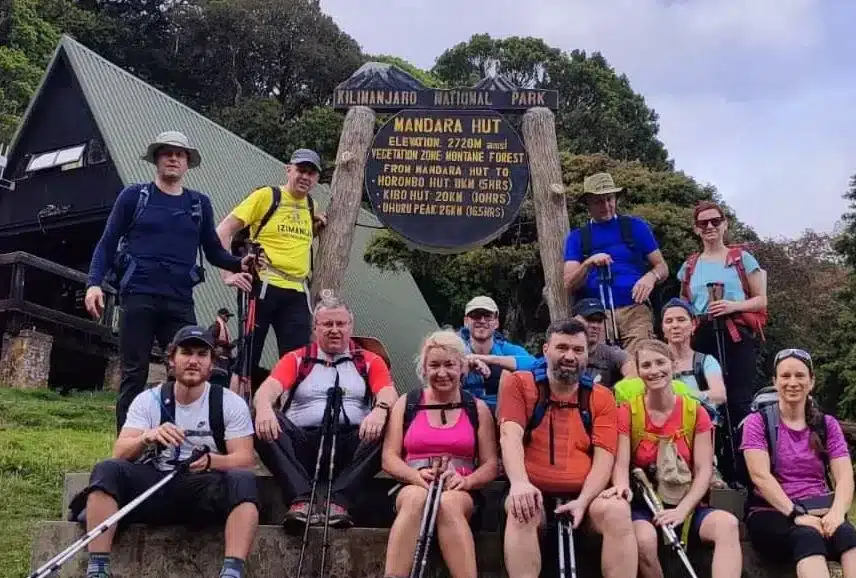
After approximately three hours of steady climbing on your day hike from Arusha, you’ll arrive at Mandara Hut, perched at 2,700 meters above sea level. This cluster of A-frame wooden cabins serves as the first overnight camp for multi-day trekkers, but for day hikers, it’s the perfect turnaround point—far enough to experience genuine altitude without overextending.
The elevation gain of nearly 900 meters provides a tangible taste of what high-altitude trekking feels like. Many hikers notice subtle changes here: slightly heavier breathing, perhaps a mild headache—gentle reminders that you’ve ascended into thinner air. This makes Mandara Hut an ideal educational stopping point where you can gauge your body’s response to altitude without committing to the extreme elevations that cause serious altitude sickness.
The hut area offers basic facilities including toilets and a picnic area where you’ll enjoy a packed lunch while gazing at the forest canopy below. On clear days, glimpses of Kibo Peak emerge through the trees, offering a tantalizing preview of Kilimanjaro’s summit still 3,195 meters above.
5. No Gear? No Problem! 🎒
The beauty of a day hike from Arusha to Kilimanjaro is that you won’t need the specialized mountaineering equipment required for summit attempts. Unlike multi-day expeditions that demand sleeping bags rated to -15°C, insulated parkas, and high-altitude trekking poles, your one-day adventure requires only basic hiking essentials you likely already own or can easily borrow.
Most tour operators provide packed lunches and sufficient water for the journey, meaning you’ll simply need comfortable hiking boots with ankle support, moisture-wicking layers, a lightweight rain jacket, and sun protection. A daypack holding 10-15 liters is perfectly adequate—no need for the 65-liter expedition packs that multi-day climbers haul to the summit. Your guide will handle navigation and safety equipment, leaving you free to focus entirely on the experience rather than gear logistics. This minimal-equipment approach makes the trek accessible to spontaneous travelers who haven’t packed for serious mountaineering.
6. Perfect Add-On to a Northern Circuit Safari 🦁🗺️
One of the smartest ways to experience Kilimanjaro without disrupting your safari itinerary is adding a day hike to your Northern Circuit adventure. Most travelers visiting Tanzania plan multi-day safaris through Serengeti, Ngorongoro Crater, or Tarangire National Park. A Kilimanjaro day hike slots perfectly into this schedule—requiring just one extra day rather than the week-plus commitment of a summit expedition.
Since Arusha serves as the gateway to Tanzania’s northern safari circuit, you’re already positioned at Kilimanjaro’s base camp starting point. The logistics are remarkably simple: morning departure from Arusha, afternoon return, minimal gear required. This efficiency means you won’t sacrifice precious safari days or face the exhausting recovery period that multi-day climbers need after summiting.
The combination delivers bucket-list diversity few trips can match—experiencing Africa’s highest peak and witnessing the Great Migration or Big Five encounters in a single journey, creating an adventure story that spans both vertical landscapes and wildlife-rich plains.
7. A Bucket-List Item Without the Altitude Burn 💥
A day hike on Kilimanjaro delivers the bucket-list thrill without the physical punishment of high-altitude climbing. While summit attempts require days of grueling ascent and come with success rates as low as 27% on shorter routes, a single-day trek to Mandara Hut guarantees achievement. You’ll experience the mountain’s iconic rainforest, spot wildlife, and earn legitimate bragging rights—all without the risk of altitude sickness or summit failure. It’s the perfect compromise for travelers who want Kilimanjaro on their resume without committing to a week-long expedition.
Sample Itinerary: 1-Day Marangu Route Hike 📋
Most day hikes follow a predictable timeline that balances exploration with safety. Your day typically begins with a pre-dawn pickup from your Moshi or Arusha accommodation, arriving at Marangu Gate around 7:00 AM for registration and briefing. The ascent to Mandara Hut takes approximately 3-4 hours through montane rainforest, where you’ll encounter colobus monkeys and towering eucalyptus trees. After lunch at the hut (elevation 2,720m/8,923ft), you’ll descend the same route, typically reaching the gate by mid-afternoon. The entire experience—including transport, meals, and guided trekking—spans roughly 10-12 hours, delivering maximum Kilimanjaro exposure without the commitment of multi-day expeditions.
Is the Mount Kilimanjaro Day Hike Right for You? ✅
A day hike suits adventure seekers who want authentic mountain exposure without committing to a week-long expedition. This option works best for travelers with limited time, moderate fitness levels, or those testing their interest in high-altitude trekking. However, the experience isn’t for everyone—the trek demands 6-8 hours of steady walking and altitude gains of 1,000+ meters, which can challenge even regular hikers unaccustomed to elevation changes.
Your Kilimanjaro in Africa Adventure Starts Now 🌄
The trail awaits, and your mountain story begins with a single step at Marangu Gate. Whether you’re testing your limits before committing to a summit attempt or seeking a condensed African adventure, this day hike delivers authentic Kilimanjaro exposure. You’ll walk the same paths that summit-bound climbers follow, experience the montane forest ecosystem, and return with stories that few travelers can claim. The transition from sea-level to mountain environment happens quickly—prepare for this adventure to challenge your expectations.
6:30 AM – 8:30 AM: Transfer to Marangu Gate
Your two-hour drive from Moshi town to Marangu Gate transforms from bustling streets to lush coffee plantations and Chagga villages. The journey covers approximately 45 kilometers through increasingly rural terrain, with the mountain growing larger in your windshield with each passing kilometer. Most operators provide this transfer as part of their day hike package, ensuring you arrive at the gate entrance refreshed and ready for registration formalities and final equipment checks.
8:30 AM – 12:30 PM: Hike to Mandara Hut
Your four-hour ascent through the montane rainforest covers approximately 8 kilometers with a 915-meter elevation gain from Marangu Gate (1,860m) to Mandara Hut (2,775m). The trail begins wide and well-maintained, winding through towering eucalyptus trees draped in moss and lichen, creating a cathedral-like canopy overhead.
The path alternates between gentle slopes and steeper sections where tree roots create natural staircases. You’ll maintain a deliberately slow pace—pole pole in Swahili—to conserve energy and allow your body to adjust to the thinning air. Your guide sets the rhythm, often pausing at scenic viewpoints where the forest opens to reveal glimpses of Moshi town far below.
Wildlife encounters add magic to the journey: colobus monkeys swing through the branches, their distinctive black-and-white fur flashing against the green canopy, while blue monkeys occasionally dart across the trail. The soundtrack includes the calls of silvery-cheeked hornbills and the rustling of unseen forest dwellers.
Around the halfway point, the vegetation shifts noticeably—tree ferns become more prominent, and the air grows cooler and thinner. This gradual transition previews the dramatic ecological changes you’ll experience on multi-day climbs to the summit. The final hour to Mandara Hut presents the steepest sections, testing your legs before you emerge into the clearing where the distinctive A-frame huts await.
12:30 PM – 1:30 PM: Lunch Break at Mandara Hut
Your midday meal at Mandara Hut provides essential refueling at 2,700 meters elevation after your morning ascent. The dining hut serves hot lunches prepared by your crew—typically soups, sandwiches, fresh fruit, and hot beverages to restore energy reserves. This hour allows your body to recover from the 915-meter climb while preparing for the afternoon descent, making proper hydration and calorie intake crucial for maintaining strength on the return journey.
1:30 PM – 4:30 PM: Descent to Marangu Gate
Your three-hour descent retraces the 8-kilometer rainforest trail from Mandara Hut (2,700m) back to Marangu Gate at 1,860 meters. The downward journey proves faster than your morning ascent but demands concentration—gravity accelerates your pace while loose rocks and exposed tree roots create slip hazards on the well-worn path. Trekking poles become essential for knee stabilization and balance control.
4:30 PM – 6:30 PM: Return to Hotel
Your two-hour return transfer delivers you from Marangu Gate back to your Moshi or Arusha accommodation by early evening. After collecting your summit certificate and completing park formalities, the vehicle departs through rural farmlands and villages as daylight fades. Most hikers arrive between 6:00-6:30 PM, depending on afternoon traffic and hotel location. The drive provides time to process the day’s achievement, review photos with fellow hikers, and plan your evening meal—your body will crave substantial calories after burning an estimated 3,000-4,000 during the trek.
Tour Reviews
The Kilimanjaro one-day hike consistently earns praise from adventurers who appreciate experiencing Africa’s highest mountain without committing to a multi-day summit attempt. Participants highlight the rewarding rainforest scenery, knowledgeable guides, and the unexpected challenge of the elevation gain within a compressed timeframe. Common feedback emphasizes the value of proper preparation—those who train for steep terrain beforehand report significantly more enjoyment during the ascent and descent phases of this intensive trek.
Leave a Review
Sharing your Kilimanjaro one-day hike experience helps future adventurers make informed decisions about this unique mountain challenge. Your honest feedback about trail conditions, guide performance, pacing, and overall satisfaction provides valuable insights that statistics and descriptions can’t capture. Whether you conquered Mandara Hut with energy to spare or found the altitude more challenging than expected, your perspective contributes to the community of travelers planning their own Tanzanian adventure.
You May Also Like
Exploring Kilimanjaro’s rainforest in a single day often sparks interest in Tanzania’s other adventure opportunities, from extended summit expeditions to wildlife safaris. Adventurers who enjoy the one-day hike frequently consider multi-day routes like the Machame or Lemosho trails, which offer higher summit success rates and better acclimatization profiles.
Day Trip
A Kilimanjaro day trip offers the perfect balance between experiencing Africa’s highest mountain and maintaining a manageable schedule for travelers with limited time. These single-day excursions allow you to walk through pristine rainforest ecosystems, gain altitude gradually, and return to your accommodation before nightfall, all while avoiding the physical demands and expenses of multi-day summit attempts that typically span 5-9 days.
Shira Plateau Day Hike
The Shira Plateau day hike ascends through moorland to reach one of Kilimanjaro’s most expansive high-altitude plateaus, offering dramatic volcanic landscapes at approximately 3,850 meters elevation. This route begins at the Londorossi Gate and follows a scenic path through heather zones before emerging onto the vast plateau formed by Kilimanjaro’s collapsed western summit. The trek provides breathtaking panoramic views across the Shira volcanic cone, with the main Kibo peak rising majestically in the distance—creating an otherworldly landscape that few day hikers ever experience.
Marangu Day Hike
The Marangu route offers the gentlest gradient for a day hike on Kilimanjaro, following the same path used by summit-bound trekkers along a well-maintained trail through lush rainforest. This approach reaches Mandara Hut at 2,720 meters (8,923 feet), making it the most accessible option for day hikers with moderate fitness levels. The trail’s nickname, “Coca-Cola Route,” reflects its relative ease compared to other Kilimanjaro paths.
What Are the Best Routes for a Day Hike on Mount Kilimanjaro?
The Marangu and Machame routes stand out as the most accessible options for day hiking, with Marangu’s gentle gradient making it ideal for families and less experienced hikers, while Machame offers more dramatic scenery despite steeper sections. The Shira Plateau route provides a unique high-altitude moorland experience but requires advance arrangements for vehicle access to the starting point at approximately 11,500 feet elevation, making it less practical for some visitors.
What Should I Pack for a One-Day Hike on Mount Kilimanjaro?
Pack layered clothing to adapt to Kilimanjaro’s rapidly changing temperatures, starting with moisture-wicking base layers and adding insulating mid-layers and a waterproof outer shell. The temperature can drop 15-20°F per 1,000 feet of elevation gain, making adaptability essential even on shorter hikes.
Essential gear includes sturdy hiking boots broken in beforehand, a daypack with water reservoir or bottles holding at least 2-3 liters, high-energy snacks like trail mix and energy bars, and sun protection including SPF 50+ sunscreen, sunglasses, and a wide-brimmed hat. Don’t forget a headlamp with extra batteries if starting early, trekking poles for stability on descents, and a basic first-aid kit containing altitude sickness medication, blister treatment, and pain relievers.
Pack lightweight rain gear regardless of season—afternoon showers occur frequently in the rainforest zone. Include gloves and a warm hat for higher elevations where temperatures regularly hover near freezing. A fully charged phone or camera captures memorable moments, while keeping your pack weight under 15 pounds ensures comfortable hiking throughout the day.
How Can I Prepare Physically for a Day Hike on Mount Kilimanjaro?
Focus on cardiovascular endurance through activities like jogging, cycling, or stair climbing for at least six weeks before your hike. Building stamina is crucial since even lower-altitude day hikes on Kilimanjaro involve sustained effort at elevations where oxygen levels decrease. Incorporate interval training to simulate the varying intensities you’ll encounter on mountain trails.
Strengthen your legs and core with targeted exercises like squats, lunges, and planks. These muscle groups bear the brunt of uphill trekking and stabilize you on uneven terrain. Practice hiking with a loaded daypack on local trails to condition your body to the actual weight you’ll carry, gradually increasing both distance and elevation gain over several training sessions.
Are There Guided Tours Available for a One-Day Hike on Mount Kilimanjaro?
Yes, guided tours are mandatory for all Kilimanjaro day hikes, as park regulations prohibit independent trekking without registered guides. Licensed operators provide everything from basic walking tours to comprehensive packages including transportation, meals, and specialized guides who understand altitude management and emergency protocols. Most reputable companies handle park permits, arrange experienced porters, and ensure proper safety equipment—critical for navigating variable weather conditions on the mountain’s lower slopes. Booking through established tour operators guarantees compliance with Kilimanjaro National Park requirements while providing local expertise that significantly enhances both safety and the overall hiking experience.
What is the Best Time of Year for a Day Hike on Mount Kilimanjaro?
The optimal windows for Kilimanjaro day hikes are January-March and June-October, coinciding with the mountain’s dry seasons when trails are most accessible and weather conditions remain stable. These periods offer clearer skies, minimal rainfall, and safer hiking conditions on the lower slopes where day hikes typically occur. The dry seasons also provide better visibility for photography and wildlife spotting along forested routes. Understanding that weather patterns on Kilimanjaro can be unpredictable even during dry months helps set realistic expectations—sudden afternoon showers remain possible year-round, particularly on the mountain’s southern slopes.
How Much Does a Permit Cost for a Day Hike on Mount Kilimanjaro?
Kilimanjaro National Park charges $70-$100 per person per day for park entry fees, which forms the base cost of any day hike permit. However, the total expense extends well beyond this single fee, as Tanzania National Parks Authority (TANPARA) requires multiple components: mandatory guide fees ($20-$30 daily), rescue fees ($20), camping fees (even for day hikes), and Value Added Tax (VAT). Most guided day hike packages range from $200-$400 per person, depending on group size and included services like transportation and meals.
The price structure reflects Tanzania’s conservation priorities—these fees directly fund park maintenance, ranger salaries, and environmental protection initiatives across Kilimanjaro’s fragile alpine ecosystems. Solo travelers typically pay premium rates, while larger groups benefit from cost-sharing on guide services and transportation. All fees must be paid in US dollars, and tourists should budget an additional 10-15% for guide tips, a customary practice that recognizes the essential role these professionals play in ensuring safe mountain experiences.
Before committing to a Kilimanjaro day hike, verify what’s included in quoted prices—reputable operators provide transparent breakdowns covering all mandatory fees, while budget options may advertise lower rates that exclude critical components. The investment in a quality guided experience not only ensures compliance with park regulations but also maximizes safety and educational value during your brief encounter with Africa’s highest peak.
👉 Book your Mount Kilimanjaro Tanzania day hike today with East Africa Travel Company. Let us guide you through the rainforest, to the heights of Mandara Hut, and back again with stories, memories, and jaw-dropping views.
📞 Call/WhatsApp: +255 784 411 852
🔗 Visit Us: East Africa Travel Company
| Destination | Mt Kilimanjaro |
|---|---|
| Arrival | |
| Departure Time | |
| Included | Day trip from Marangu Gate to Mandara Hut, Park Entry Fees, Professional Mountain Guide, Packed Lunch, Bottled Water, VAT, Transport from Moshi, Visa – MasterCard 3.5%, Money Transfer |
| Excluded | Tips/Gratuities, Personal Expenses, Travel Insurance, International Flights, Accommodation, Items Not Mentioned in Itinerary, Extra Drinks, Transfer from Arusha |
| Mt Kilimanjaro | |
6:30 AM – 8:30 AM: Transfer to Marangu Gate
Depart early from your hotel in Moshi and enjoy a scenic drive through the Tanzanian countryside. Upon arrival at the Marangu Gate (1,870m), you’ll register with park authorities and meet your certified mountain guide for a safety briefing.
Altitude: 1,870 m
Habitat: Montane Forest
8:30 AM – 12:30 PM: Hike to Mandara Hut
Begin your guided trek along the Marangu Route, winding through lush rainforest paths filled with towering trees, vibrant mosses, and the sounds of tropical birds. Keep your eyes open for black-and-white colobus monkeys along the trail.
Altitude: 2,700 m
Distance: ~8 km
Hiking Time: ~4 hours
Habitat: Rainforest
12:30 PM – 1:30 PM: Lunch Break at Mandara Hut
Arrive at Mandara Hut, nestled in the forest clearing. Enjoy a packed lunch while taking in panoramic views of the Maundi Crater and, on a clear day, distant glimpses of Kilimanjaro’s peaks. Your guide may offer a short walk to the crater rim for additional vistas.
Altitude: 2,700 m
Habitat: Rainforest
1:30 PM – 4:30 PM: Descent to Marangu Gate
Retrace your steps through the rainforest, descending back to the Marangu Gate. The downhill route offers new photographic opportunities and a relaxed pace to reflect on your one-day Kilimanjaro adventure.
Distance: ~8 km
Hiking Time: ~3 hours
Habitat: Rainforest
4:30 PM – 6:30 PM: Return to Hotel
After checking out at the park gate, your driver will transport you back to your hotel in Moshi or Arusha. Use the evening to unwind, relive the highlights of your trek, and prepare for your next Tanzanian adventure.
You May Also Like
Tour Reviews
There are no reviews yet.
Leave a Review