Mt Kilimanjaro 5 Days Marangu route offers a scenic, guided adventure with comfort and ease—perfect for climbers seeking a memorable experience.
The Marangu Route stands as Kilimanjaro’s most accessible path to Africa’s rooftop, offering sleeping huts instead of tents and a gentle gradient that attracts thousands of trekkers annually. Often called the “Coca-Cola Route,” this five-day journey combines comfortable accommodations with strategic acclimatization, making it ideal for first-time high-altitude climbers seeking a straightforward summit attempt.
🌄 Mt Kilimanjaro 5 Powerful Days Marangu Trek
The 5-day Marangu itinerary compresses Africa’s highest summit into one of Kilimanjaro’s shortest ascent windows. This accelerated timeline challenges trekkers with rapid elevation gain—from 1,860 meters at Marangu Gate to 5,895 meters at Uhuru Peak in just four days—before descending on day five. The route’s popularity stems from its hut accommodation system, which provides refuge from Tanzania’s unpredictable weather, yet this convenience comes with a trade-off: summit success rates hover around 50% for the five-day variant, significantly lower than extended itineraries. Each day builds progressively—Mandara Huts at 2,700m, Horombo Huts at 3,720m, then Kibo Huts at 4,703m—before the midnight summit push. However, this timeline leaves minimal room for acclimatization, making proper preparation and realistic fitness assessment critical for those considering this condensed adventure.
🏔️ 5-Day Marangu Route Park Fees (2026)
Climbing the Marangu route requires specific Tanzania National Park fees that vary by residency status. Foreign non-residents pay $983.80 per person (covering four nights inside the park), while the five-day itinerary’s park fee structure includes daily conservation fees, camping/hut charges, and rescue insurance. These mandatory costs support Kilimanjaro’s ecosystem preservation and trail maintenance infrastructure.
💰 $719.80 per adult foreign non-resident
The $719.80 total represents Tanzania National Parks Authority’s core park fees for day climbers on the 5-day Marangu route. This figure excludes mandatory rescue fees, camping/hut charges, and Value Added Tax—which push the comprehensive park fee total to $983.80 per person. Foreign non-residents pay premium rates compared to East African residents ($365 total) and Tanzanian citizens ($184 total), reflecting the differential pricing structure that funds park conservation and infrastructure maintenance across Kilimanjaro National Park.
📊 Park Fee Breakdown (5 Days – Marangu Route)
The 5 day Marangu route park fees structure separates into five distinct components that Tanzania National Parks Authority collects before your climb begins. Conservation fees total $353 per person ($70.60 daily × 5 days), while rescue fees add $20 per climber. Camping charges contribute $253 ($50.60 nightly × 5 nights at Marangu’s unique hut system), and crew fees include $40.30 per guide plus $12.70 per porter daily. Combined, these Tanzania National Park fees form your $719.80 baseline cost before operator services, gear, or transportation.
✅ Total Park Fees: $719.80
The $719.80 baseline represents mandatory Tanzania National Parks Authority charges every foreign non-resident pays on the 5 days Marangu route—before operator markups, guide salaries, equipment rentals, or meals enter the equation. This figure breaks into conservation fees ($882), rescue insurance ($200), camping/hut fees ($540), and transit charges ($0)—a non-negotiable foundation that shapes the true cost of your Kilimanjaro attempt. However, this is merely the starting point; most climbers pay $2,000–$3,500 total when factoring in guide teams, permits, and logistical support that operators coordinate.
🎒 Estimated Total Package Prices (2026)
Complete 5 day Marangu route packages typically range $1,350–$2,100 per person when combining Tanzania National Parks Authority fees with operator services. Budget operators quote closer to $1,350–$1,600, mid-range options settle around $1,700–$1,850, while premium packages reach $2,000–$2,100. These estimates bundle the $719.80 mandatory park fees with guide salaries, porter wages, mountain meals, camping equipment (though Marangu uses huts), and airport transfers. Group size dramatically influences per-person costs—solo travelers pay premium rates because fixed expenses like guide fees spread across one person, whereas eight-person groups share operational overhead. The per day Marangu cost averages $270–$420, positioning this route as Kilimanjaro’s most economical option primarily due to shared hut accommodations eliminating tent rental expenses and reducing porter requirements.
👨👩👧 Reduced Rates (VAT 18% Included)
Children ages 5–15 pay $120 less in Tanzania National Parks Authority fees—$599.80 instead of $719.80—making family expeditions more accessible. However, groups rarely include children on Marangu due to altitude risks and stamina requirements to climb safely. Most operators enforce minimum age policies of 10–12 years, prioritizing acclimatization capacity over cost savings.
⚠️ Important Payment Information
Payment schedules differ significantly between operators—some require 30% deposits upon booking, while others accept 50% upfront with the balance due 2–4 weeks before departure. Most companies do not refund Tanzania National Parks Authority fees if you cancel within 14 days of your route days, though travel insurance often covers medical emergencies or flight disruptions. Always verify currency conversion rates at booking time, as exchange fluctuations between dollars and Tanzanian shillings can shift your final cost by 3–5% over several months.
Why the 5‑Day Marangu Route Is So Powerful
The five‑day Marangu configuration strikes a rare balance between expedition efficiency and physiological adaptation—a compelling choice for time‑conscious trekkers seeking legitimate summit prospects. Unlike rushed itineraries, the standard Marangu route days allow critical acclimatization at Horombo Huts (3,720m) before the final push.
🗺️ Route Overview & Highlights
The Marangu Route Kilimanjaro ascent follows a distinct path that unfolds through five clearly defined ecological zones—each transition marking a dramatic shift in terrain, climate, and vegetation. Beginning at Marangu Gate (1,860m), the trail climbs through lush rainforest to Mandara Hut (2,720m) on day one, where towering trees give way to moorland. Day two advances across rolling heathland to Horombo Hut (3,720m), your acclimatization base with panoramic views of Mawenzi Peak.
What makes this route structurally unique is its up-and-down symmetry—you ascend and descend via the identical trail, reinforcing your familiarity with landmarks and simplifying logistics. The crucial acclimatization day at Horombo includes a high-altitude hike toward Mawenzi, pushing your body to adapt before the summit push.
Day four covers the longest distance to Kibo Hut (4,700m), crossing the stark alpine desert where oxygen thins and vegetation disappears entirely. The most popular trekking routes on Kilimanjaro – the latest figures confirms this traditional configuration remains widely chosen for its straightforward approach—though summit night from Kibo demands mental fortitude as you ascend 1,195 vertical meters in darkness toward Uhuru Peak at 5,895m.
🌟 Fun Facts You’ll Love
Mount Kilimanjaro holds fascinating distinctions that extend far beyond its status as Africa’s highest peak. The mountain spans three volcanic cones—Kibo, Mawenzi, and Shira—with the youngest, Kibo, being the only one still classified as dormant rather than extinct. At 5,895 meters, Kilimanjaro is the world’s tallest free‑standing mountain, rising in dramatic isolation from the surrounding plains rather than as part of a mountain range.
The Marangu Route’s historic huts represent Tanzania’s oldest mountain accommodation system, built decades ago and continuously maintained—making this the only Kilimanjaro route where climbers sleep under a roof every night. Another compelling detail: the summit success rate varies dramatically by route, with proper acclimatization schedules significantly impacting outcomes. The mountain generates its own weather patterns due to its massive elevation, creating microclimates that shift between ecological zones within hours. These remarkable characteristics shape every aspect of your five‑day journey, influencing everything from packing strategies to daily hiking rhythms—all practical considerations worth exploring as you prepare for summit day.
✅ Pro Tips for Mt Kilimanjaro in Tanzania
Success on the Marangu Route hinges on strategic preparation that addresses the mountain’s unique challenges. Start acclimatization training at least six weeks before departure—focus on cardiovascular endurance through hiking at elevation if possible, as arriving pre-conditioned significantly impacts summit success rates.
Pack layers strategically for the dramatic temperature swings. Temperatures plummet from 70°F at Mandara Hut to below zero at Uhuru Peak, so invest in quality thermal base layers, insulated jacket, and waterproof shell. Via the Marangu Route’s steady ascent, proper gear becomes your primary defense against altitude and weather.
Hydration makes or breaks summit attempts—aim for 3-4 liters daily, even when you don’t feel thirsty. Altitude suppresses thirst signals while increasing fluid loss through respiration. Electrolyte tablets help maintain balance during the demanding climb days.
Walk deliberately slow throughout the trek. “Pole pole” (slowly slowly) isn’t a cliché—it’s evidence-based strategy. Rushing early stages depletes energy reserves needed for summit night and increases altitude sickness risk.
Mental preparation matters as much as physical fitness. Summit night tests resolve through darkness, cold, and oxygen deprivation. Visualize success during training, break the climb into manageable segments, and remember that discomfort is temporary—the achievement lasts forever. Understanding these practical realities transforms ambitious goals into achievable milestones on Tanzania’s iconic peak.
📸 Highlights From the Trail
The Marangu Route climb transforms ordinary trekkers into summit achievers through a series of breathtaking visual moments. Starting in the lush rainforest where colobus monkeys swing overhead, the journey reveals dense vegetation dripping with moss and lichens. As elevation increases, the landscape shifts dramatically to moorland zones painted with giant groundsels and lobelias—otherworldly plants found nowhere else on Earth.
Kibo Hut at 4,700 meters marks the most memorable vista point, where glaciers gleam under starlight before the midnight summit push. The crater rim at Gilman’s Point showcases volcanic formations and ice cliffs that seem frozen in time. However, the ultimate visual reward arrives at Uhuru Peak, where sunrise illuminates the African plains stretching endlessly below, clouds forming a cotton blanket beneath your feet. The Marangu Route’s completion rates reflect these unforgettable moments that define the experience.
Why This Trek Belongs In Your Bucket List
The Marangu Route climb delivers an extraordinary achievement with the perfect balance of accessibility and adventure. Standing at 19,341 feet, Kilimanjaro’s summit represents Africa’s highest point—a milestone that fewer than 50,000 people reach annually despite nearly 35,000 attempting the climb. This trek transforms ambitious travelers into verified mountaineers without requiring technical climbing skills or expensive specialized gear.
What sets this route apart is its remarkable success-to-challenge ratio. The hut accommodations eliminate weather-related tent failures, while the gradual five-day ascent profile helps climbers adapt to altitude naturally. However, the real magic lies in the journey itself—witnessing five distinct climate zones in less than a week, from tropical rainforest to arctic summit conditions, creates a condensed planetary experience found nowhere else on Earth.
Beyond personal achievement, conquering Kilimanjaro through this accessible route opens doors to a deeper understanding of high-altitude trekking. The lessons learned about pacing, acclimatization, and mental resilience translate directly to other mountain adventures worldwide, making this trek an ideal foundation for future mountaineering goals.
Who Should Choose This Trek?
The Marangu Route appeals to first-time high-altitude climbers who want structured accommodation and a straightforward path to Africa’s highest peak. The route’s 70-90% summit success rate makes it particularly attractive for those seeking reliable results without technical climbing skills.
This trek suits travelers who appreciate comfort after long hiking days—the mountain huts provide shelter, sleeping platforms, and dining areas that eliminate camping concerns. However, climbing Kilimanjaro via Marangu demands respect for altitude: the compressed five-day schedule requires strong cardiovascular fitness and mental determination. Those prone to altitude sickness might struggle with the rapid ascent profile. The ideal Marangu climber balances ambition with realism—someone physically active but not necessarily an experienced mountaineer. If you’ve completed multi-day hikes before and can handle 6-8 hours of walking daily, you’re ready for this challenge.
⚠️ Quick FAQs
How long does the 5-day Marangu Route actually take? The trek spans five full days from gate to gate, with summit night beginning around midnight on day four. Most climbers return to the park entrance by late afternoon on day five, making the total experience approximately 120 hours of trekking, resting, and acclimatization combined.
Can beginners really summit Kilimanjaro on this route? Yes—the Marangu Route maintains a 65% success rate, making it accessible for first-time high-altitude trekkers. However, proper preparation and realistic fitness expectations significantly improve your chances of reaching Uhuru Peak successfully.
What’s included in typical Marangu Route packages? Standard packages cover park fees, hut accommodations, three meals daily, professional guides and porters, and emergency oxygen. Most operators also include airport transfers, pre-trek hotel stays, though personal gear rentals, and tips remain separate expenses requiring budgeting consideration. When should I book my Kilimanjaro trek? Reserve your spot 4-6 months ahead for peak season climbs (January-March, June-October). The Marangu huts operate on a first-come basis, and popular departure dates fill quickly, especially during optimal weather windows when conditions favor summit attempts.
🌍 Experience the Tanzania Northern Circuit Too!
Extend your Kilimanjaro adventure with Tanzania’s renowned Northern Circuit safaris. Most climbers combine their Marangu trek with wildlife viewing in Serengeti National Park, Ngorongoro Crater, or Tarangire—all within a few hours’ drive from the mountain. The contrast between summit snows and savanna plains creates an unforgettable African experience that showcases Tanzania’s extraordinary biodiversity in a single journey.
Ready to Climb Mt Kilimanjaro?
The Marangu Route awaits climbers who value structured comfort and clear daily objectives. This classic path combines hut accommodation with scenic variety, making Africa’s highest peak accessible without sacrificing the thrill of summit success. Your five-day journey begins at Marangu Gate, where the rainforest canopy opens onto a well-maintained trail that’s guided thousands to Uhuru Peak.
08:00–17:00: Marangu Gate to Mandara Hut
Your Kilimanjaro adventure begins at Marangu Gate (1,860m), where registration and porter organization typically take 1-2 hours. The 8km trail to Mandara Hut (2,700m) winds through lush montane rainforest, with giant ferns and colobus monkeys creating an immersive jungle atmosphere. Most climbers reach the hut after 4-5 hours of steady hiking, gaining 840 meters of elevation. The well-maintained path features wooden steps and bridges, making this first day surprisingly comfortable—though the humidity can be challenging for those from drier climates.
08:00–16:00: Mandara Hut to Horombo Hut
Day two covers 12km through Kilimanjaro’s moorland transition zone, ascending 1,000 meters to Horombo Hut at 3,720m. The trail exits montane forest within the first hour, revealing expansive views across the saddle between Mawenzi and Kibo peaks. Vegetation shifts dramatically as giant heathers give way to scattered protea bushes and the first alpine desert plants—a visible reminder that oxygen levels drop approximately 15% from Mandara. The steady climb typically takes 6-8 hours, allowing proper acclimatization pacing before the critical elevation gains ahead. Hydration becomes increasingly important here, as the drier air accelerates moisture loss even during moderate exertion.
08:00–15:00: Horombo Hut to Kibo Hut
Day four’s 10km trek crosses the alpine desert zone to Kibo Hut (4,700m), the staging point for your summit attempt. The landscape transforms dramatically—vegetation disappears entirely, replaced by volcanic rock and lunar-like terrain as you traverse “The Saddle, ” a high-altitude plateau between Mawenzi, and Kibo peaks. The trail gains 1,000 meters over roughly 6-7 hours, with temperatures dropping noticeably as you approach Kibo. Water becomes precious here; the hut’s supplies are limited, so carry sufficient reserves. Upon arrival by mid-afternoon, porters serve an early dinner around 17:00, after which you should attempt 3-4 hours of rest before the midnight summit push. However, altitude typically makes sleep difficult—lying down with eyes closed still provides crucial physical recovery even without actual sleep.
00:00–18:00: Kibo Hut to Uhuru Peak to Horombo Hut
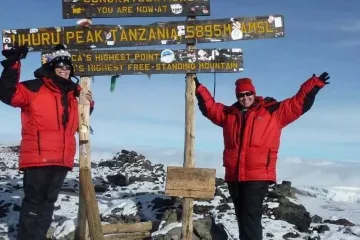
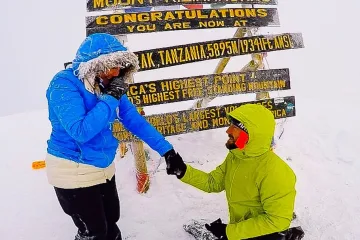
Summit day requires midnight departure for a 6km ascent to Uhuru Peak (5,895m), followed by 15km descent to Horombo Hut—a grueling 16–18 hour push. Your guide wakes you around 23:00 for hot tea and biscuits before the 00:00 start, timed to reach Gilman’s Point (5,685m) at sunrise and summit by mid-morning before afternoon clouds roll in. The climb from Kibo to Gilman’s Point zigzags steep scree slopes in darkness, with headlamps creating a chain of lights up the mountain. Pole pole becomes critical here as altitude affects coordination and judgment. After Gilman’s Point, the final 1.5-hour traverse along the crater rim to Uhuru Peak tests mental resolve more than physical strength. Most climbers spend 15–30 minutes at the summit for photos before beginning the descent, returning to Kibo Hut for brief rest and lunch before continuing down to Horombo Hut. The long descent from summit to Horombo—covering nearly 2,200 vertical meters—places enormous stress on knees and ankles, making trekking poles essential for stability on loose volcanic trails.
07:00–14:00: Horombo Hut to Marangu Gate to Moshi
The final 20km descent retraces your route through moorland and rainforest to Marangu Gate, where you’ll receive your summit certificate before transferring back to Moshi. Your knees will feel the impact of continuous downhill hiking, so trekking poles become essential. The vegetation grows lusher as you descend, with colobus monkeys often visible in the canopy by mid-afternoon. At Marangu Gate, porters and guides celebrate successful summits with traditional songs while you complete park formalities. Most climbers reach the gate by 14:00, allowing time for a hot shower and celebratory meal in Moshi that evening.
Tour Reviews
Most trekkers rate the Marangu Route highly for its structured pace and comfortable hut accommodations, though summit success heavily depends on choosing operators who prioritize acclimatization over speed. According to recent Kilimanjaro statistics, the route averages a 65% summit success rate—significantly lower than longer itineraries on other routes, primarily because many operators still offer inadequate 5-day programs instead of the recommended 6-day trek.
Leave a Review
Your trek experience helps future climbers make informed decisions about the Marangu Route. Share details about your guide’s performance, the actual difficulty compared to expectations, hut conditions, and whether the pace allowed proper acclimatization. Honest feedback about summit success factors—particularly how your operator handled altitude sickness protocols and rest day decisions—proves invaluable for trekkers researching which companies prioritize safety over speed.
You May Also Like
Climbers interested in the Marangu Route often explore alternatives like the Machame or Lemosho routes, which offer tent camping and different scenic perspectives of Kilimanjaro’s ecosystems. These alternatives provide varied acclimatization profiles worth considering based on your trekking preferences.
Your Cart is Empty
Ready to transform your Kilimanjaro dream into reality? Add your 5-day Marangu Route trek package to begin the booking process and secure your summit attempt dates with experienced guides.
climbing kilimanjaro in 5 days
The 5-day Marangu Route represents Kilimanjaro’s most accelerated ascent timeline—a compressed schedule that challenges even experienced trekkers with rapid elevation gain. This abbreviated itinerary eliminates the crucial acclimatization day at Horombo Huts, creating a race against altitude where success rates hover around 50-60% compared to the 6-day version’s improved outcomes. However, time-constrained climbers increasingly choose this option despite the physiological demands. The route covers identical terrain but compresses rest periods, requiring strong cardiovascular fitness and mental resilience as your body fights to adapt to thinning oxygen levels while maintaining summit push readiness.
Are there any altitude sickness precautions for a 5-day Marangu climb?
The compressed 5-day timeline significantly increases altitude sickness risk, making preventive measures absolutely critical for summit success. The rapid ascent from Mandara Hut (2,720m) to Kibo Hut (4,703m) leaves minimal time for proper acclimatization, creating conditions where even experienced trekkers face challenges.
The most effective precaution is diamox (acetazolamide) prophylaxis, typically started 24 hours before ascent at 125mg twice daily. This medication accelerates acclimatization by increasing respiration rate and reducing fluid retention at altitude. However, consult your physician beforehand, as side effects include tingling extremities and increased urination.
Hydration protocols become non-negotiable on the 5-day route—aim for 4-5 liters daily, even when not thirsty. Dehydration mimics and worsens altitude sickness symptoms, making proper fluid intake your simplest defense mechanism. “Pole pole” (slowly, slowly) isn’t just a mantra; maintaining a deliberately slow pace allows your body maximum oxygen processing time during the rushed schedule.
Recognition of early symptoms separates successful summits from evacuations. Headache, nausea, and sleep disturbances warrant immediate attention. If symptoms persist despite rest and hydration, descending even 300-500 meters typically provides relief—pride should never override safety decisions at altitude.
With proper preparation and precautions, you’ll be ready to consider the essential equipment that makes these altitude strategies effective on Africa’s highest peak.
What equipment and gear are essential for a 5-day Marangu trek?
The Marangu route’s hut accommodations eliminate tenting needs, but temperature extremes still demand comprehensive layering systems. A four-season sleeping bag rated to -10°F handles summit night conditions, while moisture-wicking base layers prevent hypothermia during rapid weather shifts. Quality waterproof-breathable jackets and pants protect against Kilimanjaro’s unpredictable rainfall patterns at varying elevations.
Essential gear includes broken-in hiking boots with ankle support, insulated gloves capable of handling sub-freezing temperatures, and UV-protective sunglasses for the glacier zone. Trekking poles reduce knee strain during steep descents—critical on Marangu’s compressed timeline. However, the accelerated schedule leaves minimal room for equipment failures, making backup essentials like
- extra batteries
- headlamp bulbs
- blister treatment supplies non-negotiable.
Altitude-specific items separate successful summits from turnarounds: hydration systems holding 3+ liters prevent dehydration at thin-air elevations, while electrolyte supplements counteract mineral depletion. Pack a comprehensive first-aid kit, prescription medications in original containers, and Diamox tablets if pre-approved by your physician. Understanding what accommodations provide helps optimize your pack weight for the challenging trek ahead.
What are the accommodation options like on the Marangu route?
The Marangu route offers permanent hut accommodations at each camp, making it the only Kilimanjaro route where trekkers sleep in dormitory-style structures rather than tents. These A-frame wooden huts provide bunk beds with mattresses, though climbers must bring their own sleeping bags, and additional insulation layers for the colder nights at higher elevations. Each hut features communal dining halls with tables, seating, creating a social atmosphere where trekkers from different groups share meals, and experiences. The facilities include basic bathrooms with running water at lower elevations, though these become increasingly rudimentary as altitude increases. At Kibo Hut, the highest camp, facilities are minimal due to extreme conditions and freezing temperatures. The structured accommodations attract climbers who prefer comfort over camping, contributing to Marangu’s designation as the “Coca-Cola route.” However, this convenience comes with trade-offs—limited privacy in shared dormitories and fixed camp locations that eliminate flexibility in acclimatization schedules, factors that become particularly relevant when comparing how different routes address altitude challenges and scenic variety.
How does the Marangu route compare to other routes on Mt Kilimanjaro in terms of difficulty and scenery?
The Marangu route ranks as moderately difficult among Kilimanjaro’s seven established trails, offering a gentler gradient than technical routes like the Western Breach but presenting steeper challenges than the longer Lemosho or Northern Circuit paths. The steady 4-6 hour daily ascents favor gradual acclimatization, though the compressed 5-day timeline increases altitude sickness risk compared to 7-8 day alternatives on other routes.
Scenically, Marangu follows a more limited ecological spectrum. While trekkers traverse rainforest, moorland, and alpine desert zones, the route ascends and descends the same southeastern face—missing the dramatic barranco walls of Machame or the remote wilderness panoramas found on Rongai’s northern approach. However, the permanent hut infrastructure creates a social atmosphere absent from tent-based routes, where climbers interact with diverse international groups each evening. One practical consideration is that Marangu’s well-maintained trail and consistent facilities make it ideal for first-time high-altitude trekkers, though the scenery may feel repetitive compared to circuit routes that explore multiple mountain flanks.
The Marangu Route Is One of the Most Popular Trails in Kilimanjaro
The Marangu route consistently ranks among Kilimanjaro’s top three most-traveled paths, accounting for a significant portion of annual summit attempts. Its popularity stems from the unique hut accommodation system and relatively straightforward terrain. However, recent climbing statistics show it now trails behind the Machame and Lemosho routes in total climbers, as trekkers increasingly seek wilderness camping experiences and higher success rates offered by longer acclimatization schedules on alternative routes.
The Moderate Slope Makes It Less Difficult to Climb
The Marangu route’s gradual ascent profile reduces physical strain compared to steeper alternatives, with an average gradient of 8-12% across most of the trail. This gentler incline allows trekkers to maintain a steady “pole pole” pace without the cardiovascular intensity required on routes like Umbwe or the Western Breach. The well-maintained path eliminates technical scrambling sections, making it accessible to climbers without mountaineering experience. However, the moderate slope shouldn’t breed complacency—altitude remains the primary challenge, and the route’s shorter acclimatization window affects summit success rates regardless of terrain difficulty. This accessible gradient partly explains why Marangu attracts first-time high-altitude trekkers, though proper pacing and hydration remain essential for success. With this understanding of the route’s physical characteristics, let’s examine exactly how these moderate slopes play out across each day’s climbing schedule.
What Is the Daily Itinerary for a 5-Day Marangu Route Climb on Mt Kilimanjaro?
The 5-day Marangu route follows a structured progression through five distinct ecological zones, starting at Marangu Gate (1,860m) and culminating at Uhuru Peak (5,895m). Day one covers approximately 8km through rainforest to Mandara Hut (2,700m), typically requiring 4-5 hours of hiking. Day two advances 12km across moorland to Horombo Hut (3,720m) over 6-7 hours, where most climbers experience their first altitude effects.
The third day presents a crucial 15km push through alpine desert to Kibo Hut (4,700m), taking 6-8 hours as oxygen levels decrease noticeably. Day four begins summit night—departing around midnight for a 6-7 hour ascent to Uhuru Peak, followed by descent to Horombo Hut, creating the longest and most challenging 14-16 hour day. The final day completes a 20km descent through all zones back to Marangu Gate, typically finished in 5-6 hours.
Each overnight stop provides meals, water, and basic sleeping facilities. However, this compressed schedule offers minimal acclimatization time, contributing to lower success rates compared to longer routes. Understanding these daily demands helps climbers prepare physically and mentally for the trek ahead.
How Can I Prepare Physically for a 5-Day Trek on the Marangu Route?
Build cardiovascular endurance through consistent aerobic training at least 8-12 weeks before your climb, focusing on activities that elevate your heart rate for extended periods. Hiking with a weighted backpack (15-20 pounds) on inclines most effectively simulates Kilimanjaro conditions, though cycling, swimming, and stair climbing provide excellent alternatives. Aim for 4-5 training sessions weekly, progressively increasing duration from 30 minutes to 2+ hours as your departure date approaches.
Incorporate strength training twice weekly to prepare your legs, core, and stabilizer muscles for the sustained effort of multi-day trekking. Exercises like lunges, squats, step-ups, and calf raises directly translate to improved performance on Marangu’s gradual but relentless ascent. Mental preparation matters equally—practice hiking in varying weather conditions and challenging yourself when fatigued to build the psychological resilience needed for summit night. A common pattern is gradually reducing training intensity during the final week before departure, allowing your body to recover fully while maintaining fitness. This tapering approach helps you arrive in Tanzania energized rather than overtrained, positioning you for success on the mountain.
What Is the Best Time of Year to Climb Mt Kilimanjaro via the Marangu Route?
The optimal climbing windows for the Marangu route are January through mid-March and June through October, when weather conditions offer the clearest skies and driest trails. These periods align with Tanzania’s dry seasons, providing the most stable conditions for summit attempts.
The January-March window delivers warmer temperatures and spectacular visibility, though occasional brief afternoon showers may occur in March. This period attracts fewer crowds compared to the northern hemisphere summer, offering a more serene experience on the trail. Temperature variations remain manageable, with summit conditions typically ranging from -10°C to -20°C.
June through October represents the peak climbing season, with July and August seeing the highest trail traffic. This window guarantees the driest conditions, though nights can be considerably colder. The trade-off between optimal weather and crowded huts becomes a consideration—booking several months in advance becomes essential during these months.
However, the April-May and November rainy seasons present significant challenges for Marangu climbers. Heavy precipitation transforms trails into muddy corridors, reduces visibility dramatically, and increases the difficulty of the final summit push. While these off-season rates may seem attractive, the compromised experience and lower success rates rarely justify the savings.
One practical approach is targeting the shoulder periods of late January or early October, when weather remains favorable while crowds diminish. These strategic timing choices often deliver the best balance of conditions and experience quality for your summit attempt.
What Equipment and Gear Are Essential for a 5-Day Marangu Trek?
Your essential gear list must include a four-season sleeping bag rated to -10°C, insulated waterproof boots, and layered clothing for temperature extremes ranging from tropical to sub-zero conditions. The Marangu route’s hut accommodation eliminates the need for personal tents, allowing you to focus weight and budget on quality thermal and weather protection gear. Your packing strategy should prioritize the “layering system”—base layers for moisture management, insulation layers for warmth retention, and outer shells for wind and precipitation protection. Critical technical items include trekking poles for stability on steep sections, a headlamp with extra batteries for the pre-dawn summit push, and high-quality sunglasses with UV protection for the intense equatorial sun at altitude. A daypack (25-30 liters) carries your daily essentials while porters handle your main duffel bag. Proper preparation with the right equipment significantly impacts your comfort and summit success, making gear selection as important as physical training for this memorable Kilimanjaro adventure.
How Much Does a Guided 5-Day Marangu Route Climb Typically Cost?
A guided 5-day Marangu route climb typically costs between $1,500 and $2,500 per person, with pricing variations depending on group size, tour operator quality, and included amenities. Budget operators may offer packages as low as $1, 200, while premium services with experienced guides, better equipment can exceed $2, and 800. These prices generally include
- park fees ($800-$1
- 000)
- guide
- porter wages
- meals
- hut accommodations along the route.
Group size significantly impacts per-person costs—joining a larger group typically reduces individual expenses by 20-30% compared to private climbs. However, cheaper packages often cut corners on guide experience, food quality, or proper porter treatment. Premium operators investing in safety equipment, comprehensive pre-climb briefings, and ethical labor practices justify higher prices through improved summit success rates and overall experience quality.
Understanding exactly what’s included helps avoid surprise expenses that can add $200-$400 to your budget, making accommodation choices a crucial consideration as you plan your ascent.
What Are the Accommodation Options Like on the Marangu Route?
The Marangu route features permanent mountain huts with bunk beds, making it the only Kilimanjaro route where trekkers sleep in dormitory-style buildings rather than tents. Mandara Hut (2,700m) accommodates climbers on day one with 60-bed capacity spread across multiple A-frame structures, while Horombo Hut (3,720m) serves as both the second and fourth night’s accommodation with 120 bunks offering panoramic views of Mawenzi Peak.
Kibo Hut (4,703m), positioned at the highest elevation, provides more basic shelter for 60 climbers before summit attempts, with minimal insulation against the thin mountain air. Each hut facility includes communal dining halls, basic toilet blocks, solar lighting in common areas, and though individual sleeping quarters remain unheated. However, these amenities don’t guarantee comfort—bunks are thin foam mattresses, and snoring strangers become part of the experience in shared dormitories that typically house 4-8 trekkers per room. The permanent structures mean you’ll carry lighter packs compared to camping routes, but you’ll sacrifice privacy and temperature control. What typically happens is that early-season climbers find huts less crowded, while peak months see every bunk occupied and bathroom queues stretching outside during morning hours.
How Does the Marangu Route Compare to Other Routes on Mt Kilimanjaro in Terms of Difficulty and Scenery?
The Marangu route ranks as moderately difficult with lower success rates than longer alternatives, primarily due to its compressed acclimatization schedule. While the 5-day Marangu route has a 50% summit success rate, the Lemosho and Machame routes achieve 85-90% success because they allow more gradual altitude adjustment over 7-8 days.
Scenically, Marangu offers consistent rainforest, moorland views but lacks the dramatic variety of routes like Machame, and which traverses five distinct climate zones. However, Marangu’s comfortable hut accommodations and well-maintained trails make it ideal for trekkers prioritizing convenience over wilderness immersion. One practical approach is choosing Marangu for a first African climb, then attempting more challenging routes like the Western Breach on return visits. Your choice ultimately depends on balancing success probability against time constraints—if you have an extra 2-3 days, routes with gentler ascent profiles significantly improve your summit chances while delivering more diverse landscapes.
📞 Call/WhatsApp: +255 784 411 852
🔗 Visit Us: East Africa Safari Tanzania
🌐 Book your Tanzania Northern Circuit safari today—spots fill fast!
Let us help you trek mount kilimanjaro tanzania with confidence and comfort—it’s your time to shine at the kilimanjaro peak!
| Destination | Mt Kilimanjaro |
|---|---|
| Arrival | Kilimanjaro International Airport (JRO) |
| Departure Time | Yes Require |
| Included |
✅ Included (all prices include VAT)
|
| Excluded |
❌ Not included
|
| Mt Kilimanjaro | |
08:00–17:00: Marangu Gate to Mandara Hut
Kickstart your Kilimanjaro adventure with a scenic drive from Moshi to the Marangu Gate (1,870m). After registration and a final gear check, begin your rainforest hike. Enjoy sightings of black-and-white colobus monkeys and colorful birds as you ascend to Mandara Hut (2,700m). Settle in for the evening with tea, dinner, and rest.
Altitude: 2,700m
Distance: ~8 km
Hiking Time: 4–5 hours
Habitat: Montane Forest
08:00–16:00: Mandara Hut to Horombo Hut
After a hearty breakfast, continue upward through the last stretch of rainforest into moorland terrain. The trail opens to panoramic views of Mawenzi and Kibo Peaks. You’ll pass unique vegetation like giant lobelias and groundsels before arriving at Horombo Hut (3,720m) to acclimatize and unwind.
Altitude: 3,720m
Distance: ~12 km
Hiking Time: 6–8 hours
Habitat: Moorland
08:00–15:00: Horombo Hut to Kibo Hut
Today’s hike crosses the expansive alpine desert of “The Saddle” between Mawenzi and Kibo. The terrain is stark and dramatic with minimal vegetation. It’s a steady, gradual ascent to Kibo Hut (4,703m), where you’ll have dinner and sleep early in preparation for the summit attempt.
Altitude: 4,703m
Distance: ~10 km
Hiking Time: 5–7 hours
Habitat: Alpine Desert
00:00–18:00: Kibo Hut to Uhuru Peak to Horombo Hut
Your summit push begins at midnight. Follow steep switchbacks past Gilman’s Point (5,681m) and Stella Point to reach Uhuru Peak (5,895m)—Africa’s highest point. After celebrating and taking photos at the summit, descend back to Kibo Hut for rest and lunch, then continue on to Horombo Hut for a full night’s rest.
Altitude: 5,895m (Uhuru Peak)
Distance: ~22 km
Hiking Time: 12–14 hours
Habitat: Arctic to Alpine Desert to Moorland
07:00–14:00: Horombo Hut to Marangu Gate to Moshi
After breakfast, descend through the moorland and into the rainforest, retracing your steps to Marangu Gate. Receive your summit certificate and meet your driver for the return trip to Moshi. A warm shower, soft bed, and well-earned celebration await you!
Altitude: 1,870m
Distance: ~20 km
Hiking Time: 5–7 hours
Habitat: Moorland to Montane Forest


Tour Reviews
Nec faucibus placerat ullamcorper parturient Tortor malesuada hendrerit placerat consectetuer senectus rutrum montes habitant feugiat habitant fusce ornare aptent class.
Leave a Review