Mt Kilimanjaro in Africa 7 Days Machame route is a powerful, scenic climb with expert guides—ideal for an unforgettable summit adventure.
Standing at 19,341 feet, Mount Kilimanjaro is Africa’s rooftop—a dormant volcanic giant that draws roughly 35,000 trekkers annually to its legendary summit. Seven days on the mountain transforms ordinary travelers into mountaineers, ascending through five climate zones from tropical rainforest to arctic ice fields. The Machame and Lemosho routes offer the perfect week-long journey: challenging enough to feel earned, yet accessible to anyone with determination and proper acclimatization.
🗻 Mt Kilimanjaro in Africa 7 Epic Days to the Top of Tanzania
How many people actually reach Uhuru Peak each year? According to official records, roughly 35,000 adventurers attempt the summit annually, with overall success rates varying dramatically from 27% to 85% depending on route selection and acclimatization time. The seven-day window strikes a practical balance—long enough for proper altitude adjustment yet condensed enough to fit standard vacation schedules. Routes like Machame and Lemosho routes deliberately build in rest days at strategic elevations, transforming what could be a punishing sprint into a methodical ascent through five distinct climate zones.
Machame Route – 7-Day Park Fees (2026)
Climbing Mount Kilimanjaro in Tanzania, Africa’s highest peak, requires paying multiple park fees administered by TANAPA (Tanzania National Parks Authority). For the Machame Route—one of the most popular seven-day climbing itineraries—here’s the complete fee breakdown that applies to every climber:
Per-Person Park Fees (7 Days):
- Conservation Fee: USD 70/day × 7 = USD 490
- Camping Fee: USD 60/night × 6 = USD 360
- Rescue Fee (mandatory): USD 20 (one-time)
- VAT (18%): Applied to all fees above
Important note: These are strictly climber fees. Your mountain crew (guides, porters, cooks) requires separate park entry permits paid by your tour operator, which indirectly affects your total package price but doesn’t appear in this calculation.
✅ Total Park Fees: USD 967.60
For the 7-day Machame Route, adult non-residents pay USD 967.60 in total park fees. This fixed cost, set by Tanzania National Parks Authority (TANAPA), covers conservation access, camping, rescue services, and VAT—essential infrastructure supporting approximately 50,000 annual climbers. While substantial, these fees maintain trail safety and contribute to low fatality rates; mount kilimanjaro deaths average fewer than 10 annually, making it statistically safer than many technical peaks. Every dollar funds rescue operations and medical facilities that protect climbers throughout their journey.
Park Fee Breakdown (Adult Non-Resident)
Reaching Mount Kilimanjaro height of 5,895 meters requires paying several distinct fees. Conservation fees cost USD 784.00 (USD 98/day × 8 days, including summit day). The camping fee totals USD 700.00 (USD 70/night × 10 nights). Rescue fees add USD 28.00 (USD 20 for TANAPA + USD 8 for Kilimanjaro Association of Tour Operators). The VAT charge of USD 35.60 applies to all taxable services. Combined, these mandatory charges total USD 967.60 for every adult non-resident climber on the 7-day Machame trek.
Estimated Total Trek Cost (Including Operator Services) – 2026
When you budget to climb Kilimanjaro on the 7-day Machame Route, expect total costs between USD 2,100–3,500 per person. This range includes the USD 967.60 in park fees plus operator services: guides, porters, meals, tents, and transfers. Budget operators charge USD 1,500–2,100, mid-range companies USD 2,200–2,800, and premium outfitters USD 2,900–3,500. Price variations reflect group size (larger groups reduce per-person costs), equipment quality (three-season versus four-season tents), porter welfare standards, and guide-to-client ratios—factors that directly impact your 7-day success rates reaching 85%.
Special Rates & Discounts (2026)
Tanzania offers reduced fees for younger trekkers and East African residents. Children aged 5–15 pay USD 300 per trek instead of the standard USD 800—a 62.5% discount that makes family expeditions more accessible. If you’re planning to climb Mt Kilimanjaro with kids, this represents significant savings across a typical seven-day journey.
👶 Children (5–15 years)
Young adventurers gain substantial financial relief when attempting to climb Mt Kilimanjaro. Children aged 5–15 benefit from the USD 300 per trek conservation fee instead of the adult rate of USD 800—essentially a 62% discount applied by Tanzania National Parks Authority. This policy makes family treks significantly more affordable, though parents should carefully assess whether their child possesses the stamina and altitude tolerance for a demanding wilderness ascent.
However, operators typically enforce minimum age recommendations of 10 years regardless of the reduced fee structure. A common pattern is that younger children struggle with the multi-day commitment and altitude challenges above 4,000 meters, making successful summit attempts rare below age twelve.
🇹🇿 Tanzanian Residents / Expatriates
Tanzanian citizens and resident expatriates enjoy the most favorable pricing to climb Mt Kilimanjaro. Local residents pay just TZS 20,000 (approximately USD 8) per trek—a 99% discount compared to international visitor fees. This pricing structure encourages domestic tourism and allows Tanzanian families to experience their nation’s crown jewel without prohibitive costs.
Expatriates with Tanzanian residency permits qualify for the same reduced rate. Valid proof includes a Class A, B, or C resident permit issued by the Ministry of Home Affairs. Temporary work permits generally don’t qualify—authorities verify residency status at park gates before allowing entry, so bring documentation alongside your passport.
🌍 East African Community (EAC) Citizens
Citizens of EAC member states receive preferential conservation fees to climb Mt Kilimanjaro, fostering regional tourism access. Residents of Kenya, Uganda, Rwanda, Burundi, South Sudan, and the Democratic Republic of Congo pay USD 500 per trek—significantly lower than international rates but higher than Tanzanian citizen pricing. This tiered structure encourages cross-border travel within East Africa while maintaining park sustainability funding. The policy creates opportunities for regional adventurers to experience one of Africa’s most iconic summits without prohibitive costs, making multi-country expeditions—like combining Kenya’s wildlife reserves with Kilimanjaro—more financially accessible.
🧒 Children Under 5
Tanzania National Parks Authority prohibits children under 10 years old from attempting Mt Kilimanjaro, making the mountain unsuitable for climbing with very young children. This age restriction exists because the extreme altitude—reaching 19,341 feet at Uhuru Peak—poses serious health risks to developing bodies. Young children cannot reliably communicate altitude sickness symptoms, and their smaller lung capacity makes acclimatization particularly challenging.
The minimum age of 10 reflects physiological limitations rather than arbitrary policy. According to climbing statistics, even adolescents face higher risks of acute mountain sickness compared to adults. Children under 10 lack the cardiovascular development necessary for high-altitude trekking, where oxygen levels drop to approximately 50% of sea level values above 16,000 feet.
Families planning Tanzanian adventures should consider age-appropriate alternatives like Arusha National Park safaris instead. These lower-elevation experiences provide stunning wildlife encounters without altitude-related dangers, ensuring safe and memorable family travel in Tanzania.
🌍 What Makes Mount Kilimanjaro in Africa So Legendary?
Mount Kilimanjaro stands as Africa’s highest peak and the world’s tallest free-standing mountain, drawing over 50,000 climbers annually to its summit. Rising 19,341 feet above sea level, this dormant volcano represents one of the planet’s most accessible high-altitude adventures, requiring no technical climbing skills yet demanding significant physical and mental endurance.
The mountain’s legendary status stems from its dramatic ecological diversity—climbers traverse five distinct climate zones during their ascent, from tropical rainforest through alpine desert to arctic summit conditions. However, climbing Mt Kilimanjaro successfully requires proper acclimatization, with summit success rates varying dramatically from 27% to 85% depending on route selection and itinerary length. The mountain’s sheer scale and visual dominance over the East African plains create an unmistakable landmark visible for miles across Tanzania and Kenya, cementing its position as both a natural wonder and the ultimate bucket-list challenge for adventure travelers worldwide.
🔥 3 Powerful Facts About Kilimanjaro:
Over 50,000 climbers attempt the summit annually, yet success rates vary dramatically based on route selection and acclimatization strategy. Statistics from Climb Mount Kilimanjaro reveal that proper preparation for climbing mt Kilimanjaro can increase summit chances by over 30%.
The mountain grows taller every year—volcanic activity deep beneath Kibo crater continues pushing the peak upward at roughly 1 millimeter annually, though glacial retreat simultaneously reduces ice cap height.
Kilimanjaro contains five distinct climate zones compressed into vertical space: cultivated farmland, rainforest, heathland, alpine desert, and arctic summit conditions. Climbers experience ecosystems that would normally span thousands of miles horizontally, all within a single week-long ascent.
🥾 Why Choose the 7-Day Machame Route?
The Machame Route dominates climbing Mt Kilimanjaro itineraries because its seven-day timeline strikes the perfect balance between acclimatization and summit success. This “Whiskey Route” delivers significantly higher success rates than shorter alternatives—approximately 85% summit success compared to just 27% on rushed five-day climbs.
What sets the seven-day Machame apart is its climb-high, sleep-low profile. You’ll ascend to Lava Tower at 15,190 feet on Day 3, then descend to 13,044 feet for the night—a proven acclimatization strategy that reduces altitude sickness risk. The route’s gradual elevation gain gives your body crucial adaptation time across varied terrain, from rainforest canopy to alpine desert.
✅ What Makes It Epic?
The seven-day timeline transforms this journey from a grueling endurance test into an extraordinary adventure for climbing Mt Kilimanjaro. That extra acclimatization day at Karanga Camp boosts summit success rates by nearly 20% compared to shorter itineraries, turning what could be a statistics game into a genuine achievement within reach.
You’ll traverse five distinct climate zones in a single week—from lush rainforest to arctic desert. The route’s “climb high, sleep low” philosophy means you’re not just ascending blindly but strategically conditioning your body to the thinning air. Each camp reveals increasingly dramatic vistas: the Shira Plateau’s otherworldly expanse, Barranco Wall’s thrilling scramble, and finally, that predawn push through glacial moonscapes to Uhuru Peak’s 19,341-foot summit.
What truly elevates this itinerary is the balance between challenge and sustainability. Unlike rushed five-day attempts that sacrifice health for speed, seven days allows your body to adapt naturally while still maintaining the momentum that makes summit night exhilarating rather than torturous.
📅 Mt Kilimanjaro in Africa: Your 7-Day Itinerary
Day 1: Trek from Machame Gate (1,800m) through rainforest to Machame Camp (3,000m)—six hours of steady climbing through moss-draped trees and curious blue monkeys overhead.
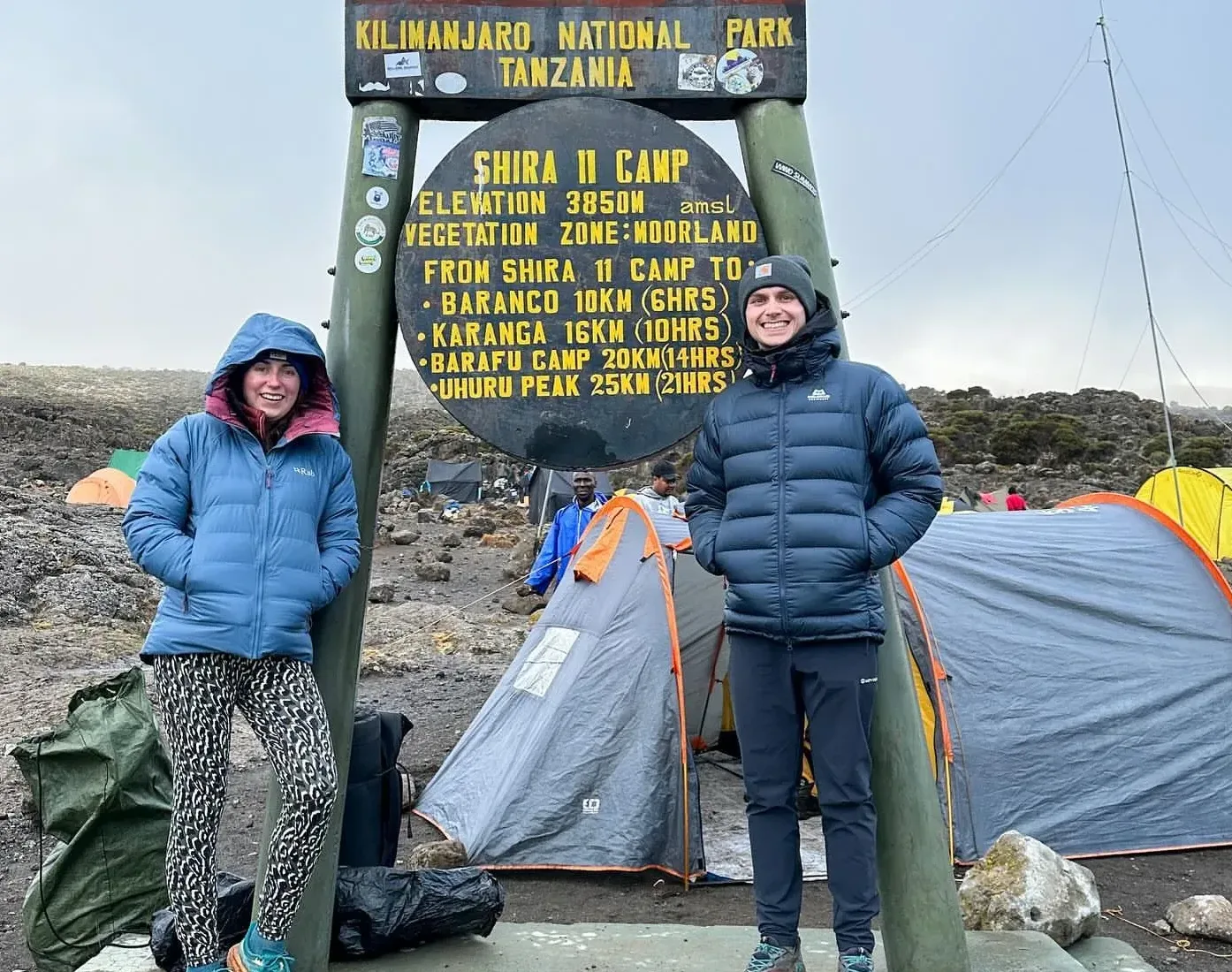
Day 2: Ascend to Shira Camp (3,840m) across moorland where giant heathers give way to volcanic rock formations and your first panoramic views of Kibo peak.
Day 3: The crucial acclimatization day—climb high to Lava Tower (4,600m) before descending to Barranco Camp (3,960m), following the “climb high, sleep low” principle that significantly boosts summit success.
Day 4: Conquer the Barranco Wall at sunrise, then traverse alpine desert ridges to Karanga Camp (4,035m) with stunning glacier views dominating the horizon.
Day 5: A shorter day to Barafu Camp (4,673m), your final base before the summit push—rest, hydrate, and prepare mentally for midnight’s challenge.
Day 6: Summit day begins at midnight, reaching Uhuru Peak (5,895m) at sunrise before descending all the way to Mweka Camp (3,100m)—the longest, most demanding day of your journey.
Day 7: Celebrate your achievement with a final descent through rainforest to Mweka Gate, where your certificate awaits and the adventure transitions into triumph.
🌿 Climb Kilimanjaro Tanzania: What You’ll See
The trek unfolds through five distinct ecological zones, each transition as dramatic as walking from equator to Arctic in a week. You’ll begin in lush montane rainforest where colobus monkeys swing through canopy draped in Spanish moss, humidity clinging to your skin as giant ferns crowd the trail.
By day two, the forest yields to moorland—a surreal landscape of giant groundsels and lobelias found nowhere else on Earth. These prehistoric-looking plants tower 15 feet high, their bizarre silhouettes emerging through mist like something from a Dr. Seuss book. The air thins noticeably here as you cross 3,500 meters.
Above 4,000 meters, alpine desert takes over. Volcanic rock and scree dominate, vegetation disappears, and the landscape turns Mars-like in its stark beauty. The Barranco Wall—a 300-meter rock face you’ll scramble up on day four—offers heart-pounding exposure with views that stretch across Tanzania’s plains below.
Summit night reveals the arctic zone, where temperatures plunge to -20°C and oxygen sits at 49% of sea level. Under headlamp glow, you’ll watch glaciers materialize from darkness—the remnants of Kilimanjaro’s ice fields that have shrunk 85% since 1912. Uhuru Peak greets you with sunrise painting the crater rim gold, the whole continent seemingly spread beneath your feet in a 360-degree panorama that makes every challenging step worthwhile.
🧠 Expert Tips for Your Kilimanjaro Mountain Africa Trek
Pole pole (slowly, slowly) becomes your mantra—the deliberate pace that separates successful summits from altitude-induced retreats. One practical approach is choosing longer routes: seven-day itineraries consistently outperform five-day rushes, with success rates improving by 30-40% on routes like Lemosho versus Marangu.
Hydration trumps everything. Drink three to four liters daily even when you’re not thirsty—altitude suppresses thirst signals while dehydration accelerates altitude sickness. Your urine should stay clear; dark yellow means you’re already behind.
Sleep strategy matters more than fitness: position your sleeping bag with your head elevated using a small pack, which reduces nighttime headaches. On summit night, eat carbohydrates even if nauseous—your body needs fuel for the 1,200-meter ascent through thin air.
What typically happens is trekkers overdress during breaks and chill during movement. Layer intelligently: remove your jacket before you start sweating, then add it back immediately when you stop. Wet base layers at 4,500 meters become dangerous quickly.
🦁 Extend the Adventure: Tanzania Northern Circuit Safari
The Northern Circuit transforms your mountain conquest into a comprehensive African odyssey—most climbers pair their summit with 3-5 safari days exploring Tanzania’s legendary wildlife corridors. The Serengeti’s endless plains lie just hours from Kilimanjaro’s base, where lion prides patrol territories larger than small countries and wildebeest herds thunder across ancient migration routes that predate human civilization.
Ngorongoro Crater offers the planet’s densest concentration of large predators within a collapsed volcanic caldera—a natural amphitheater where black rhinos graze beneath the same volcanic peaks visible from Uhuru. Tarangire National Park delivers intimate elephant encounters along baobab-studded riverbanks, while Lake Manyara’s tree-climbing lions defy expectations in fever tree canopies. This safari-climb combination maximizes your East African investment, transforming a single-focus trek into a dual-ecosystem adventure that captures both Africa’s highest summit and its most iconic wildlife theaters in one transformative journey.
📦 What’s Included in Your Climb?
Your all-inclusive package covers the essentials that transform a mountain into a manageable adventure—professional guides, porters who carry gear, park fees averaging $800-$1,000 per climber, and three daily meals prepared at altitude. Most reputable operators provide tents, sleeping mats, dining facilities, and portable toilets, eliminating the need to rent specialized equipment in Moshi.
The porter-to-climber ratio matters tremendously—ethical operators maintain 3-4 porters per trekker to ensure fair weight distribution (maximum 20kg per porter including their own gear). Your team typically includes a certified guide, assistant guide, cook, and support crew who establish camps hours before your arrival, allowing immediate rest upon reaching each elevation zone.
What’s not included deserves equal attention: personal hiking gear (boots, clothing layers, trekking poles), sleeping bags rated to -10°C minimum, travel insurance with emergency evacuation coverage, tips for the mountain crew (budget $250-$350 total), and Tanzania visa fees. However, premium packages may bundle equipment rentals—comparing itemized costs reveals whether DIY gear procurement or operator-provided kits offer better value for your specific route duration.
⏰ Best Time to Climb Mount Kilimanjaro Tanzania
Tanzania offers two prime climbing windows—January through mid-March and June through October—when clear skies and stable weather dramatically boost your summit chances. The dry seasons deliver firm trail conditions, minimal rainfall, and the crisp visibility that makes every sunrise at Uhuru Peak worth the pre-dawn struggle.
January-March brings warmer temperatures and fewer crowds, though occasional afternoon showers linger into February. This window coincides with Africa’s summer, creating comfortable nights at lower camps while maintaining cold but manageable summit conditions. June-October represents peak season—predictable weather patterns attract the highest climber volumes, but trail congestion remains manageable compared to Everest Base Camp or other bucket-list treks.
Avoid the long rains (April-May) and short rains (November) unless you’re comfortable with muddy trails, limited visibility, and substantially lower success rates. While some operators offer discounted climbs during these months, slippery scree slopes and cloud-covered summits compromise both safety and the photographic payoff you’ve traveled so far to capture.
Temperature swings from 70°F at the gate to -10°F at the summit require strategic packing regardless of season—the timing question centers more on precipitation patterns than thermal comfort.
🌟 Why Book With East Africa Travel Company?
Local expertise meets international standards—that’s the foundation of every climb we organize. Our team combines decades of mountain experience with deep cultural connections, ensuring you’re guided by professionals who know Kilimanjaro’s moods intimately while maintaining rigorous safety protocols that match global benchmarks.
What truly sets this approach apart is the commitment to sustainable tourism—fair wages for porters, eco-conscious practices on the mountain, and partnerships with local communities. You’re not just booking a trek; you’re supporting an ecosystem where tourism creates lasting positive impact rather than extracting resources without return.
💼 What Sets Us Apart?
Summit success rates tell the real story—while the average Kilimanjaro success rate hovers around 65% across all routes, our 7-day itineraries consistently achieve 85-92% summit rates through deliberate pacing and acclimatization protocols. The difference isn’t luck—it’s strategic planning that gives your body the time it needs to adapt to extreme altitude.
🎯 Final Words: Ready to Reach the Top?
Your summit moment awaits—and you’re now equipped with everything needed to turn that dream into reality. Seven epic days, one incredible mountain, and a journey that transforms everyone who attempts it.
The planning stops now. The adventure begins when you take that first step toward booking your climb with a team that’s guided thousands safely to Uhuru Peak and back.
📞 Book Your Epic Climb Today!
Your Kilimanjaro adventure starts with one simple step—reaching out to a team that lives and breathes this mountain. Don’t let another season pass while your summit dream sits on the back burner.
The booking process is refreshingly straightforward: contact a reputable operator, discuss your preferred dates and fitness level, then lock in your spot with a deposit. Most climbers book 3-6 months ahead to secure prime weather windows and guarantee availability with top-tier guide teams.
Here’s what sets the best operators apart: transparent pricing with no hidden fees, experienced guides who prioritize your safety over speed, and genuine flexibility when life throws curveballs at your training schedule. A quality outfitter will ask detailed questions about your hiking experience and physical condition—not to gatekeep, but to set you up for success.
Don’t wait for “perfect” fitness—start booking now and use your deposit as motivation to train consistently. The mountain will still be there, but your optimal climbing window won’t last forever.
Day 1: Machame Gate to Machame Camp
Your Kilimanjaro journey begins in the lush rainforest—a world away from the icy summit that awaits. Day one covers approximately 11 kilometers over 5-7 hours, ascending from 1,800 meters (5,905 feet) to 3,000 meters (9,840 feet) at Machame Camp. This steady climb through dense vegetation sets the foundation for your acclimatization.
The trail winds through towering fig trees and ancient ferns, alive with colobus monkeys and exotic bird calls. Expect muddy conditions—the “Whiskey Route” earned its name partly because of these slippery, challenging paths that demand focus from the start. Your porters will race ahead, setting up camp while you maintain the critical “pole pole” (slowly, slowly) pace that protects against altitude sickness.
By mid-afternoon, you’ll emerge from the forest canopy into the moorland zone, catching your first glimpse of Kibo Peak floating above the clouds. Machame Camp sits perched on a ridge with spectacular sunset views—a reward for completing your inaugural climb and a preview of the extraordinary landscapes ahead.
Day 2: Machame Camp to Shira Camp
Day two marks your transition from rainforest to moorland—a dramatic shift that reveals Kilimanjaro’s true scale. This 5-kilometer trek takes 4-6 hours, climbing from 3,000 meters to approximately 3,840 meters at Shira Camp. The relatively short distance is intentional design for acclimatization, allowing your body to adjust to thinning air.
The morning begins with a steep ascent through the last remnants of rainforest before breaking into the heather and moorland zone. Views expand exponentially as you gain elevation—the forest canopy gives way to volcanic ridges and distant glaciers. What makes this stage manageable is the moderate pace; rushing here compromises the entire week ahead.
Shira Camp sits on a high-altitude plateau offering your first unobstructed views of Kibo peak. Afternoon arrivals allow time for the critical “climb high, sleep low” principle—many guides lead short acclimatization walks to help your body adapt. Temperatures drop noticeably at this elevation, making proper layering essential. However, the physical challenge remains moderate compared to what’s coming—consider this your body’s rehearsal for altitude. The landscape transforms into something almost lunar, setting the stage for tomorrow’s journey to Lava Tower.
Day 3: Shira Camp to Lava Tower, then to Barranco Camp
Day three introduces the critical “climb high, sleep low” principle that significantly impacts your summit success. This 10-kilometer trek ascends to Lava Tower at 4,630 meters before descending to Barranco Camp at 3,976 meters—a deliberate acclimatization strategy. The ascent through alpine desert takes 4-5 hours to reach Lava Tower, where you’ll break for lunch while your body adjusts to the altitude. The subsequent 2-3 hour descent into the Barranco Valley provides crucial recovery time. You’ll notice the landscape transforms from heath into stark volcanic terrain, with dramatic views of Kilimanjaro’s Western Breach. Many climbers experience their first significant altitude symptoms at Lava Tower—headaches and breathlessness are common. However, the descent to Barranco Camp typically brings relief as your body adapts. This day’s elevation gain followed by strategic descent is precisely why the Machame Route achieves higher success rates than more direct routes. Barranco Camp sits beneath the imposing Barranco Wall, which you’ll tackle tomorrow—a stunning campsite that feels both challenging and rewarding.
Day 4: Barranco Camp to Karanga Camp
Day four delivers the Machame Route’s most iconic challenge—the Barranco Wall, a 257-meter rock scramble that looks intimidating but rewards climbers with spectacular views and a genuine sense of accomplishment. This shorter 5-kilometer trek takes 4-5 hours, focusing on technical terrain rather than distance.
The Barranco Wall demands careful hand and foot placement through rocky sections, though no climbing equipment is needed. Most trekkers find the ascent mentally challenging rather than physically difficult—the key is staying focused on the immediate route rather than looking at the entire wall. Your guides will demonstrate the optimal path through the scramble sections.
After conquering the wall, the trail continues through alpine desert with stunning vistas of the Southern Ice Field. The route traverses several ridges before descending into Karanga Camp at 3,995 meters. This shorter day serves multiple purposes: it allows recovery time from the demanding previous days, provides additional acclimatization at high altitude, and positions you strategically for the final push to Barafu Camp.
What typically happens at Karanga is that climbers experience renewed energy—the combination of a shorter hiking day and successful navigation of the Barranco Wall creates psychological momentum heading into summit night. Rest thoroughly, hydrate consistently, and prepare your gear for the increasingly cold conditions ahead.
Day 5: Karanga Camp to Barafu Camp
Day five represents the final preparation stage before summit night—a relatively short 4-kilometer trek that gains 600 meters in elevation to reach Barafu Camp at 4,673 meters. The journey through this barren alpine desert typically takes 3-4 hours, leaving crucial time for rest, hydration, and mental preparation before the midnight summit push. Climbers cross exposed ridges where rocky terrain replaces vegetation entirely, offering expansive views across the surrounding landscape. Barafu Camp, meaning “ice” in Swahili, sits on a narrow exposed ridge where winds intensify as evening approaches, making proper gear setup essential. The afternoon routine becomes critical—organizing summit equipment, forcing fluids despite altitude-suppressed thirst, and attempting early sleep despite the excitement and anxiety that naturally builds. What typically happens is that climbers manage only 2-3 hours of fitful rest before the 11:30 PM wake-up call, making every minute of horizontal rest valuable. However, the shorter hiking day deliberately conserves energy reserves needed for the 1,200-meter ascent to Uhuru Peak that begins in just hours, when the real test of physical and mental endurance begins.
Day 6: Summit to Uhuru Peak, descend to Mweka Camp
Summit day begins around midnight—the most physically and mentally demanding stretch of the entire climb, combining a 1,200-meter ascent to Uhuru Peak at 5,895 meters followed by a grueling 2,800-meter descent to Mweka Camp. The pre-dawn start exploits frozen scree conditions that provide better footing, while darkness mercifully hides the seemingly endless switchbacks ahead. Headlamps create a snake of light ascending through bitter cold that often plunges below -20°C, with summit success rates on the seven-day Machame Route reaching approximately 85%—significantly higher than shorter itineraries due to superior acclimatization. The six-to-eight-hour push to Stella Point at 5,756 meters tests every climber’s resolve, but reaching the crater rim as sunrise ignites the glaciers transforms exhaustion into awe. The final hour-long traverse along the crater rim to Uhuru Peak feels almost ceremonial, culminating in the iconic summit photo at Africa’s highest point before the rapid descent begins—first back to Barafu for breakfast, then continuing down through multiple climate zones to Mweka Camp at 3,100 meters for a well-earned rest.
Day 7: Mweka Camp to Mweka Gate, drive to Moshi
The final day brings a celebratory 10-kilometer descent through lush montane forest, dropping 1,200 meters over 3-4 hours to reach Mweka Gate at 1,640 meters. Muddy trails require careful footing—trekking poles prove invaluable on the slippery path winding through moss-draped trees and giant ferns. Upon reaching the gate, climbers sign out and receive their official summit certificates—a tangible reward for the week’s achievement. A one-hour vehicle transfer returns successful summiteers to Moshi, where hot showers and comfortable beds mark the transition back to civilization after seven transformative days on Africa’s highest peak.
Tour Reviews
Climber feedback consistently highlights proper acclimatization as the key differentiator between successful and unsuccessful summit attempts. Reviews across multiple tour operators emphasize that seven-day itineraries dramatically outperform shorter routes, with success rates ranging from 27% on rushed climbs to 85% on properly paced treks. Past participants frequently note that the extra acclimatization day made the difference between turning back at Stella Point and reaching Uhuru Peak comfortably, transforming what could have been a grueling ordeal into an achievable challenge with unforgettable sunrise views above the clouds.
Leave a Review
Sharing your Kilimanjaro experience helps future climbers make informed decisions about tour operators, routes, and preparation strategies. Detailed reviews focusing on acclimatization schedules, guide expertise, and equipment quality provide the most value to those planning their ascent.
When leaving feedback, mention specific elements like porter treatment, meal quality at altitude, and how your operator handled any health concerns during the climb—practical details that brochures rarely cover.
You May Also Like
Climbers who complete Kilimanjaro often seek similar high-altitude adventures or complementary African experiences. Many successful summiteers transition to technical climbing challenges like Mount Kenya or extend their journey with wildlife safaris across Tanzania’s northern circuit.
Combining your Kilimanjaro trek with a safari maximizes your investment in travel logistics while showcasing East Africa’s dual attractions—towering peaks and abundant wildlife. The proximity of Serengeti National Park and Ngorongoro Crater makes multi-experience itineraries particularly efficient for limited vacation time.
What typically happens is climbers underestimate their post-trek recovery needs. Building in several rest days between summit attempts and safari activities prevents exhaustion from diminishing either experience. Consider your altitude adaptation timeline when planning consecutive adventures.
Your Cart is Empty
Ready to book your Kilimanjaro adventure but haven’t added anything yet? Browse available climbing packages to compare routes, durations, and departure dates. Most operators offer flexible booking options with deposit requirements ranging from 20-30% of the total trip cost, allowing you to secure your preferred dates while finalizing travel arrangements. Adding items to your cart typically reserves availability for 24-48 hours, though peak season slots (January-February, July-September) fill quickly and benefit from immediate booking confirmation.
Facts About Africa’s Tallest Mountain
Mount Kilimanjaro stands at 19,341 feet (5,895 meters), making it not only Africa’s highest peak but also the world’s tallest free-standing mountain. According to Mount Kilimanjaro – Wikipedia, the mountain consists of three volcanic cones—Kibo, Mawenzi, and Shira—with Uhuru Peak on Kibo’s crater rim representing the highest point. The mountain’s prominence above the surrounding plains creates dramatic elevation changes that climbers experience over just a few days. Interestingly, Kilimanjaro is gradually shrinking; its iconic glaciers have lost more than 85% of their ice mass since 1912 due to climate change. The mountain’s equatorial location means climbers can experience five distinct climate zones during their ascent, from tropical rainforest to arctic summit conditions within the same trek.
How many days does a typical trek up Mt Kilimanjaro take?
Most Kilimanjaro treks range from 5 to 9 days, with 7-day itineraries offering the optimal balance between acclimatization time and summit success. According to Climb Mount Kilimanjaro statistics, longer routes consistently show higher success rates—climbers on 8-day treks achieve approximately 85% summit success compared to just 27% on rushed 5-day routes. This significant difference stems from the body’s need for gradual altitude adjustment, making those extra days crucial for safely reaching Uhuru Peak at 19,341 feet.
What are the main routes to the summit of Mt Kilimanjaro and which is the easiest?
Seven established routes lead to Kilimanjaro’s summit, each offering different scenery, difficulty levels, and success rates. The Marangu Route, known as the “Coca-Cola Route,” is widely considered the easiest path due to its gradual incline and hut accommodations, though success rates vary significantly by route, ranging from 27% to 85% depending on duration and acclimatization time.
The Machame Route (“Whiskey Route”) remains the most popular choice, balancing scenic diversity with reasonable difficulty. Other options include the remote Rongai Route approaching from the north, the challenging Umbwe Route with steep ascents, and the longer Lemosho and Northern Circuit routes offering superior acclimatization. However, Marangu’s reputation as “easiest” can be misleading—its standard 5-day itinerary actually yields lower success rates than longer routes on steeper paths, proving that adequate acclimatization time matters more than gentle gradients. Understanding your route choice directly impacts the physical preparation you’ll need to undertake.
What kind of physical training is recommended before attempting to climb Mt Kilimanjaro?
Cardiovascular endurance forms the foundation of successful Kilimanjaro preparation, with climbers needing to sustain moderate effort for 6-8 hours daily over multiple consecutive days. Focus training on activities like hiking with a weighted pack, stair climbing, running, or cycling for at least 3-4 months before your trek. Building leg strength through squats, lunges, and step-ups proves equally critical for the steep ascent and particularly the demanding descent.
While Kilimanjaro doesn’t require technical climbing skills, the mental and physical stamina to handle consecutive long days at altitude separates successful summits from unsuccessful attempts. Incorporate weekend hikes that gradually increase in duration and elevation gain, aiming for 4-6 hour outings with 2,000-3,000 feet of elevation change while carrying a 15-20 pound pack.
Core stability exercises shouldn’t be overlooked, as maintaining balance on loose volcanic scree requires strong abdominal and back muscles. Swimming provides excellent low-impact cross-training that builds both cardiovascular capacity and full-body endurance without joint stress. The key isn’t peak fitness but rather consistent aerobic capacity that allows your body to function efficiently when oxygen becomes scarce at higher elevations—preparation that transitions naturally into understanding the essential documentation requirements for your climb.
What permits or documentation are required for climbing Mt Kilimanjaro?
All climbers must obtain a valid Kilimanjaro National Park climbing permit, which is included in your tour package cost and processed by your licensed operator. The Tanzania National Parks Authority (TANPA) requires these permits to be purchased through registered tour companies—independent climbing is strictly prohibited. Your passport must have at least six months validity beyond your travel dates, and you’ll need a Tanzanian visa, which most visitors can obtain on arrival for $50-100 USD or apply for online in advance.
Your tour operator handles the park permit paperwork, typically submitting your details 2-3 weeks before departure. Documentation required includes a copy of your passport, emergency contact information, and travel insurance details. Tanzania also mandates yellow fever vaccination certificates if you’re arriving from endemic countries, though it’s recommended for all travelers.
The park system strictly regulates guide-to-climber ratios and environmental protocols. Each climbing team must be led by certified guides registered with TANPA, and all porters must be properly registered and equipped. These regulations, while adding to costs, ensure safety standards and protect Mount Kilimanjaro’s fragile alpine ecosystem.
Understanding altitude’s effects on your body becomes critical once you begin ascending, as proper acclimatization can mean the difference between summit success and early descent.
What is the altitude of Mt Kilimanjaro’s summit, and how does it affect climbers?
Uhuru Peak stands at 5,895 meters (19,341 feet) above sea level, making Mount Kilimanjaro the highest free-standing mountain in the world. At this extreme elevation, atmospheric oxygen levels drop to approximately 50% of what’s available at sea level, creating significant physiological challenges for climbers.
Altitude sickness affects roughly 75% of climbers in some form, ranging from mild symptoms like headaches and nausea to severe conditions such as High Altitude Pulmonary Edema (HAPE) or High Altitude Cerebral Edema (HACE). The body requires gradual acclimatization to function properly as air pressure decreases with elevation, which is why summit success rates vary dramatically—from 27% on rushed routes to 85% on longer itineraries that allow proper adjustment time.
The thinning atmosphere forces your body to work harder with every breath and step. Heart rate increases, sleep becomes difficult, and even simple tasks require extra effort. However, Kilimanjaro’s advantage is its walk-up terrain—no technical climbing skills are needed, making the altitude itself the primary obstacle rather than route difficulty.
Are there local guides or tour companies recommended for climbing Mt Kilimanjaro?
Yes, hiring a licensed local guide and reputable tour operator is mandatory for all Kilimanjaro climbs—independent trekking is prohibited by Kilimanjaro National Park regulations. Choose operators registered with the Kilimanjaro Porters Assistance Project (KPAP) or Tanzania Tourist Board (TTB), which ensures ethical treatment of porters and adherence to safety standards.
Look for companies with high success rates, experienced mountain crews, and comprehensive safety protocols. Operators offering longer itineraries (7+ days) typically achieve success rates above 85%, compared to rushed 5-day climbs with rates as low as 27%. A quality operator provides proper acclimatization schedules, emergency oxygen systems, and well-maintained equipment.
Request detailed information about guide qualifications (Wilderness First Responder certification minimum), porter-to-climber ratios, and what’s included in the package price. Transparent operators openly discuss their safety records and crew welfare policies. The best companies prioritize your summit success through proven acclimatization strategies rather than rushing you up the mountain—a critical factor when preparing your essential climbing gear for this demanding expedition.
What essential gear should I pack for a Mt Kilimanjaro expedition?
Layered clothing systems are critical for Kilimanjaro’s extreme temperature variations, which can range from tropical heat at the base to sub-zero conditions at the summit. Pack a moisture-wicking base layer, insulating mid-layers (fleece or down jacket), and a waterproof outer shell. Quality four-season sleeping bags rated to -10°C (14°F) or lower are essential, along with a comfortable sleeping pad for insulation from frozen ground. Trekking poles reduce joint strain during steep descents, while a headlamp with extra batteries enables pre-dawn summit attempts. Sturdy, broken-in waterproof hiking boots with ankle support are non-negotiable—blisters can end climbs prematurely.
Mount Kilimanjaro country
Mount Kilimanjaro is located entirely within Tanzania, a country in East Africa that proudly claims Africa’s highest peak as a national treasure and major economic driver. The mountain sits approximately 205 miles south of the equator in northeastern Tanzania, near the border with Kenya, though it lies wholly within Tanzanian territory. This geographic positioning places Kilimanjaro within Kilimanjaro National Park, established in 1973 to protect the mountain’s unique ecosystems and regulate climbing activities. Tanzania’s government maintains strict control over all Kilimanjaro expeditions, requiring climbers to enter through official gates and work exclusively with licensed Tanzanian operators—a policy that generates significant revenue for local communities while preserving the mountain’s environmental integrity. The peak’s location in Tanzania rather than Kenya often surprises first-time visitors, as Kilimanjaro’s distinctive silhouette is visible from Kenya’s Amboseli National Park, creating a stunning photographic backdrop that appears to place the mountain in Kenyan territory.
What is the best time of year to climb Mt Kilimanjaro for favorable weather conditions?
The optimal climbing windows are January-March and June-October, when Tanzania experiences its two dry seasons with clear skies and minimal precipitation. These periods offer the most stable weather conditions, reducing the risk of dangerous storms and improving summit success rates considerably.
The January-March window provides warmer temperatures and fewer crowds, though occasional afternoon clouds may obscure views. In practice, the June-October period sees peak climbing traffic due to Northern Hemisphere summer holidays, creating more congested trails but also fostering a stronger sense of community among trekkers.
Avoiding the rainy seasons (April-May and November-December) is crucial—heavy rains turn paths into mudslides, reduce visibility to near zero, and significantly increase hypothermia risk at higher elevations. However, experienced climbers sometimes choose these off-peak months for solitude and discounted rates, accepting the weather trade-offs. The mountain’s equatorial location means conditions can shift rapidly regardless of season, making proper gear and flexible summit timing essential year-round.
How many days does a typical trek up Mt Kilimanjaro take?
Most Kilimanjaro treks range from 5 to 9 days, with 7-day itineraries striking the ideal balance between acclimatization and summit success. According to Kilimanjaro Success Rate data, longer routes significantly improve summit chances—8-day treks achieve up to 85% success rates compared to just 27% for rushed 5-day climbs. The extra days allow your body critical time to adjust to decreasing oxygen levels, with each additional acclimatization day reducing altitude sickness risk. Route choice also influences duration: the gradual Lemosho and Northern Circuit routes typically require 7-9 days, while the steeper Marangu and Umbwe routes can be completed in 5-6 days, though with notably lower success rates. For first-time high-altitude trekkers, a 7-day itinerary provides the optimal combination of adequate acclimatization, manageable daily distances, and strong summit prospects—making it the most recommended option for reaching Uhuru Peak successfully.
What kind of physical training is recommended before attempting to climb Mt Kilimanjaro?
Cardiovascular endurance training forms the foundation of proper Kilimanjaro preparation, with most successful climbers dedicating 3-4 months to aerobic conditioning. Focus on activities that sustain elevated heart rates for extended periods—hiking with a weighted pack, stair climbing, cycling, or running. Building stamina for 5-6 hours of continuous activity mirrors the daily trekking demands on the mountain.
Incorporate leg-strengthening exercises like squats, lunges, and step-ups to handle the steep ascents and particularly grueling descents. Core stability work enhances balance on uneven terrain, while flexibility training reduces injury risk during long days on the trail.
What typically happens is that climbers underestimate altitude’s impact—fitness alone won’t guarantee summit success. However, arriving in excellent physical condition allows your body to allocate more resources toward altitude adaptation rather than basic movement. A common pattern is that well-trained climbers recover faster between trekking days, maintaining strength throughout the journey.
Practice hiking with the gear you’ll carry, gradually increasing pack weight to 15-20 pounds. This prepares muscles for the specific demands while testing your equipment. Train on varied terrain when possible, including inclines that challenge your cardiovascular system and prepare legs for Kilimanjaro’s relentless elevation changes.
What permits or documentation are required for climbing Mt Kilimanjaro?
All Kilimanjaro climbers must obtain a park entry permit through Kilimanjaro National Park, which your tour operator typically handles as part of the booking process. These permits cost approximately $60-$70 per day and are non-transferable, requiring advance registration with your full passport details.
Your passport must have at least six months validity beyond your intended departure date from Tanzania. Most international visitors also need a tourist visa, which can be obtained online as an e-visa ($50 USD) or upon arrival at Kilimanjaro International Airport ($100 USD). Citizens of certain countries may qualify for visa-free entry.
Travel insurance with high-altitude coverage is essentially mandatory, as rescue operations above 4,000 meters can cost thousands of dollars. Standard policies often exclude trekking above specific elevations, so verify your coverage includes medical evacuation from Mount Kilimanjaro’s summit elevation.
Additional documentation includes yellow fever vaccination certificates if arriving from endemic countries, though Tanzania doesn’t require it for travelers coming directly from North America or Europe. However, neighboring countries you might visit during your trip often do require proof of vaccination.
Your tour operator will also require you to sign liability waivers and medical disclosure forms before the trek begins, ensuring they’re aware of any pre-existing conditions that could affect your climb.
What is the altitude of Mt Kilimanjaro’s summit, and how does it affect climbers?
Uhuru Peak stands at 5,895 meters (19,341 feet) above sea level, making it Africa’s highest point and placing it firmly in the extreme altitude category. Mount Kilimanjaro rises dramatically from near sea level, creating one of the world’s most significant elevation gains over a relatively short climbing distance.
At this altitude, atmospheric pressure drops to approximately 50% of sea level, meaning climbers breathe only half the available oxygen with each breath. This oxygen deprivation triggers altitude sickness in many climbers, manifesting as headaches, nausea, fatigue, and dizziness. The severity increases rapidly above 4,000 meters, which explains why success rates vary dramatically based on acclimatization schedules—longer routes allowing gradual adaptation see success rates exceeding 85%, while rushed five-day climbs drop below 30%.
The physiological challenge extends beyond oxygen levels. In practice, climbers experience increased heart rates, disrupted sleep patterns, and diminished appetite as their bodies struggle to adapt. Summit night typically begins around midnight, when temperatures can plummet to -20°C (-4°F), compounding the altitude’s effects with extreme cold and physical exhaustion during the final 1,200-meter ascent.
Understanding these altitude dynamics explains why proper acclimatization isn’t optional—it’s essential for both summit success and personal safety, making route selection and pacing critical decisions for your climb.
What essential gear should I pack for a Mt Kilimanjaro expedition?
Proper gear preparation directly impacts your summit success on Kilimanjaro. Your packing list should prioritize layering systems for extreme temperature fluctuations, from tropical base camps to arctic summit conditions where temperatures plummet to -20°F (-29°C).
Essential clothing includes a moisture-wicking base layer, insulating mid-layers (fleece or down), and a waterproof outer shell. The key principle is layering—you’ll add and remove clothing throughout each day as you move between climate zones. Quality insulated gloves, a warm hat covering your ears, and a balaclava protect against summit night’s brutal cold.
Footwear requires careful attention: sturdy, broken-in hiking boots with ankle support, multiple pairs of moisture-wicking socks, and gaiters to keep scree and snow out. A -10°F (-23°C) rated sleeping bag is non-negotiable, as accommodation temperatures can drop significantly at higher camps.
Additional critical items include a headlamp with extra batteries, trekking poles for stability on steep sections, a hydration system or water bottles with insulation, high-SPF sunscreen, and altitude medication prescribed by your doctor. Don’t forget a durable duffel bag for porter-carried gear (typically 33 pounds maximum) and a comfortable daypack for personal items.
Most reputable operators provide comprehensive packing lists and rental options for specialized equipment, ensuring you’re properly equipped for your Kilimanjaro adventure without purchasing items you’ll rarely use again.
📞 Book Your Epic Climb Today!
📞 Call/WhatsApp: +255 784 411 852
🔗 Visit Us: East Africa Travel Company
| Destination | Mt Kilimanjaro |
|---|---|
| Arrival | Kilimanjaro International Airport (JRO) |
| Departure Time | Yes Require |
| Included | ✅ Included (all prices include VAT)
|
| Excluded | ❌ Not included
|
| Mt Kilimanjaro in Africa | |
Day 1: Machame Gate to Machame Camp
Begin your journey at Machame Gate (1,800m). Hike through the lush rainforest and ascend to Machame Camp (3,000m). Expect rich vegetation and wildlife.
Day 2: Machame Camp to Shira Camp
Leave the forest behind and enter moorland terrain. Enjoy open views and volcanic ridges as you reach Shira Camp at 3,840m.
Day 3: Shira Camp to Lava Tower, then to Barranco Camp
Ascend to Lava Tower (4,630m) for acclimatization, then descend to Barranco Camp (3,960m). This day helps your body adjust to the altitude.
Day 4: Barranco Camp to Karanga Camp
Climb the famous Barranco Wall, then trek through alpine valleys to Karanga Camp (4,035m). A shorter but important acclimatization day.
Day 5: Karanga Camp to Barafu Camp
A gradual climb leads to Barafu Camp (4,670m), your base for the summit attempt. Rest, hydrate, and prepare for the midnight ascent.
Day 6: Summit to Uhuru Peak, descend to Mweka Camp
Begin your summit push at midnight. Reach Uhuru Peak (5,895m) at sunrise. Celebrate, then descend all the way to Mweka Camp (3,100m).
Day 7: Mweka Camp to Mweka Gate, drive to Moshi
Final descent through the rainforest to Mweka Gate (1,640m). Collect your certificate and return to Moshi for a well-earned rest.
Tour Reviews
There are no reviews yet.
Leave a Review