Climb Kilimanjaro on a 5-day Marangu route adventure. Experience the ultimate trek with expert guides, breathtaking views, and a proven success rate.
Climbing Kilimanjaro transforms ordinary travelers into summit chasers — but success depends on smart preparation. At 5,895 meters, Africa’s highest peak demands respect. The five tips ahead cut through the noise and deliver what actually moves the needle between turning back and reaching Uhuru Peak.
Details
When you climb Mount Kilimanjaro, understanding the basics upfront saves time, money, and frustration. Rising 5,895 meters above sea level in Tanzania, Kilimanjaro demands respect — and the right route choice sets everything else in motion.
🏔️ Ultimate Kilimanjaro: Epic 5-Day Power Trek
Choosing the right kilimanjaro climbing tours determines everything — your summit odds, comfort, and overall experience. Smart route selection is the single most powerful decision a climber makes before setting foot on the mountain.
Each route offers a distinct personality. The right choice sets you up for success from day one — which brings us to the legendary Marangu Route next.
Conquer the Legendary Marangu Route (Coca-Cola Route)
The Marangu Route remains the most popular choice among kilimanjaro tours — and for good reason. Permanent hut accommodations set it apart from every other route, making it ideal for trekkers who prefer sleeping indoors over tents.
The Marangu Route’s defining advantage: built-in shelter removes one major comfort barrier — letting climbers focus entirely on acclimatization and summit performance.
Understanding the route’s park fee structure comes next, which directly impacts your total trip budget.
🏔️ 5-Day Marangu Route Park Fees (2026)
Planning a kilimanjaro trip means budgeting carefully for Tanzania National Parks fees — a non-negotiable part of every climb. Park fees vary by duration and residency status, so knowing the 2026 breakdown upfront prevents costly surprises.
Fee categories for the 5-day Marangu Route include:
- Conservation fees
- Camping/hut fees
- Rescue fees
- VAT
The next section breaks down the exact $719.80 per adult foreign non-resident figure in full detail.
💰 $719.80 per Adult Foreign Non-Resident
This figure represents the baseline park fee per adult foreign non-resident for the 5-day Marangu Route — a critical number for anyone researching mt kilimanjaro tours. Understanding exactly what feeds into the total fee structure helps you budget with confidence before committing to your climb.
📊 Park Fee Breakdown (5 Days – Marangu Route)
Understanding exactly where your money goes helps you compare mount kilimanjaro tours with confidence. The $719.80 total combines conservation, rescue, and camping fees — each serving a distinct purpose on the mountain.
✅ Total Park Fees: $719.80
$719.80 per adult foreign non-resident is the confirmed total park fee baseline for anyone serious about hiking Mount Kilimanjaro on the 5-day Marangu Route. Budget around this figure before factoring in any operator costs.
Park fees alone represent a significant investment — understanding this upfront prevents sticker shock later.
These fees are non-negotiable and paid directly to Tanzania National Parks (TANAPA). With that number locked in, the next step is seeing how it fits into complete package pricing.
🎒 Estimated Total Package Prices (2026)
Once you understand the $719.80 park fee baseline, the full kilimanjaro trek package price comes into focus. Operator costs typically range from $2,000–$3,500 per person, covering guides, porters, meals, and gear support — everything beyond raw park fees.
Not all budgets look the same, so knowing what’s coming next matters: reduced rates apply to certain climbers.
👨👩👧 Reduced Rates (VAT 18% Included)
Hiking Kilimanjaro costs less for certain groups — Tanzania National Parks offers reduced park fee rates for East African residents and citizens, with VAT (18%) already included in published pricing.
⚠️ Important Payment Information
When booking your climb, confirm that all kilimanjaro routes fees are paid directly to TANAPA — reputable operators handle this on your behalf. Always request official receipts.
🌍 Why Choose the Marangu Route on Kilimanjaro?
The Marangu Route remains one of the most popular paths up the mountain — and for good reason. When factoring in climb Kilimanjaro cost, Marangu’s hut-based accommodation can reduce gear expenses significantly compared to camping routes. Sleeping in permanent dormitory huts means no tent rental fees, a practical advantage that appeals to budget-conscious trekkers. As Wilderness Travel notes, route selection directly shapes your overall experience and cost. Ready to explore what makes Marangu truly stand out? The next section breaks down its key highlights.
✅ Key Highlights of the Marangu Route Kilimanjaro
The Marangu Route delivers a compelling combination of comfort and accessibility — making the kilimanjaro hike cost more manageable compared to longer alternatives. Hut-based accommodation replaces tents, reducing gear expenses noticeably.
The Marangu Route stands out as the most budget-friendly path to Uhuru Peak without sacrificing essential safety infrastructure. Ready for the specifics? The next section breaks down the full route snapshot.
📍 Marangu Route Kilimanjaro at a Glance
Planning a Kilimanjaro expedition via Marangu? Here’s a quick snapshot: the route covers approximately 73 kilometers round-trip, topping out at 5,895 meters at Uhuru Peak. It’s the only route offering hut accommodations throughout. With a structured day-by-day plan locked in, success rates climb significantly.
🗓️ 5-Day Kilimanjaro Climb: Marangu Route Itinerary
Whether you’re planning to climb Kilimanjaro 2023-style or preparing for an upcoming season, the Marangu Route’s structured 5-day itinerary gives you a clear roadmap from gate to glacier. Each day builds progressively toward the summit — starting with Day 1’s forest approach.
🥾 Day 1: Marangu Gate → Mandara Hut
The adventure begins at Marangu Gate (1,884 meters), where park fees are collected and guides finalize preparations. Trekkers cover roughly 5 miles through dense rainforest to Mandara Hut (2,700 meters) — a manageable 3–4 hour hike ideal for settling into your pace. For those climbing Kilimanjaro on a budget, the Marangu Route’s included hut accommodation makes this day notably cost-effective compared to other routes. Day 2 brings a longer, more exposed climb toward Horombo Hut — so arrive rested and ready.
🌲 Day 2: Mandara Hut → Horombo Hut
Leaving Mandara Hut (2,743 meters), trekkers push through stunning moorland toward Horombo Hut (3,719 meters) — a demanding 8-mile stretch that defines many a climb Kilimanjaro tour experience. Altitude’s effects become noticeably real here. Pace yourself deliberately; the next push toward Kibo awaits.
🏔️ Day 3: Horombo Hut → Kibo Hut
From Horombo Hut (3,719 meters), trekkers cross the vast alpine desert toward Kibo Hut (4,703 meters) — roughly 9 miles of stark, lunar-like terrain. Many trekkers planning to climb Kilimanjaro and safari afterward find this day mentally demanding; the thin air bites, and anticipation builds. Rest well at Kibo — summit night begins at midnight.
🌌 Day 4: Kibo Hut → Uhuru Peak → Horombo Hut
Summit night is the ultimate test. Departing Kibo Hut around midnight, trekkers face a brutal 1,219 meters push to Uhuru Peak (5,895 meters) in freezing darkness. If you’ve wondered about climb Kilimanjaro how long the hardest stretch takes — expect 6–8 hours upward alone. Summit day demands everything you have. After celebrating at the roof of Africa, trekkers descend all the way back to Horombo Hut — setting up the final leg tomorrow.
🎉 Day 5: Horombo Hut → Marangu Gate
The final descent from Horombo Hut back to Marangu Gate (6,400 ft) is a rewarding 11-mile walk — legs tired, spirits high. Certificates await at the gate. Booking through a reputable climb Kilimanjaro local company ensures seamless logistics on this celebratory final day.
📈 Success Rate & Safety on the Marangu Kilimanjaro Route
The Marangu route carries an overall summit success rate of roughly 65% — lower than longer routes like Lemosho. Acclimatization time is the key limiting factor. Choosing a reputable operator and listening to your guides dramatically improves those odds, as Intrepid Travel emphasizes. Knowing what gear to bring is your next critical advantage.
🎒 What to Pack for Mt Kilimanjaro Marangu Route
Packing smart is as critical as training hard. Ian Taylor Trekking notes that layering systems — moisture-wicking base, insulating mid-layer, waterproof shell — are non-negotiable at altitude. The next section’s full checklist covers every item in detail.
Essentials Checklist ✔️
A well-organized kit removes guesswork on summit day. Per Thomson Treks, layering systems, trekking poles, and a quality sleeping bag remain non-negotiable. With gear sorted, choosing the right operator becomes your next critical decision.
🌟 Why Book with East Africa Travel Company?
Choosing the right operator shapes every step of your climb. Expert local guidance, transparent pricing, and dedicated safety protocols turn a grueling ascent into a structured, memorable achievement — and that’s exactly what a trusted East Africa specialist delivers.
🧡 What Sets Us Apart
Genuine care, local expertise, and transparent pricing define every expedition. In practice, climbers who choose operators prioritizing small group sizes and certified mountain crew report significantly higher summit success rates — and safer, more memorable ascents.
Ready to extend your adventure beyond the summit? The next section explores the perfect Kilimanjaro and Tanzania Northern Circuit combination.
🧭 Kilimanjaro & Tanzania Northern Circuit: The Perfect Combo
Pairing your summit bid with Tanzania’s Northern Circuit transforms a single climb into a complete East African adventure. Serengeti wildlife, Ngorongoro Crater, and Kilimanjaro’s peak create an unmatched back-to-back experience worth every mile.
❓ FAQs: Kilimanjaro Coca-Cola Route
Why is it called the Coca-Cola Route? The Marangu Route earned the nickname due to its relative comfort — permanent hut accommodations replaced tent camping, making it feel more “accessible.”
Is it the easiest route? In practice, shorter acclimatization time makes summit success rates lower than longer routes like Lemosho.
Ready to turn these answers into action?
🚀 Ready to Climb Kilimanjaro?
Every tip, route, and insight covered throughout this guide points toward one defining moment — your decision to go. The summit is within reach. Book your Kilimanjaro adventure today and turn preparation into action.
👉 Book Your Ultimate Kilimanjaro Adventure Today!
Your summit moment starts with a single booking. Choose a reputable operator, lock in your dates, and take that first concrete step toward Africa’s rooftop.
The next section breaks down exactly what’s included in your package price — no surprises.
✅ Included (All Prices Include VAT)
No hidden fees, no last-minute surprises. Every quoted price covers VAT in full, so the number you see is the number you pay — transparent, straightforward, and summit-ready.
❌ Not Included
Knowing what’s excluded is just as important as knowing what’s covered. Standard packages typically do not include flights, travel insurance, personal gear, tips for guides and porters, or pre/post-climb accommodations.
Ready to see exactly how each day unfolds on the mountain? The next section breaks down the full itinerary.
Itinerary
Your day-by-day schedule is the backbone of the entire climb. The Marangu Route typically unfolds over five to six days, moving from lush rainforest to alpine desert to the arctic summit zone — each stage carefully paced for acclimatization.
Ready to lace up? The adventure begins at the gate.
08:00–17:00: Marangu Gate to Mandara Hut
The journey begins at Marangu Gate (elevation ~6,000 ft), where rangers register your group before you step into the rainforest. This first leg covers roughly 5 miles, arriving at Mandara Hut (~2,743 meters) by mid-afternoon — a steady, manageable introduction to the mountain ahead.
08:00–16:00: Mandara Hut to Horombo Hut
Day two pushes climbers from Mandara Hut (~2,743 meters) up to Horombo Hut (~3,719 meters) — a steady, rewarding climb where the rainforest gives way to open moorland. Pole pole remains your guiding principle here.
From Horombo, the trail toward Kibo Hut begins in earnest.
08:00–15:00: Horombo Hut to Kibo Hut
The third day transitions climbers from Horombo Hut (~3,719 meters) across the stark Alpine Desert to Kibo Hut (~4,703 meters). Vegetation disappears entirely here. Rest well — summit night starts at midnight.
00:00–18:00: Kibo Hut to Uhuru Peak to Horombo Hut
The longest, most demanding day begins at midnight. From Kibo Hut (~4,703 meters), climbers push through freezing darkness toward Uhuru Peak (~5,895 meters) — then descend all the way back to Horombo Hut by evening. Every step forward earns the summit.
07:00–14:00: Horombo Hut to Marangu Gate to Moshi
The final descent brings climbers from Horombo Hut back down to Marangu Gate — a satisfying, trail-closing journey that completes the full Kilimanjaro experience before returning to Moshi.
Location
Mount Kilimanjaro rises in northeastern Tanzania, near the town of Moshi — your base before and after the climb. The mountain sits just 3° south of the equator, making post-descent celebrations and recovery conveniently close.
Photos
Capture every zone — rainforest, moorland, arctic summit. A mirrorless camera or a capable cell phone works well, but cold batteries drain fast above 15,000 feet, so keep a spare warm inside your jacket.
Book the Tour
Choosing the right operator is the single decision that shapes everything else. Reputable tour companies handle permits, guides, porters, and safety protocols — so comparing options carefully before committing pays off. Tour reviews from verified climbers offer the clearest picture of what to expect next.
Tour Reviews
Once you’ve booked your operator, reading verified tour reviews helps set realistic expectations — and shapes how you’ll document your own experience afterward.
Leave a Review
Your experience on Kilimanjaro helps future climbers make smarter choices. Leaving a verified review after your trek builds the community knowledge that made your own planning possible.
Cancel Reply
Have thoughts on this guide? Drop a comment below — whether it’s a question about gear, routes, or acclimatization, your input helps fellow climbers prepare smarter for the summit.
You May Also Like
Ready to go deeper? Kilimanjaro in Africa: 7-Day Epic Trek Win breaks down exactly how a week-long summit attempt unfolds — day by day.
Kilimanjaro in Africa: 7-Day Epic Trek Win
Seven days on the mountain transforms a grueling summit attempt into a genuine success story. The extra acclimatization time dramatically improves your summit odds — and your overall experience.
Curious how that plays out day by day? The next section breaks it down completely.
Mount Kilimanjaro Africa 6 Daring Days
A 6-day itinerary compresses the climb into a tighter window — demanding, but achievable with smart preparation. Acclimatization becomes your top priority when days are limited. The Marangu route fits naturally into this timeline, which is exactly why the proven tips covered next matter so much.
Kilimanjaro Climb Marangu Route: The 6 Best Proven Tips
The Marangu Route — nicknamed the “Coca-Cola Route” — is Kilimanjaro’s only path offering hut accommodation. Pace yourself deliberately; the mountain rewards patience over speed.
Your Cart is Empty
Before your Kilimanjaro adventure begins, make sure your preparation cart is fully loaded. Every tip, route choice, and gear decision covered above sets the foundation for summit success.
Ready to start from scratch? The next section breaks down everything beginners need to know.
The Beginner’s Guide to Climbing Mount Kilimanjaro
Every detail covered throughout this article feeds into one bigger picture — climbing Kilimanjaro is genuinely achievable for determined beginners. Sound route selection, acclimatization, and preparation transform a daunting summit into a realistic goal.
Climbing Kilimanjaro
Climbing Kilimanjaro transforms determined beginners into summit achievers — when preparation meets the right guided experience. Every strategy covered throughout this article points toward one outcome: standing at Uhuru Peak. The next step is choosing a structured tour designed to get you there.
Summit Mount Kilimanjaro Tours
Choosing the right tour is the single decision that shapes your entire summit experience. Structured tours bundle permits, guides, meals, and logistics — removing the planning burden so climbers focus on the climb itself. The right tour match turns a daunting expedition into an achievable adventure.
Climbing Kilimanjaro: Summit Mount Kilimanjaro Tours
The right tour transforms a daunting summit attempt into a structured, achievable goal. Building on earlier route and gear decisions, selecting a reputable operator ties every element together — permits, crew, acclimatization pacing, and emergency protocols all handled seamlessly. The quality of your mountain crew ultimately determines your summit odds.
Mountain Guides
Your guide is your greatest asset on Kilimanjaro. Experienced local guides read altitude symptoms, set sustainable pacing, and make evacuation calls when conditions demand it. Choosing a well-trained guide isn’t optional — it’s survival strategy.
US-Based Kilimanjaro Guide Services
US-based operators connect American trekkers with vetted, experienced Kilimanjaro specialists. These companies handle logistics, compliance, and crew coordination — so you focus entirely on reaching Uhuru Peak.
Climbing Mount Kilimanjaro
Choosing the right guide service transforms your summit bid from uncertain to structured. With experienced professionals managing every detail, climbers can focus entirely on the climb itself — and on reaching Uhuru Peak.
All-inclusive packages take that support even further.
All-Inclusive Kilimanjaro Climb and Tour Packages
All-inclusive packages bundle permits, guides, meals, and gear rentals into one upfront cost. This structure eliminates surprise expenses and simplifies planning considerably for American trekkers.
Smart bundling means less stress — and more energy saved for the summit push ahead.
What I Wish I Knew Before Climbing Kilimanjaro
Altitude hits harder than expected — even fit climbers struggle above 15,000 feet. Slow down, hydrate aggressively, and never underestimate rest days. Small gear details — like camp slippers and hand warmers — matter more than most climbers anticipate. As you plan your summit push, practical comfort considerations become surprisingly critical, including nighttime bathroom logistics on the mountain.
Do You Need a Pee Bottle for Kilimanjaro?
A pee bottle is strongly recommended, especially for summit night. Temperatures drop to -20°F near the crater rim, making leaving your tent a serious cold-weather risk. One practical approach is keeping a wide-mouth bottle inside your sleeping bag for nighttime use — warmth and convenience in one move.
What is the Fatality Rate of Kilimanjaro?
Kilimanjaro’s fatality rate is approximately 3–10 deaths per year out of roughly 50,000 annual climbers — statistically low, but not zero. Most fatalities result from altitude-related illness, not falls. Choosing a reputable operator and descending at the first sign of serious symptoms keeps risk minimal. That said, understanding how to stay safe on the mountain naturally raises a bigger question — whether the climb alone is worth your entire trip.
Is It Worth It to Only Climb Kilimanjaro and Not Visit Anywhere Else?
Kilimanjaro alone is absolutely worth the trip. Tanzania’s safari culture, Zanzibar’s coastline, and local markets add richness — but the mountain itself delivers a complete, transformative experience on its own.
What Did You Enjoy/Not Enjoy About Kilimanjaro?
The summit sunrise is universally cited as the defining moment — worth every cold, exhausting step. The challenge, however, is real.
- Enjoy: Crater views, crew camaraderie, personal achievement
- Not enjoy: Altitude headaches, freezing summit nights
Both sides make the climb unforgettable — and fuel curiosity about what tour operators actually deliver.
How The 3 Things Of Kilimanjaro Climbing Tours Offer A Thriving Experience
Route, crew, and pacing form the foundation of every successful Kilimanjaro climb — together, they determine your summit odds and overall satisfaction. Choosing wisely across all three transforms a grueling trek into a thriving adventure worth every dollar spent.
Exclusive Routes & Prices
Route choice directly shapes your budget. The Lemosho and Machame routes typically range from $2,000–$4,500+, while the popular Marangu option often starts lower — making 2026 pricing worth exploring carefully before you book.
Climb Kilimanjaro 2026: Exclusive Routes & Prices
2026 pricing reflects growing demand. Lemosho and Northern Circuit packages are trending toward $3,500–$5,000+, rewarding climbers who book early with better crew availability and preferred campsites.
988 Success
Summit success rates matter. Experienced operators report rates near 88 percent on longer routes like Lemosho — a figure directly tied to proper acclimatization. Rushing that process, however, is where real danger begins.
The Rapid Ascent of Mount Kilimanjaro Makes It a Difficult and Rather Dangerous
Speed is the enemy at altitude. Kilimanjaro’s compressed elevation gain makes acute mountain sickness a real risk for nearly every climber. Choosing longer routes — and pacing deliberately — remains the single most effective safeguard, setting the stage for understanding exactly when conditions favor your best shot at the summit.
This Is When the Kilimanjaro Weather Is Nearly Ideal
Timing your climb correctly transforms the experience. The two prime windows are January–March and June–October, when dry, stable conditions prevail on the mountain. Planning your budget around these seasons is the natural next step.
Climbing Kilimanjaro on a Budget
Smart planning separates an affordable summit from an expensive regret. Budget $2,000–$3,500 for a reputable guided climb — cutting corners on operators risks your safety and your summit bid. Choose longer routes, pack smart, and tip your crew fairly. The mountain rewards preparation, not shortcuts.
Key Takeaways
- Enjoy: Crater views, crew camaraderie, personal achievement
- Not enjoy: Altitude headaches, freezing summit nights
- Smart route selection is the single most powerful decision a climber makes before setting foot on the mountain.
- $719.80 per adult foreign non-resident
- Park fees alone represent a significant investment — understanding this upfront prevents sticker shock later.
🚀 Ready to Climb Kilimanjaro?
This is your moment.
Stand on the Roof of Africa, challenge yourself, and experience Tanzania like never before.
👉 Book Your Ultimate Kilimanjaro Adventure Today!
📞 Call/WhatsApp: +255 784 411 852
🔗 Visit Us: East Africa Travel Company
🌍 Your trusted partner for Kilimanjaro climbs & Tanzania Northern Circuit safaris.
| Destination | Mt Kilimanjaro |
|---|---|
| Arrival | Kilimanjaro International Airport (JRO) |
| Departure Time | Yes Require |
| Included |
✅ Included (all prices include VAT)
|
| Excluded |
❌ Not included
|
| Mt Kilimanjaro | |
08:00–17:00: Marangu Gate to Mandara Hut
Kickstart your Kilimanjaro adventure with a scenic drive from Moshi to the Marangu Gate (1,870m). After registration and a final gear check, begin your rainforest hike. Enjoy sightings of black-and-white colobus monkeys and colorful birds as you ascend to Mandara Hut (2,700m). Settle in for the evening with tea, dinner, and rest.
Altitude: 2,700m
Distance: ~8 km
Hiking Time: 4–5 hours
Habitat: Montane Forest
08:00–16:00: Mandara Hut to Horombo Hut
After a hearty breakfast, continue upward through the last stretch of rainforest into moorland terrain. The trail opens to panoramic views of Mawenzi and Kibo Peaks. You’ll pass unique vegetation like giant lobelias and groundsels before arriving at Horombo Hut (3,720m) to acclimatize and unwind.
Altitude: 3,720m
Distance: ~12 km
Hiking Time: 6–8 hours
Habitat: Moorland
08:00–15:00: Horombo Hut to Kibo Hut
Today’s hike crosses the expansive alpine desert of “The Saddle” between Mawenzi and Kibo. The terrain is stark and dramatic with minimal vegetation. It’s a steady, gradual ascent to Kibo Hut (4,703m), where you’ll have dinner and sleep early in preparation for the summit attempt.
Altitude: 4,703m
Distance: ~10 km
Hiking Time: 5–7 hours
Habitat: Alpine Desert
00:00–18:00: Kibo Hut to Uhuru Peak to Horombo Hut
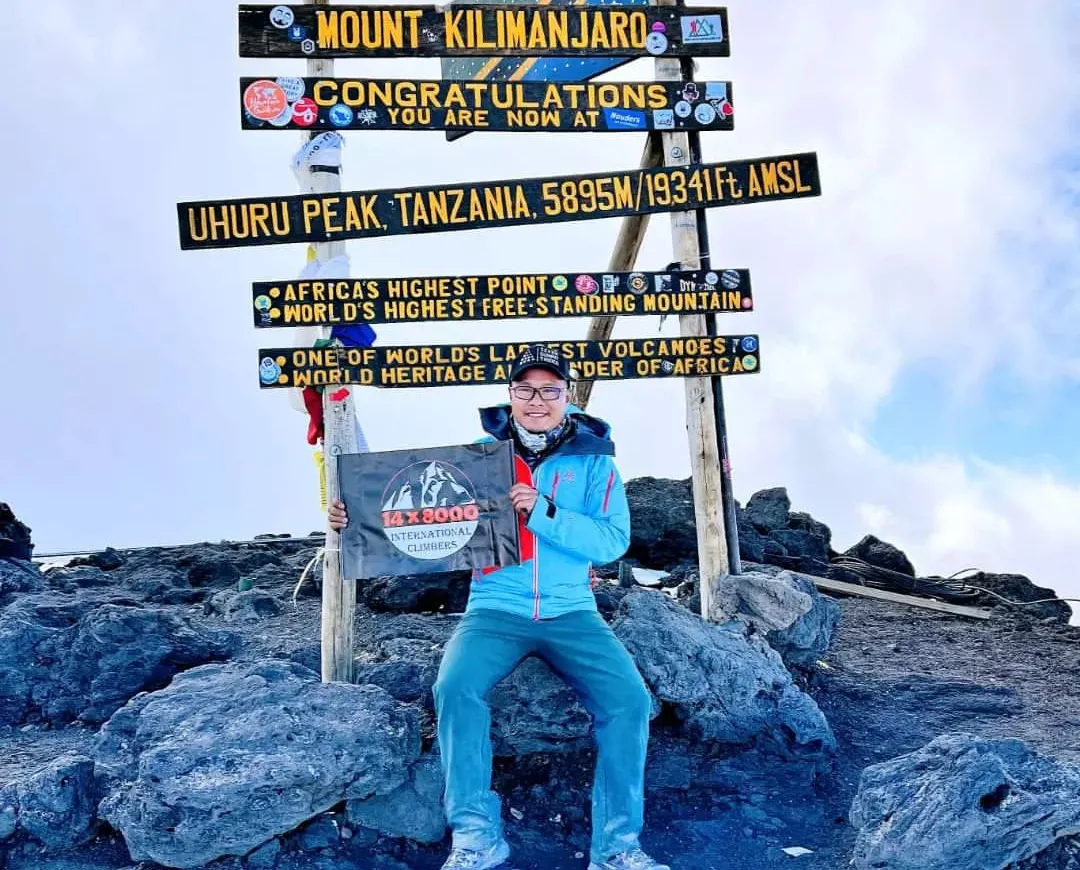
Your summit push begins at midnight. Follow steep switchbacks past Gilman’s Point (5,681m) and Stella Point to reach Uhuru Peak (5,895m)—Africa’s highest point. After celebrating and taking photos at the summit, descend back to Kibo Hut for rest and lunch, then continue on to Horombo Hut for a full night’s rest.
Altitude: 5,895m (Uhuru Peak)
Distance: ~22 km
Hiking Time: 12–14 hours
Habitat: Arctic to Alpine Desert to Moorland
07:00–14:00: Horombo Hut to Marangu Gate to Moshi
After breakfast, descend through the moorland and into the rainforest, retracing your steps to Marangu Gate. Receive your summit certificate and meet your driver for the return trip to Moshi. A warm shower, soft bed, and well-earned celebration await you!
Altitude: 1,870m
Distance: ~20 km
Hiking Time: 5–7 hours
Habitat: Moorland to Montane Forest
Tour Reviews
There are no reviews yet.
Leave a Review