Safari of Africa reveals 5 breathtaking escapes through Tarangire & Ngorongoro—iconic wildlife, epic landscapes & thrilling African safari moments.
Picture the raw thunder of wildebeest hooves against ancient plains, the hushed reverence as a leopard materializes from golden grass, or the electric moment when elephant herds converge at sunset watering holes. An African safari isn’t just a vacation—it’s a portal to Earth’s most spectacular wildlife theater, where every dawn delivers encounters that redefine your understanding of the natural world. According to luxury travel insights, 2026 marks a transformative year for safari experiences, with travelers seeking deeper connections to wilderness and conservation. Whether you’re drawn to the legendary Serengeti’s million-strong migrations, the waterlogged wonderland of Botswana’s Okavango Delta, or the mountain gorillas hidden in Rwanda’s cloud forests, East and Southern Africa harbor five incomparable safari destinations that promise encounters you’ll recount for decades. From witnessing predator-prey dramas unfold in real-time to tracking endangered species alongside expert guides, these wild escapes represent more than adventure—they’re immersive journeys into ecosystems where nature still writes the rules, and every moment carries the weight of authentic wilderness.
Safari of Africa: 5 Unmissable Wild Escapes 🐘
Africa’s wildest corners await those ready to trade predictability for primal wonder—and 2026 is shaping up as the breakthrough year for safari tours that redefine luxury, conservation, and authentic connection. From Serengeti’s record-breaking migration crossings to Botswana’s exclusive water-based game viewing, this continent delivers experiences that Instagram can’t contain and memory can’t fully capture. Whether you’re timing your journey around the dramatic Mara River crossings or seeking the snow-dusted peaks of Tanzania’s highest summit, these five unmissable wild escapes represent Africa at its most magnificent—places where the wild still runs deep and every sunrise promises stories you’ll retell for decades.
🌍 Welcome to the Ultimate Safari of Africa
The world’s most transformative wildlife encounters aren’t found in zoos—they unfold across Africa’s untamed grasslands, where nature’s grand theater operates on its ancient, unyielding schedule. African safari tours in 2026 represent more than vacation itineraries; they’re gateways to ecological storytelling written in predator-prey dynamics, seasonal migrations, and ecosystems that have shaped humanity itself. What separates a memorable game drive from a life-altering expedition? Timing, location, and the willingness to surrender control to Africa’s rhythms.
🦓 1. Tarangire National Park – The Elephant Empire
Northern Tanzania’s most underrated gem harbors Africa’s densest elephant herds—and in 2026, savvy travelers are discovering what conservationists have known for decades. While Serengeti monopolizes headlines, Tarangire National Park transforms July through October into a wildlife spectacle that rivals its famous neighbor, with safari tour Africa price points often 30-40% lower.
Ancient baobabs tower over seasonal waterholes where up to 300 elephants congregate during peak dry season—a concentration unmatched elsewhere on the continent. The Tarangire River becomes the lifeblood drawing not just pachyderms but over 550 bird species, from breeding pairs of endangered ground hornbills to migratory kori bustards. What distinguishes this 2,850-square-kilometer park is its intimate scale—game drives here feel less like safari theater and more like privileged observation of undisturbed rhythms.
Tree-climbing pythons and resident lion prides complete an ecosystem that functions with clockwork precision once the rains cease. The park’s southern reaches remain gloriously unexplored compared to northern circuits, offering adventurous travelers willing to venture beyond comfort zones a tangible sense of discovery that package tours rarely deliver.
🌟 Highlights:
Tarangire delivers Africa’s most concentrated elephant gatherings—up to 3,000 individuals converge here during dry season, creating spectacles that rival the Serengeti’s famous migrations. Beyond pachyderms, the park shelters tree-climbing pythons, rare fringe-eared oryx, and over 550 bird species including the endemic yellow-collared lovebird. The Tarangire River becomes a lifeline from June through October, drawing wildlife in staggering numbers while safari of africa tours capitalize on predictable game viewing. Unlike Tanzania’s busier circuits, you’ll encounter fewer than 50 vehicles park-wide on average days—a luxury that transforms wildlife photography and intimate animal observations. Ancient baobabs, some over 1,000 years old, punctuate golden grasslands where lions strategically hunt near permanent water sources.
📸 Pro Tip:
Book morning game drives for Tarangire’s best elephant photography—herds congregate at waterholes between 6-9 AM when golden hour lighting transforms dust clouds into ethereal backdrops. Position yourself downwind near Silale Swamp, where Africa tours typically encounter bachelor herds moving in synchronized formations that create powerful compositional layers. Use a 100-400mm lens to capture intimate behavioral moments: trunk embraces, dust bathing rituals, and maternal bonds that reveal the species’ complex social intelligence in ways telephoto compression enhances dramatically.
🧠 Fun Fact:
Tarangire’s baobab trees aren’t just scenic backdrops—they’re wildlife hotels. These ancient giants, some over 1,000 years old, hollow out naturally to create cavities that shelter everything from hornbills to hyenas. During dry season, elephants strip bark from these “upside-down trees” to access moisture-rich pulp, while baboons use fallen pods as water sources. A safari of Africa cost becomes easier to justify when you realize you’re witnessing ecosystems within ecosystems—the average baobab supports over 50 vertebrate species year-round.
🐃 2. Ngorongoro Crater – The Lost World of Wildlife
Descend 600 meters into the world’s largest intact volcanic caldera, and you’ll understand why safari of africa reviews consistently rank Ngorongoro as nature’s most concentrated wildlife theater. This 100-square-mile amphitheater cradles roughly 25,000 large mammals within walls that tower like ancient fortress ramparts—creating a self-contained ecosystem unlike any other on the continent.
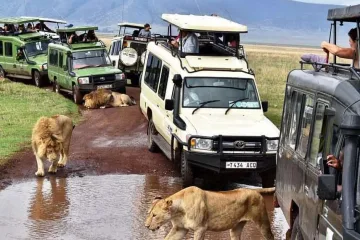
The crater floor transforms with each passing hour. Dawn reveals zebra herds streaming across golden grasslands while black rhinos—among Africa’s rarest megafauna—emerge from acacia shadows where they’ve sheltered overnight. By midday, hippo pods cluster in Lake Magadi’s alkaline shallows, their backs glistening like dark river stones beneath the equatorial sun. Predator action peaks during afternoon heat when lions laze in the shade, conserving energy before evening hunts.
What sets Ngorongoro apart from traditional safari circuits is its guaranteed game viewing. The crater’s natural boundaries keep wildlife concentrated year-round, eliminating the guesswork that characterizes other destinations. Best African Safari Tours 2026 identifies this reliability as a key factor for travelers with limited time—you won’t spend days searching for elusive species when they’re essentially corralled within view.
However, this accessibility comes with constraints. Tanzania restricts crater floor visits to six hours maximum, pushing you to prioritize sightings strategically. Morning game drives capture predators at their most active, while late afternoon sessions offer dramatic lighting for photography as dust devils spiral across the caldera. The 45-minute descent via switchback roads also limits spontaneity—once you’re down, you’re committed to the full experience.
Beyond the Big Five spectacle, Ngorongoro harbors ecological peculiarities that reveal themselves to observant visitors. Flamingo flocks tint Lake Magadi’s edges pink during wet seasons, while the Lerai Forest’s yellow-barked fever trees shelter elephants with tusks that rarely exceed small size due to calcium-poor soils. These details distinguish a surface-level visit from genuine wildlife understanding—exactly what awaits when you venture beyond the crater rim to Tanzania’s other legendary landscapes.
🌟 Highlights:
Witness Africa’s Big Five in their highest densities—over 25,000 large animals inhabit the crater floor year-round, including rare black rhinos found nowhere else in Tanzania. One 20-kilometer morning drive can yield lion prides, elephant herds, and grazing buffalo within meters of each other.
Plan for sunrise descents to beat crowds and maximize wildlife activity. The crater rim sits at 2,286 meters, creating crisp mornings perfect for photography when mist lifts from Lake Makat’s alkaline shallows. Safari of africa prices for Ngorongoro typically run $400–$600 per person daily, reflecting conservation fees and limited vehicle permits that preserve the caldera’s pristine conditions.
Combine crater visits with cultural encounters at nearby Maasai villages, where you’ll learn traditional beadwork techniques and cattle-herding practices unchanged for centuries. However, remember that the crater’s 19-kilometer diameter limits self-drive exploration—registered guides navigate the steep access road and identify wildlife behaviors most visitors miss.
📸 Pro Tip:
Visit during the green season (late March through May) when photography conditions are exceptional and you’ll experience this famous safari in Africa without the crowds. The dramatic storm clouds create stunning backdrops for wildlife shots, while softer light during overcast periods eliminates harsh midday shadows. Ngorongoro’s permanent water sources ensure animals remain visible year-round—you won’t sacrifice sightings for better rates. Professional photographers often prefer this timing specifically for the crater’s moody atmospheric conditions, lush, and verdant landscapes that contrast beautifully with golden-dry-season imagery seen everywhere else.
🧠 Fun Fact:
Lake Manyara holds one of Africa’s quirkiest wildlife mysteries—tree-climbing lions that lounge 20 feet above ground in acacia branches, a behavior found in only two locations on the entire continent. Scientists debate which African environmental factors trigger this unusual adaptation, with theories ranging from escaping ground-level insects to seeking cooler breezes and better vantage points for spotting prey. These laid-back cats rest in horizontal branches during midday heat, creating surreal photo opportunities that challenge everything you thought you knew about lion behavior. The phenomenon appears most frequently during the wet season when tsetse flies are particularly aggressive on the forest floor—making those shady branches an irresistible retreat.
🌿 3. Lake Manyara – Safari in Africa, With a Twist
Lake Manyara National Park proves that family-friendly safari experiences don’t require vast grasslands—this compact wonderland packs extraordinary wildlife encounters into a manageable 127-square-mile footprint. Unlike Tanzania’s sprawling reserves, Manyara rewards visitors with remarkable animal density, diversity in surprisingly short game drives, and making it ideal for travelers seeking a more intimate safari in Africa. The alkaline lake itself, covering two-thirds of the park, transforms dramatically with seasonal rains. During wet months, hundreds of thousands of flamingos create a pink ribbon along the shoreline, while the dry season concentrates buffalo herds, elephants, and hippos around shrinking water sources. This fluctuation ensures year-round wildlife viewing, though each season paints a different ecological picture.
What truly distinguishes this destination is its five distinct ecological zones—groundwater forest, acacia woodland, open grassland, swamps, and the lake itself—compressed into one accessible park. You’ll drive through cathedral-like mahogany groves where baboon troops swing overhead, emerge onto grassy plains dotted with giraffes, and wind through papyrus swamps harboring rare waterfowl—all within the same morning game drive. The park’s tree-climbing lions lounge on sturdy acacia branches throughout the day, offering exceptional photographic opportunities that safari destinations like Serengeti rarely provide. Beyond the felines, Manyara shelters over 400 bird species, massive elephant herds with impressive tusks, and healthy populations of buffalo, zebra, and wildebeest—a wildlife diversity that rivals parks ten times its size.
🌟 Highlights:
Lake Manyara’s compact 127-square-mile footprint delivers surprising diversity—expect to spot everything from elephants to flamingos in a single morning drive. The park’s hippo pools near the Endabash River offer guaranteed close encounters (with safety barriers), making it one of the easiest places to go for photographing these massive mammals without lengthy waits. Birdwatchers will count over 400 species, including pelicans, storks, and cormorants that turn the lake’s alkaline shores into a living aviary. The park’s northern entrance sits just two hours from Arusha, perfect for families tackling Kilimanjaro adventures who want a safari add-on without backtracking. Groundwater forest trails provide rare walking safaris where you’ll track blue monkeys and spot bushbuck beneath mahogany canopies—a refreshing change from traditional vehicle-based game viewing.
📸 Pro Tip:
Time your Lake Manyara visit for late afternoon when tree-climbing lions descend for evening hunts—this iconic behavior becomes dramatically photogenic as golden hour light filters through the acacia canopy. Position yourself near the park’s northern woodlands between 4-6 PM for the best sighting chances. After your safari day, consider how you might go on to explore Tanzania’s Northern Circuit highlights; many travelers pair Manyara’s compact wonders with a multi-day mountain adventure just hours away. Pro photographers recommend a 200-400mm lens for wildlife shots and keeping your camera’s shutter speed above 1/500 to freeze action during those unexpected lion-in-tree moments.
🧠 Fun Fact:
Lake Manyara’s tree-climbing lions represent only 2% of Africa’s lion population exhibiting this behavior—a phenomenon scientists attribute to the park’s dense acacia canopy providing midday shade and strategic vantage points above swampy terrain. When visitors go on safari here during peak afternoon heat, they’re witnessing adaptive behavior that evolved from practical necessity rather than playful curiosity.
What makes this spectacle particularly remarkable: these lions have developed stronger forelimb musculature compared to their ground-dwelling relatives, essentially creating a distinct sub-population within the park’s 120-strong pride network. The behavior continues passing from generation to generation, with cubs learning the technique by watching their mothers—nature’s version of cultural transmission happening in real-time along the lakeshore escarpment.
🏹 4. Cultural Safari with the Hadzabe & Datoga
Near Lake Eyasi, Tanzania’s oldest living cultures offer authentic encounters that transcend typical game drives. The Hadzabe people—one of Africa’s last hunter-gatherer tribes—welcome respectful visitors into their daily rhythms, creating profound cultural exchanges that luxury travelers increasingly prioritize in meaningful safari experiences. Dawn hunting excursions reveal ancient click-language communication and poison-arrow craftsmanship, while neighboring Datoga blacksmiths demonstrate generations-old metalworking techniques. These immersive mornings complement Northern Circuit adventures seamlessly—many travelers combine Hadzabe encounters with Ngorongoro Crater explorations just 90 minutes away. Ethical tour operators limit group sizes to five visitors, ensuring authentic interaction without overwhelming community life. Most visits include traditional fire-making demonstrations and bush-food foraging lessons that challenge modern assumptions about survival skills.
🌟 Highlights:
Tree-climbing lions lounging in ancient acacias, flamingo-painted shores stretching to the horizon, and authentic cultural exchanges with hunter-gatherer communities—Lake Manyara delivers experiences found nowhere else in East Africa. The park’s groundwater forest creates a rare microclimate supporting over 400 bird species, while its alkaline lake attracts massive seasonal flamingo congregations that transform the shoreline into a living pink canvas. What sets this destination apart is the diversity: morning game drives can transition seamlessly into afternoon cultural encounters, offering travelers a comprehensive Tanzania experience without the vast distances required elsewhere. For adventure seekers looking to maximize their East African itinerary, pairing these wildlife encounters with summit attempts creates an unforgettable land-and-wildlife combination. According to Best African Safari Tours 2026: Serengeti Takes the Crown, Tanzania’s Northern Circuit parks—including Manyara—continue ranking among Africa’s top five safari destinations for their accessibility and wildlife density.
📸 Pro Tip:
Shoot during the “golden hours”—the first two hours after sunrise and the final hour before sunset—when soft, directional light creates dramatic wildlife portraits with rich textures and warm tones. Position yourself so the sun illuminates your subject from the side or behind for stunning backlit shots that separate animals from their backgrounds. Keep your shutter speed above 1/500th to freeze movement, especially during action sequences like predator hunts or bird flights, and shoot in burst mode to capture peak moments you’d otherwise miss in single frames.
🧠 Fun Fact:
Arusha National Park holds a unique distinction as the only protected area in Tanzania where you can photograph both Mount Meru and Mount Kilimanjaro in a single frame—a photographic jackpot that transforms ordinary landscape shots into extraordinary dual-mountain compositions during clear morning conditions.
💧 5. Materuni Waterfall & Kikuletwa Hot Springs Combo
Adventure meets relaxation in this dual-destination escape that pairs northern Tanzania’s tallest cascade with crystalline geothermal pools. The 80-meter Materuni Waterfall thunders into a mist-shrouded plunge pool surrounded by coffee plantations, while Kikuletwa Hot Springs—fed by underground rivers from Mount Kilimanjaro—creates a turquoise oasis perfect for unwinding after days of wildlife tracking.
🌟 Highlights:
Dual natural wonders create an unforgettable contrast—plunging 90 meters through rainforest canopy, Materuni Waterfall provides the dramatic centerpiece before transitioning to the serene warmth of Kikuletwa’s spring-fed pools. The temperature differential alone tells the story: from cool mist-shrouded cascades averaging 18°C to bathwater-warm springs maintaining a constant 28°C year-round.
Cultural immersion elevates this beyond typical nature excursions. Chagga village encounters include hands-on coffee processing demonstrations—roasting, grinding, and brewing using traditional methods—while local guides share agricultural techniques refined over centuries on Mount Kilimanjaro’s fertile slopes. Photography opportunities multiply during the golden hour at Kikuletwa, when afternoon sunlight penetrates the crystal-clear water, illuminating submerged rope swings and creating ethereal turquoise reflections. The waterfall’s base pool offers dramatic angles for capturing the full cascade’s power, particularly during Tanzania’s longer rainy season from March through May when flow rates peak.
📸 Pro Tip:
Arrive before sunrise at the hot springs to capture that magical morning light filtering through the palm trees—the steam rising from the turquoise water creates ethereal photography conditions that disappear once the sun climbs higher.
🧠 Fun Fact:
Tanzania’s Northern Circuit hosts over 2.5 million wildebeest during the Great Migration—the largest terrestrial mammal migration on Earth. What’s remarkable is that this massive herd moves in a clockwise pattern covering approximately 800 kilometers annually, crossing crocodile-infested rivers and predator-rich plains. The timing creates a perpetual cycle where calving season in the southern Serengeti (January-March) produces roughly 500,000 wildebeest calves within a three-week window—nature’s strategic defense against predators who simply cannot consume that many newborns simultaneously. This synchronized birthing phenomenon transforms the ecosystem temporarily, with cheetahs and hyenas achieving their highest hunting success rates during this brief abundance. The diverse wildlife encounters throughout Tanzania’s protected areas showcase evolution’s most successful survival strategies in action.
📋 Tanzania Northern Circuit Overview
Tanzania’s Northern Circuit forms the backbone of East Africa’s premier safari experiences—a compact powerhouse of three UNESCO World Heritage Sites and four major national parks within a 250-mile radius. This concentrated wilderness corridor includes the Serengeti, Ngorongoro Crater, Lake Manyara, Tarangire, each offering distinct ecosystems, and wildlife encounters. The circuit’s strategic layout allows travelers to experience dramatic landscape diversity—from volcanic calderas to endless grasslands—without spending days on the road between destinations. Most itineraries dedicate 7-10 days to properly explore this region, though condensed 4-5 day trips focus on Serengeti and Ngorongoro highlights. The infrastructure here is Tanzania’s most developed, with reliable all-season access roads (except during heavy April rains), diverse accommodation options from basic campsites to ultra-luxury lodges, and convenient proximity to Arusha’s international airport. This proven circuit delivers consistent year-round wildlife viewing, making it the default choice for first-time safari-goers who want guaranteed animal encounters alongside iconic African landscapes.
🧳 Safari en Africa: Packing Essentials
Neutral-colored clothing in breathable fabrics forms the foundation of any African safari wardrobe—think khaki, beige, olive, and tan shades that blend with the landscape without attracting unwanted attention from wildlife. Bright whites startle animals, while dark blues and blacks attract tsetse flies in certain regions.
Layer strategically for dramatic temperature swings. Mornings on game drives hover around 50°F (10°C), while midday temperatures soar to 85°F+ (29°C). A lightweight fleece, long-sleeved sun shirt, and convertible pants handle these extremes better than overpacking multiple outfits. Most lodges offer same-day laundry service, meaning five days of clothing suffices for two-week safaris.
Sun protection demands serious attention—the equatorial sun at 4,000+ feet elevation burns exposed skin in minutes. SPF 50+ sunscreen, a wide-brimmed hat, polarized sunglasses, and UV-protective lip balm qualify as essentials, not optional extras. A buff or lightweight scarf protects your neck during open-vehicle drives.
Binoculars transform safari experiences from good to exceptional. Eight to ten-power magnification brings distant leopards into crisp detail and reveals intricate bird behaviors that naked eyes miss entirely. Compact models (8×32 or 10×42) balance portability with performance.
However, skip the camouflage patterns—many East African countries restrict or ban camo clothing due to military associations, potentially causing complications at customs.
🏝️ Thinking About Zanzibar Tanzania After Safari?
Zanzibar’s white-sand beaches and turquoise waters provide the perfect counterbalance to dusty safari trails—transforming your adventure into a complete East African experience. The spice-scented archipelago sits just a 90-minute flight from the Serengeti, making it Tanzania’s natural post-safari escape where coral reefs replace acacia trees and sunset dhow cruises follow morning game drives. This seamless transition from bush to beach has become a hallmark of Tanzania’s tourism appeal, offering travelers the rare opportunity to witness wildlife at dawn and snorkel pristine reefs by afternoon.
Stone Town’s labyrinthine alleys and UNESCO-protected architecture reveal centuries of Swahili, Arab, Persian, and European influence—a cultural depth that safari lodges simply can’t match. Beyond the historical capital, the island delivers barefoot luxury at properties like Mnemba Island Lodge, Zuri Zanzibar, where overwater villas, and private beaches cater to travelers seeking post-safari relaxation without sacrificing style. Whether you’re drawn to the underwater world of Mnemba Atoll, the spice plantations of central Zanzibar, or simply the prospect of hammock time with an Indian Ocean view, the archipelago complements Tanzania’s northern safari circuit with coastal beauty and cultural richness that rounds out any East African itinerary.
🏖️ Top Zanzibar Must-Dos:
Stone Town’s UNESCO-listed alleyways demand at least half a day of wandering—the spice market aromas, intricately carved wooden doors, and fusion architecture tell centuries of Swahili, Arab, and Portuguese history. Snorkeling around Mnemba Atoll reveals pristine coral gardens teeming with tropical fish, sea turtles, and occasional dolphin pods. Spice farm tours transform into sensory journeys where you’ll taste fresh cloves, crush cinnamon bark, and learn why Zanzibar earned its “Spice Island” nickname. Beach time splits naturally between the powder-soft sands of Nungwi’s sunset-facing shores and Paje’s turquoise shallows ideal for kitesurfing. Prison Island’s giant tortoises—some exceeding 100 years old—offer surprisingly interactive wildlife encounters just a short boat ride from the main island.
🎯 Ready to Book Your Africa Safari?
The window for 2026 safari bookings is closing fast—prime migration-viewing lodges and exclusive seasonal camps fill up 6-12 months in advance, leaving latecomers with limited choices or inflated rates. Securing your dates now means claiming the best positions during peak wildlife events, not settling for whatever’s left when lions scatter across dispersal areas or lodges redirect you to less favorable locations that still have vacancy.
✅ Take the Next Step Now
Your 2026 safari window is narrowing—premium lodges in the Serengeti and Ngorongoro are already filling their migration-season slots, with February through March availability tightening by the week. The difference between securing front-row access to the wildebeest calving season versus settling for secondary properties often comes down to booking before the year-end rush. Start by requesting a customized itinerary that locks in your preferred travel dates, then compare lodge options while peak-season inventory remains available—most safari specialists can hold provisional reservations for 72 hours, giving you breathing room to finalize flight logistics without losing your spot at sought-after camps like those overlooking the Mara River crossings.
Day 1: Arrival in Arusha
Your Tanzania safari adventure begins in Arusha, the gateway city nestled between Mount Meru and Kilimanjaro, where the transition from international travel to African wilderness happens seamlessly—most lodges provide airport transfers and pre-safari briefings within hours of touchdown at Kilimanjaro International Airport. After clearing customs, you’ll find yourself in the capable hands of safari operators who’ve perfected the arrival logistics: climate-appropriate welcome refreshments, vehicle introductions, and preliminary wildlife briefings while your luggage is secured for the journey ahead.
Day 2: Tarangire National Park Safari
Your second day transitions from acclimatization to immersion as you drive south to Tarangire National Park, Tanzania’s elephant sanctuary where herds numbering 300+ members gather along the Tarangire River during the dry season. The two-hour journey reveals a landscape shift—acacia woodlands and baobab silhouettes replace Arusha’s highlands, signaling your entry into genuine wilderness territory.
Morning game drives reveal Tarangire’s signature ecosystem: ancient baobab trees cradle leopards in their branches, while the riverbanks host dense concentrations of wildlife during June through October when water sources elsewhere have dried. The park’s 2,850 square kilometers support over 550 bird species alongside the iconic elephant populations, making it a photographer’s paradise where light filters through dust clouds kicked up by passing herds.
What distinguishes Tarangire from Tanzania’s more famous parks is its intimate scale and manageable visitor numbers—you’ll encounter wildlife without the vehicle congestion that sometimes characterizes Serengeti hotspots. Experienced guides position Land Cruisers for optimal sightings: zebra crossings at midday watering points, pythons coiled in tree forks, and the occasional tree-climbing lion that defies conventional big cat behavior.
Your overnight at a mid-range tented camp or lodge within the park ecosystem extends the safari beyond daylight hours—nocturnal sounds of hyenas and bush babies create an auditory landscape that hotel rooms in Arusha cannot replicate, preparing you mentally for the deeper wilderness immersion that Ngorongoro Crater will demand tomorrow.
Day 3: Ngorongoro Crater Exploration
Day three descends into Africa’s Eden—the Ngorongoro Crater, a UNESCO World Heritage Site where 25,000 large mammals thrive within the world’s largest intact volcanic caldera. The 2,000-foot descent into this natural amphitheater reveals a self-contained ecosystem spanning 100 square miles, where lions, black rhinos, elephants, and flamingo-speckled soda lakes create what conservation biologists call the densest concentration of predators on the African continent.
Your morning begins with the dramatic drive down the crater rim, switchbacking through cloud forest where colobus monkeys leap between moss-draped branches. The crater floor transforms into a wildlife theater unlike any other safari destination—herds of wildebeest and zebra graze alongside Cape buffalo while hippos wallow in Mandusi Swamp and spotted hyena clans patrol the open grasslands. The absence of giraffe (the crater walls are too steep) and impala (ecological competition theories vary) makes every species present feel more significant, more purposeful.
What makes Ngorongoro extraordinary isn’t just wildlife density—it’s accessibility. In practice, you’ll encounter more species in a single game drive here than during multiple days in other parks. The crater’s compact geography means predator-prey interactions unfold in clear view: lions stalking through golden grass, cheetahs sprinting across flat plains, jackals scavenging elephant carcasses. However, this concentration also means higher vehicle traffic during peak seasons, making early morning departures essential for solitude and optimal wildlife photography in soft light.
Day 4: Lake Manyara National Park & Maasai Cultural Visit
Your fourth day splits between wildlife discovery and cultural immersion, beginning with Lake Manyara National Park—a compact jewel where tree-climbing lions lounge in acacia branches and flamingo flocks paint the alkaline shoreline pink. The park’s groundwater forest supports troops of baboons and blue monkeys, while the lake’s edge attracts hippos and over 400 bird species, making every turn reveal a new vignette of biodiversity. Afternoon transitions to human connection as you visit a traditional Maasai village, where warriors demonstrate fire-starting techniques, women showcase beadwork artistry, and elders share stories of cattle-herding traditions that have endured centuries. This cultural exchange transforms your safari from observation to participation, deepening your understanding of the intricate relationship between Tanzania’s people and the wildlife they’ve coexisted with for generations—a balance that continues shaping East Africa’s conservation philosophy today.
Day 5: Snake Park Visit & Departure
Your final morning offers unexpected education at Meserani Snake Park, where conservation meets fascination just outside Arusha. This compact facility houses Tanzania’s venomous and non-venomous species—puff adders, black mambas, Nile crocodiles, and pythons—with knowledgeable handlers explaining each species’ ecological role and debunking common myths about Africa’s misunderstood reptiles.
The half-day visit includes a Maasai Museum showcasing traditional weaponry, beadwork, and cultural artifacts before your transfer to Kilimanjaro International Airport. Departures typically accommodate afternoon or evening flights, giving you buffer time to process five days of wildlife encounters, volcanic landscapes, and cultural immersion that redefined what safari means beyond the game drive.
Tour Reviews
Past travelers consistently highlight the seamless organization and wildlife abundance across these East African itineraries. Recent feedback emphasizes the quality of local guides—particularly their ability to spot elusive predators and interpret animal behavior—alongside the comfort of mid-range lodges that balance authenticity with modern amenities. However, some reviewers note that dusty road conditions during dry season require flexibility with travel times between parks. What resonates most strongly in feedback: the cultural authenticity of Maasai encounters and the emotional impact of witnessing the Great Migration’s sheer scale.
Leave a Review
Your safari experience shapes future travelers’ journeys—sharing honest feedback helps others discover East Africa’s wild beauty while supporting the guides and operators who made your adventure memorable. Beyond personal satisfaction, reviews contribute to conservation-focused tourism, ensuring quality standards that protect both wildlife and communities.
You May Also Like
Travelers exploring East Africa’s wildlife circuits often extend their adventures to include Kilimanjaro climbing expeditions, combining summit attempts with Serengeti game drives for the ultimate dual experience that luxury travelers increasingly favor in 2026.
African Safari Vacations
African safari vacations blend adventure with luxury—modern travelers increasingly seek experiences that combine wildlife encounters with sustainable tourism practices and personalized itineraries tailored to individual interests and travel styles.
6 of the Best Places to Go on Safari in Africa
East Africa dominates safari destination rankings—according to 2026 travel data, the Serengeti ecosystem consistently outperforms other regions for wildlife density and migration spectacles. However, the continent’s diversity means different destinations excel during specific seasons.
Tanzania’s northern circuit remains unmatched for witnessing the Great Migration between January and March, when over 1.5 million wildebeest concentrate in the southern Serengeti. Kenya’s Masai Mara takes precedence from July through October as herds cross the Mara River in dramatic fashion.
Botswana’s Okavango Delta offers intimate encounters through water-based safaris that eliminate road congestion entirely. The seasonal flooding creates exclusive wildlife viewing channels accessible only by mokoro canoe. A common pattern is combining Chobe National Park’s elephant populations with delta wetlands for contrasting ecosystems.
South Africa’s Kruger National Park appeals to first-time safari-goers with self-drive options and extensive infrastructure. Neighboring private reserves like Sabi Sands provide luxury alternatives with guaranteed Big Five sightings through expert tracking networks.
Rwanda and Uganda specialize in primate safaris—gorilla trekking permits cost significantly more than traditional game drives but deliver transformative encounters. Seasonal planning proves crucial, as January through June offers optimal conditions for East African destinations while avoiding European summer crowds. Namibia’s Etosha Pan rounds out this selection with unique desert-adapted wildlife and photographic opportunities around waterholes.
African Safari Tours
African safari tours require careful timing and route planning—seasonal wildlife movements dictate optimal travel windows, with January through June offering distinct advantages across East Africa’s prime game-viewing regions. Tour packages typically combine multiple parks within a single itinerary, maximizing wildlife diversity while minimizing travel fatigue. Most operators structure circuits around migration patterns, concentrating on Serengeti-Ngorongoro loops during calving season or northern circuit routes when river crossings peak. What typically happens is travelers book 7-10 day packages that balance game drives with cultural experiences, though condensed 4-5 day options suit time-constrained visitors. Guided group tours offer cost advantages over private arrangements, yet small-group formats maintain personalized attention while sharing vehicle expenses across participants.
Best African Safari Tours
Premium safari experiences now emphasize small-group departures and exclusive lodge access—luxury travelers in 2026 prioritize privacy and personalized wildlife encounters over traditional mass-market packages. Top-tier operators combine multiple parks within single itineraries, maximizing wildlife diversity while maintaining comfortable pacing. Multi-country tours linking Tanzania’s Serengeti with Kenya’s Masai Mara deliver comprehensive East African experiences, though single-destination deep dives often provide richer immersion. The best tours balance game drives with cultural interactions, incorporating Maasai village visits or conservation center tours that contextualize wildlife protection efforts beyond simple animal viewing.
Packages Tailored Itineraries
Custom safari packages now incorporate flexible booking structures and modular activity options—operators design itineraries that adjust to real-time wildlife movements and client preferences rather than following fixed routes. Pre-planned packages increasingly include optional add-ons like bush walks, cultural village visits, and or photographic workshops that travelers activate based on daily conditions. Multi-destination itineraries combine coastal extensions with highland treks, allowing travelers to experience diverse ecosystems within a single booking framework while maintaining schedule flexibility for unexpected wildlife opportunities.
Best African Safari Tours Packages Tailored Itineraries
Tailored safari packages now blend wildlife priorities with cultural immersion and flexible scheduling—operators design modular itineraries that allow travelers to adjust daily activities based on real-time wildlife movements and personal energy levels. A common pattern is structuring packages with core wildlife experiences as fixed components while offering optional add-ons like hot air balloon rides, guided bush walks, and or village visits that can be confirmed closer to departure dates. Premium packages increasingly include pre-safari consultations where specialists discuss fitness levels, photography interests, preferred accommodation styles to match travelers with appropriate lodges, and activity intensity. What typically happens is operators present three-tier options—budget camping safaris, mid-range tented camps, and luxury lodge experiences—each with customizable duration from compact 5-day circuits to comprehensive 14-day journeys spanning multiple countries. The most effective packages incorporate seasonal wildlife migration patterns into their design, automatically adjusting routes when travelers book specific months. However, this flexibility requires working with operators who maintain real-time communication with local guides and can pivot itineraries within 48 hours if conditions change. Tours combining Tanzania’s Serengeti with Kenya’s Masai Mara offer natural migration continuity, while packages pairing Botswana’s Okavango Delta with Zimbabwe’s Hwange National Park provide contrasting ecosystems within manageable transfer distances.
Africa Tours African Safaris
Modern safari operators now structure tours around seasonal wildlife movements and conservation access—itineraries synchronize game drives with migration patterns while incorporating private conservancy visits that traditional packages overlook. A common pattern is booking tours six months ahead to secure prime seasonal positioning, particularly for Serengeti calving season (January-March) or Okavango Delta flooding (June-August).
What distinguishes contemporary African safari tours is the integration of multi-country routing with ecological storytelling—guides explain predator-prey dynamics during actual hunts rather than delivering generic wildlife facts. Operators increasingly offer combination packages that pair Tanzania’s Ngorongoro Crater with Kenya’s Laikipia Plateau, creating contrast between volcanic highlands, and semi-arid ecosystems within a single trip. The shift toward conservation-funded tourism means safari tours now include participation in wildlife monitoring activities, transforming passive observation into active contribution. This approach addresses traveler demand for meaningful engagement while supporting regional conservation efforts through direct funding mechanisms tied to visitor numbers.
The 6 Kinds of African Safari
Safari diversity extends far beyond traditional game drives—travelers now choose from six distinct safari styles, each offering unique perspectives on African wilderness. The classic game drive safari remains foundational, using 4×4 vehicles to track wildlife during optimal viewing hours at dawn and dusk. Walking safaris bring travelers closer to ecosystems through guided bush walks, where foot travel reveals tracks, plants, and smaller species vehicles typically bypass.
Boat-based safaris navigate waterways like the Okavango Delta, Chobe River, positioning travelers at eye level with hippos, and crocodiles while birds fish overhead. Horseback safaris allow riders to move quietly alongside grazing herds, covering terrain traditional vehicles cannot access. However, these require moderate riding experience and weight restrictions typically apply. Fly-camping safaris strip away permanent infrastructure—temporary camps move with animal migrations, placing travelers in remote areas unreachable by road. Night safaris use spotlights to illuminate nocturnal predators and elusive species like servals and honey badgers that emerge after dark. Specialized guides trained in after-hours tracking lead these drives, which remain restricted in many conservation areas due to wildlife protection protocols.
The combination approach proves increasingly popular—multi-day itineraries now layer three or four safari types within single bookings, providing varied wildlife encounters while maintaining comfortable base camps between adventures.
Which African Safari Destinations Are Most Suitable for a Family with Young Children?
Family-friendly safari destinations prioritize short travel distances, malaria-free zones, and child-focused programming—selecting locations where young children can engage meaningfully without extensive game drives that test attention spans proves essential for memorable experiences.
Private reserves in South Africa’s Eastern Cape offer malaria-free environments with flexible schedules that accommodate nap times and shorter activities. These properties typically allow children of all ages, unlike traditional safari camps with strict age restrictions. In practice, families find success when lodges provide dedicated children’s programs—junior ranger activities, wildlife tracking lessons, and age-appropriate bush walks create engagement beyond passive vehicle viewing. Tanzania’s northern circuit presents family-accessible options through shorter drives between Ngorongoro Crater and Lake Manyara, where wildlife concentrations remain high without marathon search patterns. What typically happens is that lodges near these areas structure half-day game drives rather than full-day excursions, allowing children under six to maintain enthusiasm throughout the experience. One practical approach is selecting properties with swimming pools and interactive spaces where children can decompress between activities.
Beach-safari combinations particularly suit families with young children—coupling three nights of wildlife viewing with coastal relaxation balances active exploration and downtime. The rhythm of morning game drives followed by afternoon beach play accommodates varied energy levels across age groups. However, travelers should verify lodge infrastructure: family suites with adjoining rooms, child-safety features, and flexible dining options become non-negotiable when traveling with toddlers or preschoolers who require familiar routines within extraordinary settings.
How Can I Plan a Budget-Friendly Safari Trip in Africa?
Budget safaris balance strategic timing, destination selection, and accommodation choices—travelers who plan around shoulder seasons and choose group tours can reduce costs by 40-60% compared to peak-season private experiences. The key lies in understanding where flexibility creates savings without compromising wildlife viewing quality.
Timing determines pricing more than any other factor. Green season safaris (typically April-May and November in East Africa) offer dramatically lower rates as lodges reduce prices during brief rainy periods, yet game viewing remains excellent since animals concentrate around permanent water sources. These periods also bring fewer crowds and lush landscapes that enhance photography opportunities.
Destination selection significantly impacts overall costs. Tanzania’s northern circuit and Kenya’s Masai Mara command premium pricing due to their iconic status, while equally wildlife-rich alternatives like Zambia’s South Luangwa or Tanzania’s Selous Game Reserve deliver comparable experiences at 30-50% lower costs. National parks with lower entrance fees and less tourism infrastructure often provide more authentic encounters.
Group joining safaris represent the most economical approach—sharing vehicle costs among 4-6 travelers reduces per-person expenses while maintaining quality guides and wildlife access. Self-drive options in countries like Botswana, Namibia, South Africa eliminate guide fees entirely, though they require confidence navigating unfamiliar roads, and identifying wildlife independently. Accommodation choices span a wide spectrum. Budget camping safaris with basic tented facilities cost $150-250 per person daily compared to $500-1,500 for mid-range lodges. Some travelers strategically blend one or two nights at premium lodges with budget camping to balance comfort and cost.
Direct booking with local operators rather than international agencies often reduces commissions and provides more flexibility for customization. Many reputable operators offer package deals that include park fees, meals, and transfers—simplifying budgeting while securing better rates than à la carte arrangements. Understanding these vaccination requirements becomes the next essential planning step.
What Vaccinations Are Recommended Before Going on an African Safari?
Essential vaccinations depend on your specific destination and health history—travelers should consult a travel medicine specialist at least 6-8 weeks before departure to ensure adequate protection and allow time for multi-dose vaccines.
Yellow fever vaccination remains mandatory for entry into several African countries, including Tanzania, Kenya, and Rwanda. The vaccine must be administered at least 10 days before travel, and proof of vaccination via an International Certificate of Vaccination is required at borders. This single-dose vaccine provides lifetime immunity. Routine vaccinations should be up-to-date before departure. Most travelers need boosters for tetanus, diphtheria, pertussis, measles, mumps, and rubella. Additionally, hepatitis A and typhoid vaccines are strongly recommended for all safari-goers, as these diseases spread through contaminated food and water—risks present even in upscale lodges.
For travelers venturing into rural areas or planning extended stays, hepatitis B, rabies, and meningococcal vaccines warrant consideration. Rabies pre-exposure prophylaxis proves particularly valuable for wildlife photographers or those visiting remote regions where immediate medical access is limited. However, these remain optional based on individual risk assessment.
Malaria prophylaxis, while not technically a vaccination, requires equal attention. A travel medicine specialist can recommend appropriate antimalarial medication based on your destination’s resistance patterns and your medical history. Common options include atovaquone-proguanil, doxycycline, and or meningococcal vaccines. Starting this medical preparation early ensures you’re protected and ready to focus on what matters most—the incredible wildlife encounters ahead. Beyond vaccinations, understanding basic safari safety protocols helps maximize both enjoyment and security in the bush.
What Are the Top Safety Tips for First-Time Safari Travelers in Africa?
Wildlife viewing safety begins with maintaining proper distance and following guide instructions—most safari incidents occur when travelers ignore established protocols. Always remain inside your vehicle unless explicitly told it’s safe to exit, as even herbivores like hippos and buffalo account for more human fatalities than predators. Never approach animals for closer photos, regardless of how docile they appear.
A practical approach involves preparing for environmental challenges beyond wildlife encounters. Pack sun protection with SPF 50+, as equatorial UV exposure intensifies rapidly. Bring insect repellent containing DEET for malaria-prone regions, and wear neutral-colored clothing to avoid attracting tsetse flies. What typically happens during game drives is temperature fluctuations—mornings start cool but afternoons reach 90°F+, so layer clothing strategically.
Communication protocols matter significantly in remote safari areas. Share your itinerary with family, establish check-in schedules, and confirm your accommodation has reliable Wi-Fi or satellite phone access. One common pattern is cellular service disappearing outside major parks, making emergency coordination challenging without advance planning.
Understanding cultural sensitivity and local customs enhances both safety and experience quality. Research appropriate photography etiquette before visiting indigenous communities, as some cultures restrict images. Keep valuables concealed and use lodge safes consistently—opportunistic theft targets distracted tourists at busy lodges and markets.
How Do I Choose Between a Self-Drive and a Guided Safari in Africa?
Your safari experience level and destination determine whether self-drive or guided options work best—beginners typically benefit more from professional guides who provide wildlife expertise and safety protocols, while experienced travelers with proper vehicles may prefer the flexibility of self-drive adventures in well-developed parks. A common pattern is starting with guided safaris to build confidence before attempting self-drive journeys.
Guided safaris offer expert wildlife tracking and interpretation that significantly enhances animal encounters. Professional guides understand animal behavior patterns, know where specific species congregate during different times of day, and can identify tracks, calls, and other signs invisible to untrained eyes. They also handle navigation, park regulations, and vehicle maintenance—allowing you to focus entirely on the experience rather than logistics.
Self-drive safaris provide freedom to set your own pace, explore at will, particularly appealing in countries like Botswana, Namibia, and South Africa where park infrastructure supports independent travel. However, this option requires substantial preparation: a reliable 4×4 vehicle with proper clearance, detailed maps or GPS systems, camping gear if needed, and thorough understanding of park rules and safety protocols. Consider the terrain and wildlife density when deciding. Areas with dense bush or challenging navigation conditions favor guided experiences, while open plains with established road networks suit self-drive exploration. Budget also plays a role—guided safaris typically cost more upfront but include expertise, equipment, whereas self-drive requires lower daily rates but demands significant investment in vehicle rental, and gear. For your first African safari, a guided experience builds essential knowledge that makes future self-drive adventures more rewarding and safer.
What Should I Pack for a Two-Week Safari Adventure in Africa?
Strategic packing balances comfort, protection, and versatility—neutral-colored clothing in breathable fabrics like cotton or moisture-wicking synthetics works best for game drives and walking safaris. Pack layers to accommodate temperature swings between cool morning drives and midday heat, including a warm fleece or jacket for early starts when temperatures can drop to 50°F (10°C).
Essential items include binoculars (8×42 or 10×42 magnification), a wide-brimmed hat with chin strap, high-SPF sunscreen, insect repellent with DEET, and a quality camera with telephoto lens. Most lodges provide laundry services, so packing seven days’ worth of clothing suffices for two weeks. Choose closed-toe walking shoes for bush walks and comfortable sandals for evenings at camp. Create a “daily essentials” daypack containing sunglasses, hand sanitizer, wet wipes, lip balm, and personal medications—game drive vehicles have limited storage. Bring a refillable water bottle, as lodges provide filtered water stations to minimize plastic waste. A headlamp with red-light setting proves invaluable for navigating camps after dark without disturbing wildlife, while a power bank ensures devices stay charged between drives when electricity access may be limited.
Which African Countries Offer the Most Sustainable and Eco-Friendly Safari Options?
**Kenya
- Tanzania
- Rwanda
- Botswana lead Africa’s sustainable safari movement** through community-based conservation programs
- low-impact lodges
- strict wildlife protection policies. These destinations balance tourism revenue with environmental preservation, ensuring safari experiences support rather than exploit natural ecosystems.
Kenya’s conservancies demonstrate successful community-driven conservation, where land lease agreements between Maasai communities and safari operators create economic incentives for wildlife protection. Tanzania’s Serengeti and Ngorongoro Conservation Area employ strict visitor quotas and seasonal access restrictions that minimize environmental impact while maintaining exceptional wildlife viewing opportunities.
Rwanda pioneered high-value, low-volume tourism with its gorilla trekking permits, generating substantial conservation funding through limited daily visitors. Botswana similarly restricts safari numbers through higher pricing structures and remote camp locations, creating exclusive experiences that significantly reduce ecological footprints. On the other hand, these premium pricing models make sustainable safaris less accessible to budget-conscious travelers.
Solar-powered camps, water recycling systems, and zero-single-use-plastic policies now define leading eco-lodges across these countries. What typically happens is these facilities reinvest tourism revenue directly into anti-poaching units, habitat restoration, and local education programs—creating measurable conservation outcomes beyond simply reducing carbon emissions.
When selecting sustainable safari options, verify lodges hold recognized certifications like Travelife Gold or membership in organizations like the Long Run, which authenticate environmental, and social responsibility claims beyond marketing rhetoric.
Best African Safari Vacations
The continent’s premier safari experiences combine wildlife abundance, luxury accommodation, and seamless logistics—with Tanzania’s Serengeti and Kenya’s Masai Mara consistently ranking among top destinations for 2026. These standout vacations feature multi-park itineraries that maximize diverse encounters, from wildebeest migrations to Big Five tracking, and while providing expert guides who transform animal sightings into educational narratives. A common pattern is combining conservation-focused lodges with exclusive game drives during optimal wildlife viewing hours—typically early morning and late afternoon—when animals are most active. Botswana’s Okavango Delta offers water-based safaris through seasonal floodplains, while Rwanda’s mountain gorilla treks deliver intimate primate experiences. What typically happens is that travelers who invest in comprehensive packages discover deeper connections with ecosystems, supported by naturalist guides who contextualize behaviors and environmental relationships beyond simple wildlife checklists.
Trips Luxury Travel
Luxury safari trips combine personalized itineraries with exclusive accommodations and expert-guided wildlife encounters—typically featuring private game reserves, gourmet dining, and curated cultural experiences that elevate the traditional safari beyond simple game viewing. What luxury travelers are craving from a 2026 Africa vacation reveals that transformative wellness experiences and hyper-personalization now define premium African travel, with travelers seeking properties that blend conservation impact with sophisticated comfort.
The most distinctive luxury trips incorporate private conservancies where vehicle limits preserve wildlife viewing exclusivity, boutique lodges with fewer than 20 suites ensuring intimate service, and specialist guides who tailor each safari drive to guest interests—whether tracking specific predators, photographing rare birds, or understanding complex ecosystem dynamics. However, authentic luxury increasingly means supporting community-led tourism initiatives and conservation projects rather than simply accessing the most opulent amenities, creating meaningful connections between travelers and the landscapes they explore.
Best African Safari Vacations Tours Trips Luxury Travel
The evolution toward experiential luxury is reshaping African safari packages—what luxury travelers are craving from a 2026 Africa vacation emphasizes transformative cultural immersion over traditional comfort-focused itineraries. Premium operators now curate multi-country circuits combining Tanzania’s wildlife spectacles with conservation-focused lodges, private guides fluent in behavioral ecology, and exclusive access to restricted areas. These comprehensive packages eliminate logistical complexity while maintaining flexibility—travelers might spend three nights tracking lions in Serengeti’s remote Lamai Wedge, transition to Ngorongoro’s crater floor for concentrated predator viewing, then conclude with Zanzibar’s boutique beach resorts. The integration of wildlife photography workshops, bush survival skills training, and community-led storytelling sessions distinguishes contemporary luxury safaris from conventional game drives.
The Best Parks for Safaris in Africa 1
Africa’s premier safari destinations are determined by biodiversity density, seasonal wildlife movements, and conservation effectiveness—factors that separate exceptional experiences from merely adequate ones. The continent’s top-tier parks consistently deliver encounters with Africa’s iconic species while maintaining ecological integrity through sustainable tourism practices and anti-poaching initiatives.
Kruger National Park 2
Kruger’s conservation corridors now extend beyond traditional boundaries, creating wildlife movement networks that mirror ancestral migration routes. The park’s private concessions offer exclusive traversing rights across 220,000 hectares where Big Five encounters happen away from day-visitor traffic patterns. What typically happens is leopards and wild dogs utilize these buffer zones during peak tourist seasons, concentrating predator activity in areas accessible only through guided private reserve access—a pattern that’s revolutionizing how luxury properties position their wildlife offerings.
What are the best months to go on a safari in Africa for wildlife viewing?
Timing your safari around Africa’s seasonal wildlife movements dramatically increases your chances of witnessing dramatic predator-prey interactions and mass migrations. January through March delivers prime viewing in Tanzania’s Serengeti, where calving season attracts concentrated predator activity around vulnerable newborns. The dry season months of June through October offer optimal game viewing across East Africa, as diminishing water sources force wildlife to congregate around remaining rivers, and waterholes—creating predictable viewing opportunities. However, specific destinations follow distinct seasonal patterns. Southern Africa’s parks peak during their winter dry season (May through September), while Kenya’s Masai Mara showcases the Great Migration’s dramatic river crossings between July and October. What typically happens is that shoulder seasons (April-May and November) offer reduced crowds, lower prices, and though unpredictable rainfall can affect road accessibility in certain regions. For budget-conscious travelers weighing seasonal pricing variations, understanding these wildlife movement patterns becomes essential for maximizing value without sacrificing exceptional viewing experiences.
How can I plan a budget-friendly safari trip in Africa?
Strategic timing transforms safari affordability—traveling during shoulder seasons (April-May and November) reduces accommodation costs by 30-50% while wildlife viewing remains exceptional. Self-drive safaris in countries like Botswana, South Africa eliminate guide fees, and with camping inside national parks costing $15-30 per night compared to $300+ for lodges. Group safari packages distribute vehicle and guide expenses across multiple travelers, making premium destinations like the Serengeti accessible at mid-range prices. Budget-conscious travelers should prioritize lesser-known parks that rival famous reserves without premium pricing. Tanzania’s Tarangire National Park offers elephant densities comparable to Kenya’s Amboseli at half the entrance fees, while Zambia’s South Luangwa provides walking safaris at prices significantly below Botswana’s Okavango Delta. Selecting three-star accommodations just outside park boundaries rather than luxury camps inside can reduce daily costs from $800 to $200 without compromising wildlife access.
A common pattern is booking directly with local operators rather than international tour companies, often saving 20-40% on identical itineraries. Combining safari days with beach extensions on Zanzibar or cultural experiences creates diverse African adventures while allowing strategic budget allocation. One practical approach is limiting safari days to four or five concentrated wildlife-viewing mornings and evenings, maximizing encounter quality over quantity while maintaining reasonable overall trip costs before exploring vaccination requirements for your journey.
What vaccinations are recommended before going on an African safari?
Yellow fever vaccination remains mandatory for most East African countries, with travelers required to present proof of vaccination upon entry to Tanzania, Kenya, and Uganda. Consult your healthcare provider at least 6-8 weeks before departure to complete the full immunization schedule, as some vaccines require multiple doses spaced over several weeks.
Routine immunizations should be current, including tetanus-diphtheria, measles-mumps-rubella (MMR), and seasonal influenza. Hepatitis A and typhoid vaccines are strongly recommended due to potential exposure through food and water, particularly in rural safari areas. Travelers planning extended stays or visiting remote regions should consider hepatitis B vaccination, especially if medical procedures might be necessary. Malaria prophylaxis requires careful planning—prescription antimalarial medication should begin before travel (timing varies by medication type) and continue throughout your safari and for a specified period after returning home. However, malaria risk varies significantly by region and season, so discuss your specific itinerary with a travel medicine specialist. One practical approach is scheduling a consultation with a travel health clinic that specializes in African destinations, as they maintain current information about disease patterns and entry requirements.
Rabies vaccination may be recommended for travelers engaging in wildlife photography at close range or planning extended stays in rural areas. With health preparations complete, understanding safety protocols for wildlife encounters becomes equally important.
What are the top safety tips for first-time safari travelers in Africa?
Maintaining safe distance from wildlife forms the foundation of safari security—guides typically enforce minimum distances of 25 meters for most animals and significantly more for predators, with vehicle-based viewing providing optimal protection. Staying inside your safari vehicle unless explicitly authorized by your guide prevents dangerous encounters, as animals perceive vehicles as single entities rather than potential threats.
Following guide instructions without deviation ensures comprehensive protection, particularly during walking safaris where human vulnerability increases exponentially. Professional guides assess terrain, wind direction, and animal behavior patterns continuously to maintain safety buffers. Never attempt photography or observations that require breaking formation or approaching wildlife independently.
Health precautions extend beyond vaccinations to practical daily habits—using insect repellent containing at least 30% DEET, wearing long sleeves during dawn and dusk, and sleeping under mosquito nets significantly reduces malaria risk. Drinking only bottled or purified water and avoiding uncooked foods in remote areas prevents gastrointestinal issues that could derail your adventure.
Communication protocols matter when traveling through remote wilderness areas. Inform lodge staff of any pre-existing medical conditions, carry essential medications in original packaging with prescriptions, and maintain travel insurance that includes emergency evacuation coverage. Many safari regions operate with limited cellular connectivity, making pre-arranged emergency communication channels vital for accessing medical assistance when needed.
What should I pack for a two-week safari adventure in Africa?
Lightweight, neutral-colored clothing in moisture-wicking fabrics forms the foundation of smart safari packing—khaki, olive, and tan garments blend naturally with surroundings while dark colors attract tsetse flies and heat. Pack seven to eight versatile pieces that layer easily: long-sleeved shirts protect against sun and insects during game drives, while convertible pants transition from morning coolness to midday warmth. A quality fleece or lightweight down jacket proves essential for early morning drives when temperatures dip unexpectedly, particularly at higher elevations. Closed-toe walking shoes and comfortable sandals handle varied terrain, while a wide-brimmed hat and polarized sunglasses provide crucial sun protection during extended outdoor exposure. Include a high-quality camera with zoom lens capabilities to capture wildlife moments from safe distances, plus extra memory cards, and portable charging solutions. A small daypack carries daily essentials during excursions, while soft-sided luggage accommodates bush plane weight restrictions common across East Africa. Don’t forget binoculars for detailed wildlife viewing—8×42 or 10×42 magnification delivers optimal performance without excessive weight. Essential health items include
- prescription medications in original containers
- broad-spectrum sunscreen (SPF 50+)
- insect repellent containing DEET
- basic first-aid supplies
- personal toiletries in travel sizes. However, luxury lodges typically provide most amenities, so avoid overpacking items readily available at safari camps.
✅ Take the Next Step Now
📞 Call/WhatsApp: +255 784 411 852
🔗 Visit Us: East Africa Travel Company
Plan your perfect safari a Africa with local experts who live it, love it, and guide it every day.
Your safari en Africa starts the moment you say yes. Don’t wait—wild memories are calling! 🐾
| Destination | Tarangire, Ngorongoro, Lake Manyara, Snake Park |
| Arrival | Kilimanjaro International Airport (JRO) |
| Departure Time | Yes Require |
| Included |
✅ Included in Your Safari Package (All Prices Include VAT)
|
| Excluded |
❌ Not Included in Your Safari Package
|
| Tanzania in Safari | |
Day 1: Arrival in Arusha
Day 2: Tarangire National Park Safari
Day 3: Ngorongoro Crater Exploration
Day 4: Lake Manyara National Park & Maasai Cultural Visit
Day 5: Snake Park Visit & Departure
Ngorongoro Crater:
Tour Reviews
There are no reviews yet.
Leave a Review