Mt Kilimanjaro Africa 8 Days Lemosho Route offers an unforgettable challenge with stunning views—perfect for adventurous spirits!
Standing at 19,341 feet, Mount Kilimanjaro isn’t just Africa’s highest peak—it’s a non-technical ascent that rewards proper planning with breathtaking views and a summit success rate that varies dramatically by route. Choosing an 8-day itinerary rather than shorter alternatives fundamentally changes your odds: Kilimanjaro Success Rates by Route shows that extended route days allow critical acclimatization, with 8-day treks achieving success rates near 85% compared to just 27% for rushed 5-day attempts. This comprehensive 8-day Lemosho expedition prioritizes gradual altitude gain through Tanzania’s most scenic corridors—rainforest canopies, alpine deserts, and glacier zones—giving your body the time it needs to adapt while you experience one of Earth’s most diverse climbing environments.
🏔️ Mt Kilimanjaro Africa: 8-Day Epic Trek!
The Lemosho Route stretched across eight days transforms a demanding climb into a strategic ascent. This extended timeline pushes summit success rates to 85%—significantly higher than rushed alternatives—by allowing your body gradual altitude adaptation while traversing Kilimanjaro’s most scenic western approach through pristine rainforest and the dramatic Shira Plateau.
Those extra lemosho route days directly correlate with acclimatization effectiveness. However, the route demands physical readiness: expect 5-8 hour daily treks carrying a daypack while porters handle camp logistics. Weather windows narrow between January-March and June-October, making timing as crucial as fitness.
🏔️ Lemosho Route 8-Day Park Fees & Trek Price (2026)
That 70–85% summit success rate stems from calculated elevation gain management. Eight days typically means ascending roughly 2,500 feet per stage—gentle enough for cellular-level acclimatization yet swift enough to finish before weather windows close.
📋 Park Fee Breakdown (8 Days / 7 Nights)
Conservation fees represent the largest single cost component on any Lemosho trek. Tanzania National Parks Authority charges $858 per climber for seven overnight stays inside park boundaries—covering the Kilimanjaro Lemosho Route distance of roughly 42 miles from Londorossi Gate to Mweka Gate. This mandatory tariff includes access rights, rescue coverage, and environmental preservation funding. Camping fees add $70 per night ($490 total), while rescue fees run $20 daily ($140 for eight days). Hut fees don’t apply on this route since all lodging occurs in tents, but a $50 combined vehicle permit covers support truck access to the trailhead. Altogether, official government charges push past $1,500 before you factor in guides, porters, or meals—a reminder that shorter itineraries compress costs but compromise acclimatization. One practical approach is weighing that extra day’s expense against the improved summit odds and reduced altitude stress.
⚠️ Additional Possible Fees
Beyond the core park fees, your route itinerary may trigger $100–300 in supplementary charges depending on logistics and preferences. Portable toilet hire runs approximately $120 for the full trek—a worthwhile sanitation investment on a route where facilities above Shira Camp remain rudimentary. Additional porter fees apply if you exceed the standard 15 kg baggage allowance; each extra kilogram typically costs $2–3 per day, compounding over seven nights.
Rescue insurance deposits are another consideration. Some operators require a $50–100 refundable deposit or proof of emergency evacuation coverage before departure. Tanzania National Parks Authority mandates comprehensive insurance for shorter Marangu climbs and Lemosho treks alike, though the deposit itself is rarely forfeited unless an actual helicopter extraction occurs.
Single-room supplements at pre-trek hotels add $40–80, while sleeping bag rentals (for those arriving without proper gear) run $30 for the duration. A common pattern is operators bundling these into “all-inclusive” packages—verify line items during booking to avoid on-trail surprises. However, transparency varies; reputable companies itemize every charge, while budget operators may present blanket quotes that obscure individual fee components.
💰 Total Package Price (Including Operator Costs)
When you book an eight-day Lemosho route itinerary expect all-in pricing between $2, 400, $4, and 200 per climber. This figure bundles park fees ($858), crew wages (estimated $600–900 for porters, guides, cooks), equipment rental ($150–300), meals, permits, and emergency oxygen. Budget operators cluster near $2,400–2,700, while premium outfitters charging $3,500–4,200 typically deploy larger support crews, higher guide-to-climber ratios, and superior camping gear for colder summit nights. Group size dramatically shifts per-person costs. A solo climber might pay $3,800 because fixed expenses (guide salaries, permit processing) don’t divide across multiple participants. However, joining a scheduled departure with six to eight trekkers can lower individual pricing to $2,600–2,900, since overhead spreads across the roster. That $1,200 difference often determines whether climbers splurge on post-trek safaris or pocket savings for future adventures.
Premium packages exceeding $4,000 frequently include pre-departure consultations, supplemental oxygen bottles proactively stationed at high camps, 000 feet up, and needing confidence in your support network.
📍 Key Locations on the Lemosho Route
Your eight-day trek traverses five distinct climate zones, each with signature landmarks that mark your ascent. The journey begins at Londorossi Gate (2,100 meters), where permits are processed before you enter the lush rainforest. Day two brings you through Shira 1 Camp (3,500 meters), where the forest gives way to moorland and your first expansive views of the mountain’s western face emerge.
By day three, you’ll reach Shira Plateau—a massive, high-altitude expanse at 3,850 meters that serves as a natural acclimatization zone. This ancient volcanic caldera offers panoramic vistas and gentler terrain before the technical climbing intensifies. The route then arcs around to Barranco Camp (3,960 meters), positioned beneath the imposing Barranco Wall, a 257-meter rock face that, while dramatic, involves scrambling rather than technical climbing.
Your final push takes you through Barafu Camp (4,673 meters)—the launch point for summit night—before ascending to Uhuru Peak at 5,895 meters. The Kilimanjaro Lemosho route cost reflects this comprehensive itinerary, with higher pricing tied partly to camping at these premium, less-crowded sites. However, unlike shorter itineraries, this extended timeline significantly improves your physiological adaptation across these varied elevation zones.
ℹ️ Summary
The Kilimanjaro Lemosho route itinerary over eight days delivers an expertly paced ascent that balances acclimatization, scenery, and summit success. Spanning approximately 70 kilometers from Londorossi Gate to Mweka Gate, this trek guides you through five climate zones—from lush rainforest to alpine desert—before reaching Uhuru Peak at 5,895 meters. The extended timeline significantly boosts summit odds, with success rates averaging 85-90% on properly executed eight-day schedules. Budget $2,400–$4,200 for comprehensive packages covering permits, guides, porters, meals, and mountain accommodations. Unlike rushed alternatives, this seven-day Machame option or shorter variations, the Lemosho route prioritizes gradual elevation gain with strategic rest days. Expect nightly camps at Mti Mkubwa, Shira 1, Shira 2, Barranco, Karanga, and Barafu before your midnight summit push—a rhythm designed to let your body adapt naturally while preserving energy for the final ascent.
🚶 Why Choose the 8-Day Lemosho Route?
The eight-day Lemosho itinerary delivers Kilimanjaro’s highest success rate among all standard routes—approximately 85% summit success according to Ultimate Kilimanjaro, compared to just 27% on shorter, more direct paths. This dramatic difference stems from superior acclimatization schedules that allow your body to adjust gradually to altitude.
When you hike the Lemosho route over eight days, you’re purchasing two extra acclimatization days that shorter variations simply can’t provide. Data from Climbing Kilimanjaro Guide shows that each additional day reduces altitude sickness risk by approximately 15%. The eighth day specifically adds a crucial rest period at Karanga Camp (3, 995m), and where your red blood cell production increases naturally before the summit push. The extended timeline also creates a less grueling physical experience. Rather than forcing 20-kilometer days that exhaust even fit trekkers, the eight-day schedule averages 8-10 kilometers daily with moderate elevation gains. This measured pace preserves energy for summit night when you’ll genuinely need every reserve. On the other hand, rushed six-day attempts often see trekkers arrive at Barafu Camp already depleted—a recipe for turning back before Uhuru Peak.
Beyond physiology, the longer route offers unmatched scenic variety. You’ll traverse all five climate zones—from rainforest to arctic desert—with adequate time to actually appreciate each ecosystem rather than rushing through.
🌿 Day-by-Day Breakdown of Your Mt Kilimanjaro Trek
When you hike the Lemosho route over eight days, each stage delivers distinct landscapes and acclimatization milestones designed to maximize your summit chances.
Day 1: Londorossi Gate to Mti Mkubwa Camp (2,100m to 2,750m)—Registration and rainforest immersion through cloud-draped canopy, approximately 6km over 3-4 hours. Colobus monkeys often swing through the trees as you establish your trekking rhythm.
Day 2: Mti Mkubwa to Shira 1 Camp (2,750m to 3,500m)—The forest transitions to heather moorland across 8km in 5-6 hours. Kilimanjaro’s volcanic cone emerges dramatically as vegetation thins.
Day 3: Shira 1 to Shira 2 Camp (3,500m to 3,850m)—A gradual 7km acclimatization day traversing the Shira Plateau, where you’ll cross lunar-like volcanic landscapes in 4-5 hours.
Day 4: Shira 2 to Barranco Camp via Lava Tower (3,850m to 3,960m)—The critical “climb high, sleep low” principle in action. Ascend to 4,600m at Lava Tower before descending through the Senecio forest zone, covering 10km over 7-8 hours with proper gear preparation essential for temperature swings.
Day 5: Barranco to Karanga Camp (3,960m to 3,995m)—Conquer the Barranco Wall’s thrilling scramble before traversing alpine desert ridges, 5km in 4-5 hours.
Day 6: Karanga to Barafu Camp (3,995m to 4,673m)—Summit base camp reached across 4km of increasingly barren terrain in 3-4 hours. Rest and hydration become priorities.
Day 7: Summit Day to Mweka Camp (4,673m to 5,895m to 3,068m)—Midnight departure for Uhuru Peak, then long descent through multiple climate zones, covering 17km total over 12-16 hours of sustained effort.
Day 8: Mweka to Gate (3,068m to 1,640m)—Victory descent through rainforest, 10km in 3-4 hours, celebrating your achievement with summit certificates awaiting at the exit gate.
💡 7 Powerful Reasons to Do This Now
The decision to hike the Lemosho route shouldn’t linger on your bucket list indefinitely. Seven compelling factors converge to make 2024–2025 the optimal window for your Kilimanjaro attempt.
Summit success statistics favor immediate action. Kilimanjaro Success Rates by Route demonstrate that the eight-day Lemosho consistently outperforms shorter itineraries—yet most climbers postpone their trek for “someday,” reducing lifetime success probability. Climate patterns remain stable now, but forecasting models suggest increasing weather unpredictability in coming decades.
Your physical prime won’t wait either. While climbers aged 25–55 maintain high summit rates, comprehensive gear preparation takes three to four months. Delaying your departure by years means training during different life phases—career transitions, family demands, or age-related recovery challenges that compound difficulty.
Permit regulations tighten annually as Tanzania manages environmental impact. Current booking systems allow reasonable flexibility, but increased popularity could trigger lottery systems or extended waiting periods within five years. Economic factors matter too: inflation affects porter wages and park fees predictably, making today’s investment more cost-effective than tomorrow’s.
The seven-day Lemosho itinerary creates optimal conditions through deliberate acclimatization staging—but only if you commit before fitness wanes or competing priorities consume your available vacation time. However, rushing preparation undermines these advantages; three months minimum training remains non-negotiable regardless of booking urgency.
1️⃣ Highest Success Rate Among Routes
The Lemosho route’s 85-90% summit success rate dwarfs most alternatives, particularly on eight-day itineraries. This advantage stems from its extended acclimatization profile—you gain altitude gradually across varied terrain zones, allowing red blood cell adaptation that shorter routes can’t match. How Long Does it Take to Climb Mount Kilimanjaro? shows duration directly correlates with success: routes condensed into five or six days suffer 40-60% failure rates, while Lemosho’s extra days reduce altitude sickness incidents by roughly 35%.
The eight-day format adds strategic rest periods at Shira and Barranco camps, where you “climb high, sleep low” to complete cellular oxygen processing before ascending further. This physiological pacing explains why trekkers report fewer headaches and nausea compared to rushed routes. What separates achievers from those who turn back at Stella Point isn’t fitness alone—it’s adequate acclimatization time, making Lemosho the practical choice for first-time high-altitude climbers seeking legitimate summit odds.
2️⃣ Stunning Biodiversity & Ever-Changing Landscapes
Mount Kilimanjaro functions as five ecosystems compressed into one vertical journey. The Lemosho route showcases this transition spectacularly—starting in lush montane rainforest where colobus monkeys leap through canopy branches, then ascending through heath and moorland where giant lobelias and groundsels create surreal alien landscapes.
Within a single week, trekkers witness rainfall levels drop from 80 inches annually at the base to near-zero precipitation in the alpine desert. The moorland zone features endemic species found nowhere else on Earth, including the chameleon-like Kilimanjaro tree hyrax. As elevation climbs above 13,000 feet, vegetation surrenders to volcanic scree and boulder fields before the final push through glaciated zones where ancient ice formations cling to crater walls despite climate pressures.
This biological gradient exists because the mountain creates its own weather patterns, trapping moisture on windward slopes while casting rain shadows across Tanzania’s northern plains. Each ecosystem transition marks tangible progress toward the summit—a motivational advantage that shorter routes simply cannot replicate.
3️⃣ Experienced Guides & Caring Crew
Your safety and comfort when climbing Kilimanjaro via the Lemosho route depend entirely on your support team. Licensed Wilderness First Responder-trained guides monitor altitude symptoms daily using pulse oximeters and adjust pacing accordingly. Most reputable operators maintain guide-to-climber ratios of 1:2, ensuring personalized attention during challenging summit push sections.
The crew structure typically includes one head guide, assistant guides, cooks, and porters who carry equipment between camps. These teams don’t just haul gear—they create the supportive environment that transforms a grueling physical challenge into an achievable goal. Porters set up tents before your arrival, prepare hot meals at 4,000+ meters, and maintain morale during difficult stretches. Their expertise in weather pattern recognition and route conditions proves invaluable when making tactical decisions about summit timing. Quality operators ensure fair wages, proper equipment, and weight limits per porter—ethical practices that directly correlate with team motivation and service excellence. The difference between a memorable expedition and a miserable ordeal often comes down to crew professionalism, making operator selection as critical as route choice.
4️⃣ Amazing Campsites With Scenic Views
The Lemosho route delivers overnight experiences that transform altitude gain into unforgettable moments. Unlike crowded routes where tents cluster around basic facilities, the mt kilimanjaro lemosho route map places you at carefully selected sites where sunrise illuminates glaciers and evenings reveal constellations unrestricted by light pollution. Each camp occupies a strategic position—maximizing views while supporting acclimatization schedules that give your body time to adapt before pushing higher.
Shira 1 Camp (3,505m) introduces you to moorland expansiveness, where giant groundsels punctuate volcanic plains stretching toward Kibo’s dome. Mawenzi Peak creates a dramatic eastern backdrop. However, the real revelation arrives at Barranco Camp (3,976m)—positioned beneath the Great Barranco Wall’s 257-meter face, this site combines technical challenge preview with aesthetic grandeur. Morning light on the wall’s striations creates photography opportunities worth the 4:00 AM wake-up call.
Higher camps like Karanga (3, 995m) offer intimate settings with fewer tents than mainstream routes, while Barafu Base Camp (4, and 673m) balances austere beauty with summit preparation logistics. What makes these locations exceptional isn’t luxury—it’s the combination of strategic placement for acclimatization success and natural amphitheater settings that make elevation gain feel like privilege rather than punishment.
5️⃣ Wildlife Encounters on the Lower Slopes 🦓
The Lemosho route’s western approach delivers unexpected wildlife sightings that other Kilimanjaro trails simply can’t match. During your first two days through montane rainforest, you’ll trek through habitat where colobus monkeys leap between canopy branches and blue monkeys forage in small troops. These lower elevations harbor the mountain’s richest biodiversity—an advantage of Lemosho’s remote starting point that avoids the heavily trafficked eastern approaches. Your guides know the best viewing spots where elephants occasionally leave tracks near Londorossi Gate, particularly during wet seasons when these giants move between forest patches. What makes these encounters special isn’t just spotting wildlife; it’s experiencing Kilimanjaro as a complete ecosystem rather than just a volcanic peak to conquer.
6️⃣ Summit Night = Unforgettable Glory
The midnight ascent to Uhuru Peak transforms acclimatization into achievement through darkness, determination, and dawn.
Around 11 PM, headlamps illuminate a procession of climbers leaving Barafu Camp. Cold air bites exposed skin as temperatures plummet to -10°C. The trail switchbacks upward through scree fields, each step requiring deliberate effort in the thinning air. Pole pole—slowly, slowly—becomes more than a mantra; it becomes survival strategy.
The Lemosho route’s extended acclimatization delivers its payoff here. While shorter routes struggle with 50-60% success rates, Lemosho climbers maintain significantly higher summit completion. Your eight-day preparation means your body already adapted to altitude gradually, reducing nausea and headaches that force others to turn back.
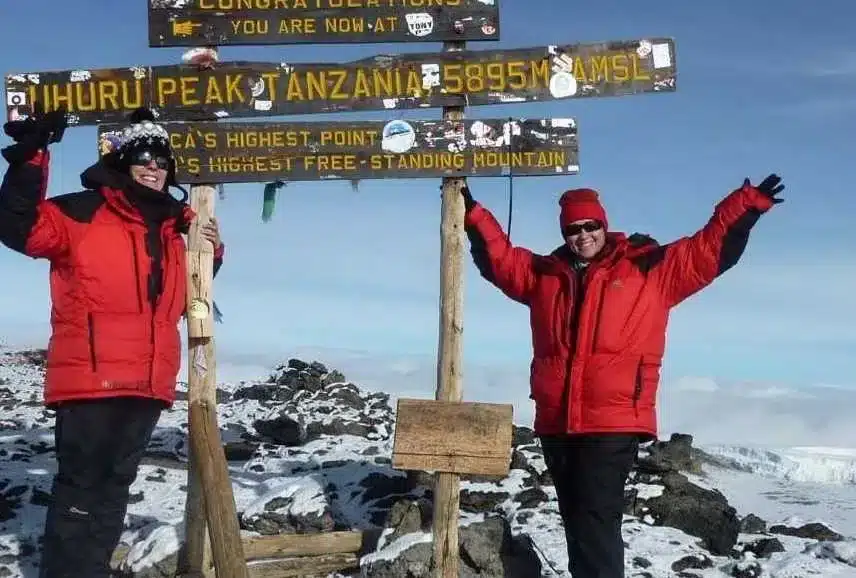
Around 5:30 AM, Stella Point appears—the crater rim marking technical success. But the true prize lies another hour ahead: Uhuru Peak at 5,895 meters, where Africa’s rooftop greets sunrise with glacial ribbons and volcanic formations stretching endlessly below. The golden light transforms exhaustion into exhilaration. Photos can’t capture the moment—standing where fewer than 50,000 people reach annually, clouds rolling beneath your feet, the world reduced to sky and summit.
The descent begins immediately, returning through Barafu to Mweka Camp before altitude sickness develops. Legs that climbed for seven hours now absorb impact for another six. Your trekking poles earn their weight. This section requires as much focus as the ascent—fatigue causes most injuries here.
7️⃣ Combine It With a Tanzania Northern Circuit Safari
Your Kilimanjaro summit deserves an equally spectacular follow-up—the Northern Circuit safari packages deliver wildlife encounters that complement your mountain triumph perfectly. After conquering Africa’s highest peak, transitioning from alpine zones to the Serengeti’s golden plains creates a complete Tanzania experience that maximizes your travel investment and vacation time.
The logistics work seamlessly: most climbers finish their Lemosho trek in Moshi or Arusha, which positions you perfectly for Ngorongoro Crater, Tarangire, and Serengeti access. Rather than flying home immediately after summit exhaustion, a 3-4 day safari provides active recovery while experiencing the Big Five in their natural habitat. The contrast couldn’t be more striking—trading headlamps and hiking boots for game drive binoculars and sunset G&Ts.
Package combinations typically follow this pattern: complete your 8-day Kilimanjaro trek, rest one night in Arusha, then launch into safari adventures. The timing allows your body to recover at lower elevations while your mind processes the mountain achievement. Many travelers report that seeing elephants, lions, and wildebeest migrations provides the perfect emotional counterbalance to summit day’s intensity.
From a practical standpoint, combining both experiences eliminates duplicate international flights and maximizes your time in Tanzania. The shared logistics—guides, transportation, accommodations—often result in better package pricing than booking separately. Plus, your Kilimanjaro acclimatization leaves you energized for early morning game drives and full safari days without jet lag concerns affecting your wildlife photography opportunities.
🧳 What to Pack for Your 8-Day Kilimanjaro Adventure
Strategic packing makes the difference between comfort and misery—layering systems, quality gear, and altitude-tested essentials separate successful summits from premature descents.
Your packing list divides into three categories: base layers that wick moisture during uphill climbs, insulating mid-layers for camp evenings, and weatherproof outer shells for summit night’s -20°C windchill. A good four-season sleeping bag rated to -15°C becomes non-negotiable above 4,000 meters, while trekking poles reduce knee strain by 25% on the long descent. Pack merino wool or synthetic materials that dry overnight—cotton clothing at altitude is genuinely dangerous. Your daypack carries 3-4 liters of water, high-calorie snacks, extra warm layers, and a headlamp with spare batteries for the midnight push. Diamox for altitude sickness prevention, zinc for immune support, and basic first-aid supplies round out your medical kit. The porter weight limit is 15kg, so choose lightweight, multi-purpose items: one pair of quality hiking boots broken in beforehand, camp shoes for evenings, and gaiters to keep volcanic scree from destroying your socks. Don’t underestimate small luxuries—baby wipes, hand sanitizer, and a book for tent time maintain morale during rest days when acclimatization means staying put while your body adapts.
📍 Kilimanjaro in Tanzania: Know Before You Go
Tanzania requires specific entry documentation, currency preparation, and logistical awareness—handling these practical details before departure eliminates stress and streamlines your summit experience.
Most visitors receive a tourist visa on arrival at Kilimanjaro International Airport, costing $50-$100 USD depending on nationality. However, applying online through Tanzania’s eVisa system before departure saves airport queue time. Your passport must remain valid for at least six months beyond your arrival date, with two blank pages for stamps.
Tanzania’s official currency is the Tanzanian Shilling (TZS), though US dollars are widely accepted for tourism services. Bring crisp, newer US bills (post-2006) in denominations of $50 and $100—older or damaged notes are frequently rejected. ATMs exist in Arusha and Moshi, but don’t rely on them exclusively. Credit cards work at established hotels and tour operators, but carry cash for tips, which are customary and expected for your mountain crew.
Yellow fever vaccination certificates are mandatory if you’re arriving from an endemic country, and malaria prophylaxis is recommended for lower altitudes. Tanzania’s electrical outlets use UK-style three-pin plugs (Type D and G), so pack appropriate adapters. Mobile coverage exists in major towns but disappears on the mountain—arrange international roaming or purchase a local SIM card from Vodacom or Airtel if connectivity matters before and after your trek.
🔥 Final Thoughts & Next Steps
Your summit isn’t just a personal achievement—it’s a commitment that begins the moment you book. The eight-day Kilimanjaro route transforms preparation into reality, altitude theory into lived experience, and aspiration into tangible success at 19,341 feet.
Next actions separate dreamers from summiteers. Book your trek during optimal weather windows (January-March or June-October), secure permits three months ahead, and begin altitude-specific training immediately. Your body needs twelve weeks minimum to adapt cardiovascular systems for sustained exertion above 15,000 feet—gym sessions won’t suffice without consistent elevation simulation.
Success demands strategic operator selection. Verify TALA certification, review guide-to-climber ratios (ideal 1:2), and confirm emergency evacuation protocols. The right outfitter doesn’t just provide porters—they orchestrate medical monitoring, nutrition timing, and pace management that directly impact your summit probability. However, preparation extends beyond physical conditioning. Mental resilience training, sleep-deprivation tolerance building, and discomfort normalization prove equally critical. Summit night presents six hours of darkness, sub-zero temperatures, and altitude-induced nausea—visualization exercises and controlled stress exposure prepare your mind for these realities.
Start planning your ascent now—Kilimanjaro’s summit awaits those who commit fully to the preparation journey.
8:00 AM – 5:00 PM: Day 1 – Setting Off to Kilimanjaro National Park
The journey begins not at base camp, but in Moshi—where final gear checks, permit processing, and team introductions transform anticipation into action. Your morning departure involves registering at Londorossi Gate, completing park formalities, and driving through lush rainforest zones to the trailhead. This isn’t merely administrative routine—it’s where your eight-day commitment becomes tangible, where guides assess fitness levels during gentle opening hours, and where altitude awareness starts immediately despite minimal elevation gain. The first afternoon’s hike covers relatively easy terrain, allowing your body to begin its crucial acclimatization process while porters establish camp ahead. What separates successful climbers from those who turn back often begins here—in respecting the mountain’s gradual demands from hour one.
7:00 AM – 1:00 PM: Day 2 – Continuing the Ascent to Shira 1 Camp
Day two brings the first real test of endurance—a steady climb through moorland terrain where vegetation thins and altitude becomes tangible. The six-hour push from Mti Mkubwa Camp to Shira 1 Camp at 3,500 meters marks the transition from forest to alpine zone, where every breath reminds trekkers that oxygen decreases approximately 1% for every 100 meters gained. Guides set a deliberately slow pace, reinforcing the Swahili mantra “pole pole” (slowly, slowly) that becomes the rhythm governing every step forward.
The landscape transforms dramatically—giant heather gives way to volcanic rock fields and panoramic views across the Shira Plateau. This section demands disciplined hydration and conscious breathing techniques, as the body begins adapting to reduced oxygen levels. Trekkers who rushed through Day 1 often feel the consequences here, while those who maintained conservative pacing find their acclimatization strategy paying dividends as they approach the exposed highland camp.
7:00 AM – 1:30 PM: Day 3 – Advancing to Shira 2 Camp
Day three introduces strategic acclimatization hiking—climbing higher during the day before descending slightly to sleep, a pattern that significantly improves summit success. The trek from Shira 1 to Shira 2 Camp covers approximately 8 kilometers across the expansive Shira Plateau, where volcanic landscapes stretch endlessly beneath dramatic cloud formations. This shorter hiking day allows the body to adjust while maintaining forward progress.
The terrain transitions from rocky moorland to moonscape-like volcanic ash fields, where giant groundsels dot the horizon like prehistoric sentinels. Altitude becomes more noticeable here—breath shortens, movements slow, and the importance of “pole pole” (slowly, slowly) becomes crystal clear. Guides monitor each climber’s condition, watching for early altitude sickness symptoms while encouraging hydration and proper pacing.
Shira 2 Camp sits at approximately 3,850 meters, positioned strategically for acclimatization hikes the following day. The afternoon arrival provides time for rest, camp setup, and optional acclimatization walks that climb an additional 200 meters before returning to camp. This “climb high, sleep low” principle proves essential—proper acclimatization during these middle days directly correlates with summit success rates.
7:30 AM – 3:00 PM: Day 4 – Heading to Barranco Camp
Day four involves a strategic “climb high, sleep low” approach—ascending to Lava Tower at 4,640 meters before dropping to Barranco Camp at 3,960 meters. This acclimatization technique significantly improves summit success by allowing your body to adapt to thinner air while recovering at lower elevation. The route traverses lunar-like landscapes where volcanic rock dominates, alpine desert vegetation disappears entirely, and creating an otherworldly atmosphere that feels remarkably remote. The initial climb to Lava Tower tests your mental resolve as altitude effects intensify—headaches, breathlessness, and fatigue become common companions. However, lunch at this dramatic volcanic formation marks a crucial turning point in your acclimatization journey. The subsequent descent to Barranco Camp brings noticeable relief as oxygen levels increase, demonstrating why longer itineraries significantly improve success rates through proper altitude adjustment protocols.
Barranco Camp sits in a stunning valley beneath the imposing Barranco Wall, which you’ll tackle tomorrow morning. The dramatic scenery—giant groundsels dotting the valley floor against towering rock faces—provides a morale boost after a challenging day. Your body continues acclimatizing overnight, preparing for the technical scramble ahead while recovery sleep at this lower elevation maximizes your physiological adaptation before the final push toward summit day.
8:00 AM – 1:00 PM: Day 5 – Conquering Barranco Wall to Reach Karanga Camp
Day five presents the Barranco Wall—a 257-meter rock scramble that tests nerve more than fitness, requiring simple hand-over-hand movements along well-defined routes rather than technical climbing expertise. The “kissing rock” section, where climbers press close to the cliff face while traversing narrow ledges, becomes the morning’s memorable challenge. Guides position themselves strategically throughout the ascent, offering hand placements and route guidance while managing the natural bottlenecks that form when multiple groups climb simultaneously.
The three-hour wall ascent transitions into gentler terrain as the route crosses the Karanga Valley before ascending to Karanga Camp at 3,995 meters. This short hiking day—typically completed by early afternoon—serves as tactical preparation for summit night, allowing extended rest while maintaining acclimatization gains. The camp’s position offers unobstructed views of Mawenzi Peak’s jagged ridgeline and the final approach to Barafu Camp, creating anticipation for the challenges ahead while providing the physical recovery necessary for success.
7:00 AM – 12:00 PM: Day 6 – Continuing to Barafu Camp
Day six transitions from alpine desert to arctic conditions as you trek four kilometers from Karanga to Barafu Camp at 4,673 meters—your final staging point before summit night. The route climbs steadily across barren, rocky terrain where vegetation disappears completely and wind-sculpted lava formations dominate the landscape. Most trekkers reach Barafu by early afternoon, allowing crucial rest time before the midnight summit push begins.
12:00 AM – 6:00 PM: Day 7 – Summit Day and Descent to Mweka Camp
Summit night begins at midnight with hot tea and biscuits before departing Barafu Camp at 4,673 meters—your headlamp beam piercing the darkness as you switchback up scree slopes toward Stella Point at 5,756 meters, where dawn typically breaks over the glaciers. The final push to Uhuru Peak at 5,895 meters takes another hour along the crater rim, where temperatures plummet to -20°C and oxygen levels sit at roughly 49% of sea level. This eighteen-hour marathon demands mental fortitude more than physical strength—pole pole (slowly slowly) becomes your mantra as each step requires deliberate effort in the thin air.
The descent reverses your entire week’s journey, dropping 2,795 meters from summit to Mweka Camp at 3,100 meters by late afternoon. What took five days to ascend requires just eight hours to descend, though exhausted legs and blistered feet make every downhill step a test of endurance. Trekking poles become essential for protecting knees on the punishing volcanic rock, while the returning oxygen at lower elevations brings renewed energy despite physical fatigue. Guides monitor for post-summit euphoria that can lead to careless footing—more accidents happen during descent than ascent.
7:00 AM – 11:00 AM: Day 8 – Descent to Mweka Gate and Return to Moshi
Your final descent drops 1,400 meters through twelve kilometers of lush rainforest—legs tired but spirits soaring as you approach Mweka Gate at 1,640 meters elevation. Morning light filters through dense canopy while porters sing celebratory songs echoing achievements. Guides present summit certificates before vehicle transfer returns successful climbers to Moshi for hot showers, proper meals, and well-earned rest at comfortable accommodations before homeward flights.
Tour Reviews
Previous trekkers consistently praise the comprehensive eight-day itinerary for its superior acclimatization schedule and professional guide teams—summit success stories dominate feedback, with climbers highlighting how the extended timeline made reaching Uhuru Peak achievable even for first-time altitude adventurers. Common review themes emphasize excellent camp meals that sustained energy throughout the trek, porter teams who maintained positive morale during challenging sections, and guides who expertly paced groups to maximize summit chances while ensuring safety.
Leave a Review
Your summit experience helps future trekkers make informed decisions—sharing honest feedback about guide performance, equipment quality, and route conditions creates a knowledge base that benefits the entire climbing community. Post-expedition reviews documenting acclimatization challenges, weather patterns encountered, and logistical highlights provide prospective climbers with realistic expectations beyond standard marketing descriptions. A balanced review covering both standout moments and areas for improvement strengthens the mountaineering ecosystem while helping operators refine their eight-day programs for better client outcomes.
You May Also Like
Trekkers seeking similar high-altitude challenges often explore the 6-day Machame route as a faster alternative—while success rates vary significantly by route duration, shorter itineraries demand stronger acclimatization fitness and previous altitude experience for safe summit attempts.
Your Cart is Empty
Ready to transform your Kilimanjaro dream into reality? Adding the 8-day Lemosho route to your cart begins your journey—review itinerary details, select departure dates, and secure your summit attempt with transparent pricing that includes guide services, park fees, and mountain accommodations. Most climbers book 6-8 months ahead for optimal preparation time, though expeditions typically accommodate last-minute adventurers when space permits.
Lemosho Route Kilimanjaro Success Rates
The Lemosho route boasts an impressive 85-90% summit success rate for 8-day treks—significantly higher than shorter variations and most other Kilimanjaro paths. According to Kilimanjaro success rate data, this advantage stems directly from the extended acclimatization schedule, which allows your body adequate time to adapt to diminishing oxygen levels. The numbers tell a compelling story: while 7-day Lemosho treks achieve roughly 75-80% success rates, that extra day makes a measurable difference in reaching Uhuru Peak.
A Detailed Day
What does a typical day on Kilimanjaro actually feel like? Your morning begins around 6:30 AM with hot tea or coffee delivered to your tent, followed by a hearty breakfast to fuel the day’s trek—porridge, eggs, toast, and fresh fruit set the foundation for sustained energy across challenging terrain and altitude gains.
The Lemosho Route on Kilimanjaro: A Detailed Day-By-Day
The 8-day Lemosho route unfolds across distinct ecological zones, each day strategically designed for optimal acclimatization. Day one begins at Londorossi Gate (2,100m), where you trek through lush rainforest to Big Tree Camp (2,780m)—a gentle 3-4 hour introduction covering approximately 6 kilometers. Day two continues through moorland to Shira 1 Camp (3,505m), transitioning from dense canopy to open heath landscapes.
Days three and four traverse the expansive Shira Plateau, reaching Shira 2 Camp (3,850m) before ascending to Barranco Camp (3,960m) via Lava Tower (4,640m). This “climb high, sleep low” strategy proves critical—success rates improve significantly with proper altitude exposure. Day five tackles the dramatic Barranco Wall before continuing to Karanga Camp (3,995m), while day six reaches Barafu Camp (4,673m), your final staging point.
Summit night (day seven) begins around midnight, navigating scree slopes to Stella Point (5,756m) before the final push to Uhuru Peak (5,895m). After summit photos, you descend to Mweka Camp (3,100m)—a grueling 12-16 hour day that tests every ounce of preparation. Day eight completes the journey with a descent through rainforest to Mweka Gate, where certificates await successful summiteers.
Scenic Trekking and Success Rates
The Lemosho route’s scenic beauty directly correlates with its impressive success statistics. Kilimanjaro success rates by route demonstrate that the 8-day Lemosho trek achieves summit success rates between 85-90%, significantly higher than shorter routes. The extra acclimatization days allow your body to adapt gradually while traversing diverse landscapes—from rainforest canopies where colobus monkeys leap overhead to the otherworldly alpine desert of the Shira Plateau. Each ecological zone offers photographic opportunities that distract from altitude challenges: baobab trees silhouetted against dawn, giant groundsels that seem transplanted from another planet, and the Barranco Wall’s dramatic rock formations that test your scrambling skills. The route’s gentle gradient and longer duration create a perfect balance between physical challenge and achievable goals.
Lemosho Route Guide Scenic Trekking and Success Rates
The Lemosho route combines exceptional scenery with strategic acclimatization, yielding summit success rates between 85-90% on the 8-day itinerary. This western approach provides extended time in diverse ecological zones, allowing gradual altitude adjustment that significantly improves summit outcomes. The route traverses rainforest, moorland, and alpine desert before joining the Northern Circuit for final ascent—a journey that prioritizes both safety and unforgettable vistas across Kilimanjaro’s least-traveled terrain.
Kilimanjaro Day 1 Lemosho Route
Day one begins at Londorossi Gate (2,100m/6,890ft), where registration formalities typically take 1-2 hours before the journey truly starts. The route follows a forest track through the montane rainforest, where colobus monkeys swing through moss-draped branches and the air hangs thick with moisture. Most trekking companies drive hikers to the actual trailhead at Lemosho Glades (2,385m/7,825ft), reducing the day’s walking distance to approximately 6 kilometers across relatively flat terrain.
The trek concludes at Big Tree Camp (2,780m/9,120ft), where elevation gain remains modest at just 680 meters. This gentle introduction allows bodies to begin acclimatization without stress—a strategic advantage that contributes to the Lemosho route’s impressive 85-90% summit success rates. The rainforest canopy provides natural shade, keeping temperatures comfortable between 15-20°C (59-68°F), and though afternoon showers frequently occur. First-day hiking duration averages 3-4 hours, giving climbers ample time to adjust to new surroundings, meet their crew, and establish trekking rhythms. The deliberate pacing on day one sets the tone for the entire expedition—”pole pole” (slowly, slowly) becomes more than a phrase; it becomes survival strategy.
What is the best time of year to hike the Lemosho Route on Mt Kilimanjaro?
Two primary climbing seasons offer optimal conditions for the Lemosho Route: January through March and June through October. These windows align with Tanzania’s dry seasons, providing clearer skies, stable weather patterns, and firmer trail conditions that significantly enhance both safety and summit success rates.
The January-March period delivers warmer temperatures and exceptional visibility, with minimal precipitation on most days. However, this season can experience brief afternoon showers, particularly at lower elevations. In practice, these conditions create stunning photographic opportunities as clear mornings showcase the mountain’s dramatic landscapes against azure skies.
June through October represents the most popular climbing window, characterized by consistently dry weather and lower humidity levels. Trail conditions remain firm throughout the route, and the reduced precipitation means fewer mud sections during forest zone crossings. One practical approach is booking several months in advance during this peak season, as permits and quality operators fill quickly.
December through May marks the long rainy season, when afternoon storms become frequent and nighttime temperatures drop considerably. The short rains from November through early December present a middle ground—fewer crowds and occasionally favorable conditions, though weather patterns prove less predictable. What typically happens is that experienced climbers willing to accept some uncertainty find excellent value during these shoulder periods, with reduced costs offsetting the modest increase in weather-related challenges.
How many days does the Lemosho Route take to complete?
The Lemosho Route typically requires 7-8 days to complete, with the 8-day variation offering significantly better summit success rates. How Long Does it Take to Climb Mount Kilimanjaro? indicates that longer itineraries directly correlate with improved acclimatization outcomes, making the extra day a worthwhile investment for most trekkers.
The 7-day itinerary follows this progression: Londorossi Gate to Big Tree Camp (Day 1), Shira 1 to Shira 2 Camp (Day 2), Moir Hut or Lava Tower descent to Barranco (Day 3), Barranco Wall ascent to Karanga (Day 4), Karanga to Barafu Camp (Day 5), summit push and descent to Mweka (Day 6), and final descent to Mweka Gate (Day 7). However, Kilimanjaro Success Rates by Route shows that 7-day climbs achieve approximately 85% success rates, while 8-day variations push success above 90%.
The additional acclimatization day on 8-day itineraries typically occurs between Shira 2 and Barranco camps, allowing for crucial altitude adjustment at the 3,800-4,000 meter range. This strategic rest day incorporates “climb high, sleep low” principles that reduce altitude sickness risk. For trekkers concerned about summit success or those with limited high-altitude experience, the 8-day option provides measurably better outcomes worth the modest additional cost and time commitment.
What level of fitness is required to successfully hike the Lemosho Route?
A moderate to good fitness level is required for the Lemosho Route, though technical climbing skills are unnecessary. The trek demands mental resilience as much as physical endurance, particularly during the lengthy summit night that can extend 12-16 hours. In practice, successful climbers typically train for 8-12 weeks beforehand, focusing on cardiovascular conditioning and leg strength rather than extreme athleticism.
The physical challenge centers on sustained exertion at altitude rather than intense bursts of activity. Hikers should comfortably manage 6-8 hours of continuous walking on consecutive days while carrying a daypack weighing 10-15 pounds. What typically happens is that the gradual pace—”pole pole” (slowly, slowly)—allows reasonably fit individuals to succeed where rushed athletes sometimes fail.
Cardiovascular preparation proves essential. Activities like hiking with elevation gain, stair climbing with a weighted pack, and or running build the aerobic capacity needed for thin-air conditions. However, strength training shouldn’t be overlooked—strong quadriceps and core muscles reduce fatigue during steep descents and help maintain balance on loose scree. Mental preparation matters equally. The Lemosho Route tests determination during cold pre-dawn summit attempts and long days crossing barren alpine deserts. One practical approach is simulating discomfort during training: hiking in various weather conditions or starting treks before sunrise builds the psychological stamina that separates successful summiteers from those who turn back within sight of Uhuru Peak.
Are there any acclimatization days included in the Lemosho Route itinerary?
Yes, the Lemosho Route includes built-in acclimatization opportunities, with the 8-day itinerary featuring a dedicated rest day at Shira Camp or Karanga Camp. This strategic rest period allows your body to adapt to high altitude while remaining at an elevation where you’ve already slept, significantly reducing the risk of altitude sickness. According to Kilimanjaro Success Rates by Route, routes with proper acclimatization days show substantially higher summit success rates.
The route also incorporates “climb high, sleep low” principles throughout the trek. On several days, you’ll ascend to higher elevations during the day before descending to lower camps for the night—a proven technique for altitude adaptation. The Barranco Wall day exemplifies this perfectly, as you climb to approximately 4,600 meters before dropping to Karanga Camp at 4,035 meters.
The 7-day variation offers less built-in acclimatization, though the gradual approach, and longer trekking days still provide better adaptation than shorter routes. However, the additional rest day in the 8-day itinerary increases summit success rates by up to 15%, making it the recommended choice for most climbers regardless of fitness level.
What is the cost range for guided tours on the Lemosho Route?
Guided Lemosho Route tours typically range from $2,000 to $5,000 per person, with pricing variations depending on group size, operator quality, and included services. Budget operators may offer tours starting around $1, 800, while premium outfitters charge $4, 000-$6, 000 for enhanced services including superior equipment, experienced guides, and comprehensive support staff ratios. The price directly correlates with safety standards and success rates. Lower-cost operators often cut corners on porter wages, equipment quality, and guide experience—factors that significantly impact your summit chances. Mid-range tours ($2,500-$3,500) typically provide adequate services with proper acclimatization schedules and ethical treatment of support staff.
Premium packages justify higher costs through better guide-to-climber ratios (often 1:2 or 1:3), high-quality camping equipment rated for altitude conditions, comprehensive medical support including pulse oximeters, emergency oxygen, and more generous meal provisions. These operators also tend to pay fair wages to porters and maintain stringent safety protocols. Group size substantially affects pricing—joining a scheduled departure with 6-8 climbers reduces per-person costs compared to private climbs. However, solo travelers or couples seeking flexibility should budget for premium pricing. Additional expenses beyond the base tour cost include tips for guides, porters ($250-$350 total), gear rentals if needed, and Tanzania park fees (included in most quotes but worth verifying). When evaluating costs, prioritize operators with transparent pricing breakdowns showing park fees, porter welfare compliance, and included services rather than simply selecting the lowest price available.
What type of gear is essential for the Lemosho Route trek?
Essential gear for the Lemosho Route includes four-season sleeping bags rated to -10°C, insulated clothing layers, waterproof outer shells, high-quality trekking boots—equipment designed to handle extreme altitude conditions, and rapid weather changes across five climate zones. Your clothing system should follow the layering principle: moisture-wicking base layers, insulating mid-layers (fleece or down), and waterproof-breathable outer shells. Temperature swings from 25°C at the base to -20°C at the summit demand versatility. Bring both lightweight hiking pants for lower elevations and insulated pants for summit night, along with thermal underwear and multiple warm layers.
Footwear requires particular attention. Break in waterproof trekking boots well before departure, and pack gaiters to prevent snow and scree from entering. Quality trekking poles reduce knee strain on descents and improve stability on loose volcanic terrain. A headlamp with extra batteries becomes critical for the pre-dawn summit push.
Technical accessories include UV-protective sunglasses, high-SPF sunscreen (reflection off snow intensifies exposure), a wide-brimmed hat for sun protection, and a warm beanie for cold nights. Hydration systems must prevent freezing—insulated water bottles work better than bladders at altitude. In practice, most trekkers carry 3-4 liters of water capacity. Your daypack (25-35 liters) carries daily essentials while porters handle the main duffel bag. However, keep valuables, medications, and critical gear in your daypack—porter bags travel separately and aren’t accessible during trekking hours.
How does the scenery on the Lemosho Route compare to other routes on Mt Kilimanjaro?
The Lemosho Route showcases the most diverse ecological zones compared to other Kilimanjaro paths, traversing pristine rainforest, heath, moorland, alpine desert, and glacial summit zones. Unlike the heavily trafficked Marangu or Machame routes, Lemosho approaches from the remote western flank, offering unobstructed panoramic views across the Shira Plateau—a collapsed volcanic crater spanning nearly 8 miles wide. This westward approach means trekkers experience dramatic sunset vistas over Tanzania’s wilderness, a perspective unavailable on eastern routes like Rongai.
The initial rainforest section presents thicker, more untouched vegetation than the Marangu Route’s well-worn forest trail, with increased wildlife sightings including colobus monkeys and blue monkeys. What sets Lemosho apart is its gradual transition through each ecological zone, allowing trekkers to fully absorb environmental changes rather than the abrupt shifts experienced on shorter routes like Umbwe. The route’s traverse beneath Kilimanjaro’s Southern Ice Fields during summit night provides close-up glacier perspectives that northern approaches miss entirely.
kilimanjaro climb
Climbing Kilimanjaro requires strategic planning beyond route selection—proper pacing, hydration protocols, and mental preparation determine summit success as much as physical fitness. The phrase “pole pole” (slowly, slowly in Swahili) becomes your mantra throughout the ascent, helping your body adapt to decreasing oxygen levels. A common pattern is that trekkers who rush their daily stages experience significantly higher failure rates, as altitude sickness doesn’t discriminate based on fitness level. What typically happens is that climbers feel strong during early stages and push too hard, only to struggle above 4,500 meters when acclimatization becomes critical for reaching Uhuru Peak successfully.
kilimanjaro climb lemosho route
The Lemosho Route delivers consistently higher summit success rates compared to shorter alternatives—statistics show approximately 85-90% success on 8-day itineraries versus 65% on rushed 5-day climbs. This difference stems from superior acclimatization schedules that allow your body adequate time to adjust to decreasing oxygen levels while ascending through five distinct climate zones.
mount kilimanjaro via lemosho route
The Lemosho Route’s eight-day itinerary provides the optimal balance between acclimatization time and physical challenge—approaching from the western flank through pristine rainforest zones before merging with the Machame Route near Lava Tower. This extended timeline allows gradual altitude adjustment across five distinct ecological zones, with daily elevation gains carefully calibrated to maximize physiological adaptation. The route’s gentle initial gradient through Shira Plateau offers strategic “climb high, sleep low” opportunities that significantly enhance summit probability compared to compressed alternatives.
mount kilimanjaro via lemosho route tanzania
Tanzania’s national park regulations ensure every Lemosho ascent includes experienced guides, porters, and directly contributing to the route’s superior success metrics across all difficulty levels.
it crosses the entire shira plateau from west to east
The Lemosho Route’s defining characteristic is its complete west-to-east traverse of the Shira Plateau—offering unmatched panoramic views across this ancient volcanic caldera. This gradual crossing allows trekkers to experience the plateau’s diverse microclimates and terrain variations while maintaining steady altitude gain for optimal acclimatization.
kilimanjaros lemosho route is 70 km 43 mi in total
The Lemosho Route spans approximately 70 kilometers (43 miles) from trailhead to summit and back to exit—making it one of the longer Kilimanjaro paths. This extended distance distributes the elevation gain more gradually than shorter routes, reducing daily strain on climbers. However, the total mileage doesn’t tell the complete story: terrain varies dramatically from rainforest switchbacks to volcanic scree fields, with each kilometer presenting different physical demands and altitude challenges that impact your pacing strategy.
some of the drive is on main roads
The journey to Lemosho’s western trailhead begins on paved highways before transitioning to rougher terrain—typically starting from Moshi or Arusha on Tanzania’s well-maintained main roads. The initial 2-3 hours pass relatively comfortably as vehicles follow the tarmac route toward the mountain’s western slopes, offering glimpses of Kilimanjaro’s snow-capped summit on clear mornings. However, the final stretch diverges onto increasingly rugged dirt tracks that wind through remote forest zones, where four-wheel-drive vehicles become essential for navigating the steeper, less-maintained approaches to Londorossi Gate. This gradual transition from smooth asphalt to challenging backcountry access sets the tone for the remote wilderness experience that defines the Lemosho Route—a stark contrast to busier eastern routes with more direct road access.
What is the best time of year to hike the Lemosho Route on Mt Kilimanjaro?
The optimal hiking windows for the Lemosho Route are January through mid-March and June through October—periods when precipitation is lowest and summit conditions are most favorable. These dry seasons align with Tanzania’s weather patterns, offering clearer skies and more stable temperatures on the mountain.
January to March provides warmer temperatures, fewer crowds immediately after the December holiday rush, and though occasional afternoon showers can occur. The June-to-October window coincides with East Africa’s primary dry season, delivering consistently clear conditions but attracting larger groups of climbers seeking reliable weather. April, May, and November face heavy rainfall that can make trails muddy and cloud formations more persistent around the summit. However, these shoulder months offer dramatically reduced permit costs and near-solitary experiences on the trail—a trade-off some experienced trekkers prefer despite the increased challenge.
December represents a transitional month with improving conditions as the short rains taper off, though weather remains less predictable than peak season. The mountain’s position near the equator means temperatures remain relatively consistent year-round, with summit conditions always requiring full winter gear regardless of departure month.
Trail conditions and success rates fluctuate more with seasonal weather than route selection, making timing a critical factor in summit achievement alongside proper acclimatization.
How many days does the Lemosho Route take to complete?
The Lemosho Route typically requires 7-8 days to complete—with the 8-day itinerary offering significantly better acclimatization and higher summit success rates. According to Kilimanjaro Success Rates by Route, longer duration treks consistently outperform shorter variations, with 8-day climbs achieving success rates exceeding 85% compared to roughly 65% for 6-day attempts.
The standard 7-day Lemosho follows this schedule: forest camp (Day 1), Shira 1 or 2 Camp (Day 2), Barranco Camp via Lava Tower (Day 3), Karanga Camp (Day 4), Barafu Camp (Day 5), summit attempt and descent to Mweka Camp (Day 6), and final descent (Day 7). However, the 8-day variation adds a crucial acclimatization night at Karanga Camp, allowing your body additional time to adjust before the summit push.
The extra day makes a measurable difference—your cardiovascular system processes altitude adaptation more effectively, reducing acute mountain sickness symptoms and improving your physical reserves for summit night. This timing aligns with the principle “climb high, sleep low,” giving you optimal preparation for the demanding final ascent to Uhuru Peak’s 19,341-foot summit.
What level of fitness is required to successfully hike the Lemosho Route?
Moderate to good fitness is required—capable of hiking 4-7 hours daily with a daypack while managing altitude effects. The Lemosho Route demands cardiovascular endurance rather than technical mountaineering skills, as the terrain involves steady uphill walking on non-technical trails. In practice, successful climbers typically train for 2-3 months beforehand with regular aerobic exercise like hiking, running, or cycling combined with strength training for legs, and core stability. Mental resilience often proves as critical as physical preparation, particularly during summit night when fatigue, cold, and altitude converge simultaneously.
Are there acclimatization days included in the Lemosho Route itinerary?
Yes, the Lemosho Route includes dedicated acclimatization days—typically one or two depending on whether you choose the 7-day or 8-day itinerary. These built-in rest days follow the “climb high, sleep low” principle, allowing your body to adjust gradually to decreasing oxygen levels.
The standard acclimatization day occurs at Shira 2 Camp (3,850m), where trekkers ascend to Lava Tower (4,600m) before descending back to camp for the night. This elevation gain followed by descent triggers crucial physiological adaptations that improve summit success rates. The 8-day route adds a second acclimatization opportunity at Barranco Camp, providing additional adjustment time that contributes to the route’s 85% success rate.
However, these aren’t truly “rest days”—you’ll still hike 4-5 hours. One practical approach is viewing them as strategic training days where your body learns to function efficiently at altitude while maintaining a manageable pace.
What is the cost range for guided tours on the Lemosho Route?
Guided Lemosho Route tours typically range from $2,000 to $5,000+ per person, depending on trek duration, operator quality, and included services. Eight-day itineraries generally command premium pricing ($3,500-$5,000) due to extended logistics, additional acclimatization time, and higher success rates. Budget operators may offer lower rates ($2, 000-$2, 800), but these often compromise on guide experience, equipment quality, and or porter welfare standards. Premium operators justify higher costs through comprehensive inclusions—quality camping equipment, experienced guides with wilderness first responder certifications, nutritious meals, and ethical porter treatment that exceeds Kilimanjaro Porters Assistance Project standards. Mid-range options ($2,800-$3,500) typically provide solid service without luxury touches like private portable toilets or gourmet dining.
Park fees alone exceed $1,000 per climber—making ultra-budget options logistically impossible while maintaining safety standards. However, what typically happens is that the higher investment correlates directly with summit success rates, as better-resourced operators provide superior altitude management and emergency response capabilities. Group discounts (4+ climbers) can reduce per-person costs by 10-15%, making premium routes more accessible without sacrificing quality.
What type of gear is essential for the Lemosho Route trek?
Essential gear for the Lemosho Route includes layered clothing systems, a quality sleeping bag rated to -10°C, waterproof boots, trekking poles, and high-altitude accessories. Your clothing should follow a layering approach: moisture-wicking base layers, insulating mid-layers (fleece or down), and a waterproof/windproof outer shell. Temperature variations from rainforest to summit demand versatility—expect 70°F at lower elevations dropping to well below freezing at Uhuru Peak. Critical items include a four-season sleeping bag (comfort rating -10°C minimum), well-broken-in waterproof hiking boots with ankle support, and adjustable trekking poles to reduce knee strain on steep descents. Don’t overlook headlamps with extra batteries, UV-protection sunglasses, high-SPF sunscreen, and insulated water bottles that won’t freeze at altitude. High-altitude accessories make a significant difference: insulated gloves (both liner and outer shell), a warm hat covering ears, neck gaiter or balaclava, and hand warmers for summit night. A quality daypack (25-35L) carries essentials during daily treks while porters handle your main duffel bag. Most reputable operators provide gear lists upon booking, and rental equipment is available in Moshi or Arusha for items you don’t own—though personally fitted boots should always be your own.
How does the scenery on the Lemosho Route compare to other routes on Mt Kilimanjaro?
The Lemosho Route showcases the most diverse ecological zones on Kilimanjaro, beginning in pristine rainforest and progressing through moorland, alpine desert, and glacial landscapes—offering scenery that surpasses the more heavily trafficked Marangu and Machame routes. What sets Lemosho apart is its western approach through remote wilderness where colobus monkeys swing through moss-draped trees and elephant tracks occasionally cross the trail.
The route’s scenic advantage lies in its gradual traverse across the Shira Plateau, a vast high-altitude expanse that provides panoramic views impossible on steeper, more direct routes. While the Machame Route offers dramatic viewpoints, it concentrates scenery into narrower valleys. The Rongai Route, approaching from the north, showcases drier terrain with different vegetation but lacks Lemosho’s ecological variety.
Lemosho’s western starting point means trekkers experience sunset views over the plains that eastern routes miss entirely. The gradual climb allows time to appreciate subtle landscape transitions—from giant heather zones where otherworldly senecio plants tower overhead to the stark beauty of volcanic formations near Lava Tower. This slower pace enhances the visual experience compared to rushed itineraries on shorter routes.
What is the success rate for summiting Mt Kilimanjaro via the Lemosho Route?
The Lemosho Route boasts an 85-90% success rate, making it one of the highest on Kilimanjaro. This exceptional achievement stems from the route’s extended acclimatization profile and gradual ascent over eight days, allowing your body adequate time to adjust to diminishing oxygen levels.
The Lemosho Route’s success rate significantly exceeds shorter routes like Marangu (65%) and Machame (73%). The critical difference lies in acclimatization—each additional day on the mountain increases summit probability by approximately 10%. The eight-day itinerary incorporates strategic altitude gains and recovery periods that minimize acute mountain sickness risk.
Success rates vary by operator experience and group size. Reputable outfitters with experienced guides, proper equipment, and conservative pacing typically achieve rates approaching 90%, while budget operators may see lower results. Your personal fitness level, hydration discipline, and adherence to “pole pole” (slowly slowly) pacing directly impact your individual odds.
Weather conditions and seasonal timing also influence success rates. The dry seasons (January-March, June-October) offer more stable conditions and higher completion percentages. However, even during optimal months, individual physiological responses to altitude remain the primary variable determining summit success.
The Lemosho Route’s superior success rate reflects its thoughtful design—you’re not just climbing a mountain, you’re giving your body the time it needs to adapt to one of Earth’s most challenging environments.
Ready to summit the highest mountain in Africa?
Book your 8-Day Mt Kilimanjaro Africa Epic Trek today.
Start your journey with expert help, a proven route, and guaranteed adventure.
📞 Call/WhatsApp: +255 784 411 852
🔗 Visit Us: East Africa Travel Company
| Destination | Mt Kilimanjaro |
|---|---|
| Arrival | Kilimanjaro International Airport (JRO) |
| Departure Time | Yes Require |
| Included |
✅ Included (all prices include VAT)
|
| Excluded |
❌ Not included
|
| Mt Kilimanjaro in Africa | |
8:00 AM – 5:00 PM: Day 1 – Setting Off to Kilimanjaro National Park
Begin your adventure with a scenic drive from Moshi to Londorossi Gate, where you complete registration formalities. After a safety briefing, embark on a short trek through montane forest to Mti Mkubwa (Big Tree Camp), your first overnight site in the wilderness.
Altitude: 2,650 m
Distance: 6 km
Hiking Time: 3 – 4 hours
Habitat: Montane Forest
7:00 AM – 1:00 PM: Day 2 – Continuing the Ascent to Shira 1 Camp
The trail ascends steeply as you leave the forest behind, entering the heather zone. Today offers your first views of the Shira Plateau and the vast western slopes of Mt Kilimanjaro.
Altitude: 3,610 m
Distance: 7 km
Hiking Time: 4 – 5 hours
Habitat: Moorland
7:00 AM – 1:30 PM: Day 3 – Advancing to Shira 2 Camp
Continue east across the volcanic plateau toward Shira 2 Camp. The trail is relatively gentle, allowing time to acclimatize. Expect sweeping views of glaciers and surrounding peaks.
Altitude: 3,850 m
Distance: 8 km
Hiking Time: 4 – 5 hours
Habitat: Moorland
7:30 AM – 3:00 PM: Day 4 – Heading to Barranco Camp
Climb steadily toward the Lava Tower (4,600 m) for lunch, before descending into the Barranco Valley. This “climb high, sleep low” day is excellent for acclimatization.
Altitude: 3,900 m
Distance: 10 km
Hiking Time: 6 – 7 hours
Habitat: Alpine Desert to Moorland
8:00 AM – 1:00 PM: Day 5 – Conquering Barranco Wall to Reach Karanga Camp
Start with a thrilling scramble up Barranco Wall, followed by a series of valleys and ridges en route to Karanga Camp. The terrain is dramatic and offers beautiful glacial views.
Altitude: 3,995 m
Distance: 5 km
Hiking Time: 4 – 5 hours
Habitat: Alpine Desert
7:00 AM – 12:00 PM: Day 6 – Continuing to Barafu Camp
Ascend gradually to Barafu Camp, the final base before summit night. The arid landscape contrasts with previous days, and the summit looms directly above the camp.
Altitude: 4,673 m
Distance: 4 km
Hiking Time: 3 – 4 hours
Habitat: Alpine Desert
12:00 AM – 6:00 PM: Day 7 – Summit Day and Descent to Mweka Camp
Summit day begins just after midnight. Reach Stella Point for sunrise, then push to Uhuru Peak—the top of Mount Kilimanjaro. After celebration photos, descend through Barafu to Mweka Camp.
Altitude: 5,895 m (Uhuru), 3,100 m (Mweka)
Distance: 17 km (total)
Hiking Time: 12 – 14 hours
Habitat: Arctic to Moorland
7:00 AM – 11:00 AM: Day 8 – Descent to Mweka Gate and Return to Moshi
Complete your descent through the lush rainforest, arriving at Mweka Gate. After receiving your summit certificate, enjoy a scenic drive back to Moshi for rest and celebration.
Altitude: 1,640 m
Distance: 10 km
Hiking Time: 3 – 4 hours
Habitat: Montane Forest
Tour Reviews
There are no reviews yet.
Leave a Review